
Cold Storage Feasibility Studies Cold storage facilities can be profitable, but they are not automatically profitable. That is the real answer.
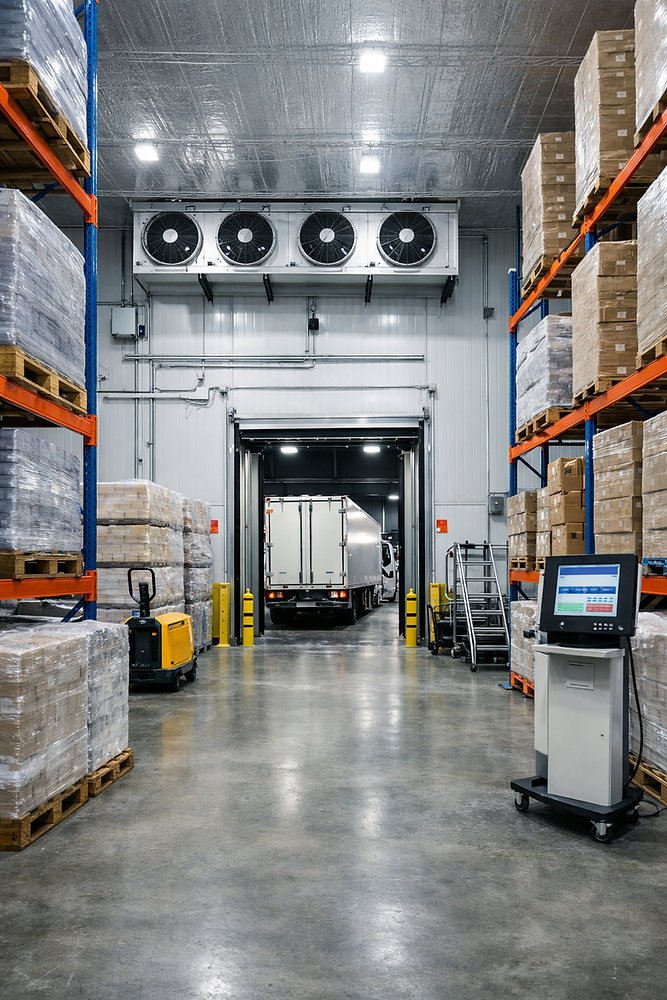
Cold Storage Feasibility Studies Cold storage facilities can be profitable, but they are not automatically profitable. That is the real answer.
This asset class can generate durable demand because food, protein, seafood, pharma, and temperature-sensitive goods still need specialized storage, handling, and transportation. Even so, profitability depends on whether the facility is sized correctly, located correctly, financed correctly, and operated with the right service mix. In other words, a cold storage project can be a terrific business, but it can also become an expensive mistake when the first phase is too large, too generic, or too optimistic.
That is where disciplined feasibility work matters. Wert-Berater, Inc. positions its work around independent analysis built to withstand underwriting scrutiny, with experience supporting SBA, USDA, USCIS, and institutional financing decisions since 1998. The firm says it focuses on complex, capital-intensive projects where “the cost of being wrong is significant.”
In your MSY example, that discipline produced a very clear conclusion: 125,000 square feet was the best first-phase size , while 110,000 square feet was the best fallback for downside protection . Bigger boxes looked impressive on paper, but they became increasingly equity-heavy and less efficient.
Cold storage keeps drawing attention because it serves essential supply chains. Food does not stop moving. Ports do not stop handling perishables. Retailers, importers, processors, and distributors still need temperature-controlled capacity close to demand centers and logistics nodes.
The long-term story is still positive.
Newmark’s H1 2025 U.S. Cold Storage Market Overview says the sector is in a market recalibration, but its long-term outlook remains favorable because of structural demand drivers such as food production investment and online grocery growth. Newmark also notes that the active pipeline remains elevated at 7.4 million square feet and that average taking rents have risen more than 100% since 2020.
That mix creates both opportunity and risk. Rising rents help support new development, but a wave of supply also means tenants can be picky. So developers cannot just build big and hope.
Yes, cold storage facilities can be profitable. But the profitability question has two layers.
The first is operating profitability . Can the building generate healthy storage income, handling income, and ancillary revenue after labor, utilities, maintenance, and overhead?
The second is development profitability . Can the project earn a return high enough to justify its cost of land, refrigeration systems, sitework, racking, financing, and lease-up risk?
Those are not the same thing.
A facility may work operationally and still disappoint the developer if the basis is too high. That is exactly why rigorous underwriting matters.
Revenue usually comes from several buckets:
The big lesson is simple: the more specialized and sticky the service mix, the more resilient the revenue base can become.
The usual profit killers are easy to name and hard to fix:
Cold storage is not a commodity shed. It is a capital-heavy operating platform.
A dry warehouse can sometimes be rescued by generic demand. Cold storage usually cannot.
Modern cold buildings are more expensive, more operationally complex, and more sensitive to throughput assumptions. Developers have to think in terms of cube, dock flow, temperature zones, labor, power load, and customer mix.
Square footage matters, sure, but cubic capacity matters more than many first-time developers realize. A cold box is really a machine for monetizing refrigerated cube, not just floor area.
That is why your MSY model tested square footage, usable cubic feet, stabilized utilization, revenue per cubic foot, and equity per square foot together. That is also why “right-sizing” beat “maximize the footprint.”
Another common mistake is underwriting revenue as if all dollars come from storage alone. In practice, handling and ancillary revenue can make or break returns.
Your model used a blended revenue approach, but it also correctly flagged the need to move toward a more contractual mix by customer class: base storage, in/out, cross-dock, blast freeze, and pick/pack. That is smart. It turns a generic underwriting story into an operational one.
The market is not dead. It is just more selective.
Newmark says the sector is working through a cyclical reset, with elevated vacancy and supply pressure, while still benefiting from structural long-term demand drivers. New facilities are competing in a market that is not as forgiving as it was a few years ago.
That means developers should be careful with speculative first phases.
Newmark also reports that much of the vacant inventory is older, with an average age of 42 years, and that modernization remains necessary across the sector. That is good news for well-designed projects with the right systems, clear heights, and operational layout.
For food imports, protein flows, and export handling, port-connected locations remain important. At Port NOLA, Lineage’s two cold-storage facilities now span more than 460,000 square feet, and the site also benefits from value-added services and reefer-related infrastructure. That existing footprint is a huge clue for sizing any new entrant nearby: do not pretend you are entering an empty market.
Cold storage is energy-intensive by nature, so power strategy is not a side issue. It is a margin issue. Lineage says the industry is energy-intensive and ties sustainability to business performance, while its latest report also emphasizes a technology-enabled operating platform across a global network of 488 properties. Americold likewise highlights its global scale and value-added temperature-controlled logistics platform.
The takeaway is plain: newer buildings are not only about more space. They are about more efficient space.
This is the heart of the matter.
A lot of developers ask, “How big can we build?”The better question is, “What first phase gives us the best combination of lease-up realism, financeability, and return conversion?”
That is where many profitable projects are won or lost.
Your project is a strong example of why cold storage development should be optimized, not just designed.
The model tested multiple first-phase scenarios: 110k, 125k, 150k, 175k, 210k, and 250k square feet . It measured each scenario against supportable leverage, DSCR, equity requirement, market fit, and 10-year returns.
In the refreshed optimization sheets, the model compared:
That is exactly the framework a serious sponsor and lender should want.
The winning scenario was 125,000 SF .
Why? Because it produced the best overall balance of market fit, supportable leverage, and long-run return performance.
In the model, the 125k option showed roughly:
By comparison, the 110k option remained attractive as a fallback, but slightly weaker on composite performance:
That is a close race. But the 125k box won.
The 110k option worked as the downside-protection case because it needed less total capital and still maintained good lender-fit characteristics. It is the kind of box a sponsor can defend if the priority is caution, not maximum platform capture.
That matters because cold storage does not forgive overbuilding. A smaller phase can prove the node, establish tenant traction, and create an expansion path later.
This is where the example gets really useful.
The larger scenarios delivered more EBITDA in absolute dollars, but not enough to justify the heavier capital burden. As the size increased, supportable leverage dropped and equity per square foot rose.
For example:
At the same time, 10-year equity IRRs weakened:
That is the classic warning sign of an oversized first phase. You may gain footprint, but you lose efficiency.
And the strongest line in the refreshed recommendation may be the most honest one: the model supports a lender-friendly size recommendation, but not yet a clean developer-equity go decision at the current basis.
That is not bad news. That is useful news.
So, are cold storage facilities profitable?
They can be. But your project shows the real-world answer:
That means the right answer is not “yes” or “no.”It is: yes, if the first phase is right-sized and the underwriting is honest.
Wert-Berater, Inc. fits this kind of project because its value is not flashy design talk. Its value is disciplined decision-making.
The company describes its work as independent feasibility analysis intended to withstand lender and underwriter review, not reports designed to justify preconceived outcomes. It also highlights senior-led analytical expertise in finance, economics, valuation, market analysis, and underwriting support.
That matters in cold storage because many sponsors start with a concept plan and then try to justify it. The better process is the one your project used: test the concept against a scenario ladder.
That allows a team to ask:
Wert-Berater’s kind of process helps avoid a costly trap: locking the design too early.
The MSY model shows why. A 125k first phase outperformed larger alternatives not because it was the biggest earner in raw dollars, but because it was the best risk-adjusted size.
For capital-intensive projects, lenders care about more than enthusiasm. They care about defensible demand, realistic leverage, and downside resilience.
That is where a study built for underwriting review can save real money.
For reference, Wert-Berater says its work has supported more than 1,280 SBA feasibility studies accepted by lenders , 817 USDA studies reviewed in agency financing , and $40.2 billion in project values evaluated under financing criteria, all as of December 2025.
Here is the practical playbook your example supports:
Sometimes, yes. They can command higher pricing and stickier customer relationships, but they also cost much more to build and operate. Profitability depends on execution, not just rent premium.
Because the 125k scenario better balanced market fit, supportable leverage, equity efficiency, and long-run returns. The larger boxes needed too much equity relative to the added earnings.
Yes. That is one of the clearest lessons from this example. A project may support a defensible loan request while still missing a sponsor’s target return threshold.
Oversizing phase one. It is tempting to build for the “ultimate vision,” but many projects work better when the first phase proves demand and leaves room for expansion.
By focusing on independent feasibility, financeability, market analysis, and underwriting-grade decision support rather than trying to force a predetermined outcome.
The biggest ones are market recalibration after a supply wave, stronger preference for modern facilities, growing importance of efficient multimodal logistics nodes, and rising attention to energy performance and technology.
Yes, as a strategic node tied to food logistics and port activity. But existing incumbent capacity means a new project should be right-sized and differentiated, not oversized and generic.
The best answer to the profitability question is this:
Cold storage facilities are profitable when the first phase is sized for real demand, not ambition alone.
Your MSY project proves the point. The optimal answer was not “build the biggest box.” It was build the smartest first box . In this case, that meant 125,000 square feet as the best lender-fit scenario, with 110,000 square feet as the lower-risk fallback, while larger phase-one boxes became progressively less efficient.
That is exactly why a firm like Wert-Berater, Inc. adds value. The company’s role is not just to say whether cold storage sounds promising. It is to pressure-test the footprint, the assumptions, the capital stack, and the timing until the plan becomes defendable.
_______________________________________________________________________________________________________
If you are planning a cold storage development and want to ensure your project is optimized, financeable, and aligned with real market demand, you can contact:
Wert-Berater, Inc.
🌐 Website: https://www.wert-berater.com/📍
Address:1968 South Coast Highway
Suite 2382
Laguna Beach, CA 92651
📞 Phone: +1 310-857-2443 ext. 800
President, Wert-Berater, Inc. — independent feasibility study consultants since 1998. More than 4,000 feasibility studies completed across all 50 states and internationally, evaluating $40.2 billion in project value for SBA, USDA, EB-5, conventional, and institutional financing decisions. Fiduciary duty runs to the lender and agency in every engagement.
+1 310-857-2443 ext. 800 · email · 1968 South Coast Hwy, Ste 2382, Laguna Beach, CA 92651 · 111 Town Square Pl Ste 1238 PMB 657834, Jersey City, NJ 07310 · 539 W. Commerce St #8486, Dallas, TX 75208 · 66 W Flagler Street, Suite 900, PMB 12704, Miami, FL 33130
Schedule a ConversationIndependent feasibility studies since 1998 — 4,000+ engagements, $40.2 billion in evaluated project value. Standard delivery in 10 to 15 business days. Fiduciary duty to the lender and agency.