
Factories Being Built or Expanded in the USA: A Data-Driven Analysis of Regions, Products, and the Need for Feasibility Study Consultants Introduction to U.S.
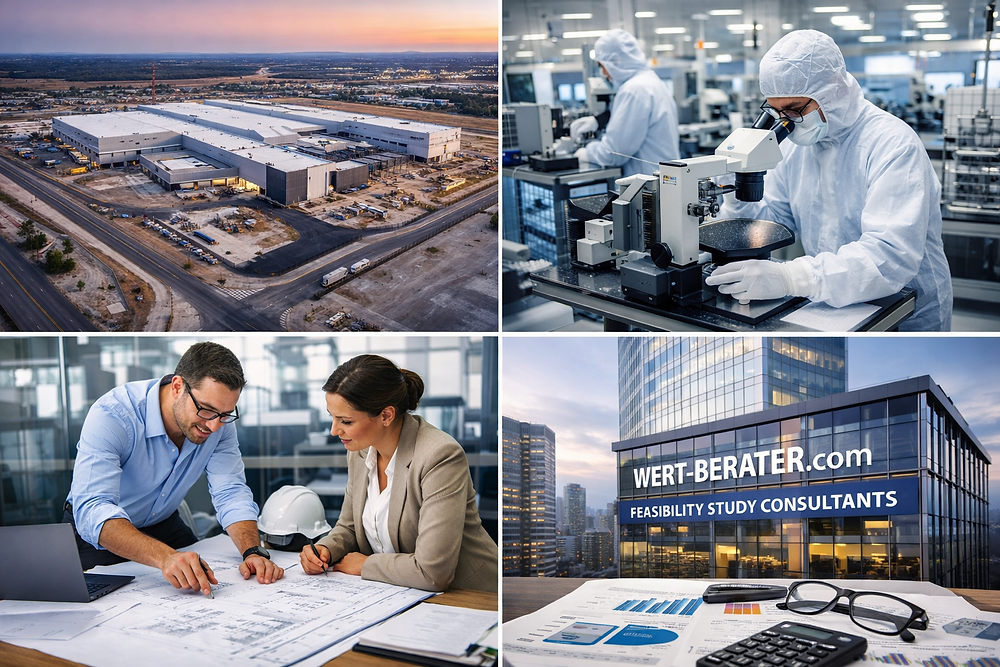
Factories Being Built or Expanded in the USA: A Data-Driven Analysis of Regions, Products, and the Need for Feasibility Study Consultants Introduction to U.S. Factory Expansion Trends Factories being built or expanded in the USA are at the center of a major industrial transformation that is reshaping the national economy. Over the past decade, but especially since 2020, the United States has experienced a surge in manufacturing investment fueled by supply chain disruptions, geopolitical tensions, and strategic federal policies aimed at rebuilding domestic production capacity.
The scale of this expansion is significant. According to the National Association of Manufacturers, U.S. manufacturing contributed approximately
This resurgence is not merely cyclical; it reflects structural change. The shift toward domestic production—commonly referred to as reshoring—has accelerated as companies seek to reduce dependence on overseas suppliers. The COVID-19 pandemic exposed vulnerabilities in global supply chains, prompting corporations to invest heavily in U.S.-based facilities.
Employment trends reinforce this growth. Manufacturing employment in the U.S. has rebounded to nearly 13 million workers, with strong gains in advanced manufacturing sectors such as electronics, transportation equipment, and pharmaceuticals.
Government initiatives have played a decisive role. The CHIPS and Science Act allocated over $50 billion to semiconductor manufacturing, while the Inflation Reduction Act introduced incentives for clean energy and electric vehicle production. These policies have catalyzed billions in private investment, particularly in large-scale factory developments.
The geographic distribution of factories being built or expanded in the USA reveals clear regional patterns shaped by infrastructure, labor availability, and policy environments.
The Southern United States has emerged as the fastest-growing region for new factory construction. States such as Texas, Georgia, and Tennessee consistently rank among the top for facility development.
Texas alone has led the nation in facility projects for over a decade, with more than 1,400 qualifying projects in 2025. Its manufacturing sector generates over $330 billion in annual output, supported by nearly one million workers. Georgia has become a hub for electric vehicle and battery manufacturing, attracting billions in investment from global automakers.
Tennessee continues to expand its automotive manufacturing base, with major investments in EV production and supplier networks. These states benefit from lower operating costs, favorable tax policies, and strong logistics infrastructure.
The Midwest remains the historical core of American manufacturing, but it is also undergoing modernization. Ohio, Michigan, and Indiana collectively account for hundreds of billions in manufacturing output annually.
Ohio alone has secured nearly
The Western United States is characterized by high-value, technology-driven manufacturing. California leads the nation in manufacturing output, exceeding $390 billion annually, driven by aerospace, electronics, and medical device production.
Arizona has rapidly emerged as a semiconductor powerhouse, with multibillion-dollar investments in chip fabrication plants. These facilities are among the most capital-intensive projects in the country, often exceeding
The Northeast focuses on specialized and advanced manufacturing sectors. Pennsylvania and New York are key players in pharmaceuticals, food processing, and precision machinery.
These states benefit from proximity to major consumer markets and established infrastructure, although higher costs can limit large-scale expansion compared to other regions.
Factories being built or expanded in the USA span a wide range of industries, reflecting both traditional strengths and emerging technologies.
The automotive sector is undergoing a historic transformation. Billions of dollars are being invested in electric vehicle assembly plants and battery manufacturing facilities. These projects are concentrated in the Midwest and Southeast, where existing automotive supply chains provide a strong foundation.
Semiconductor manufacturing has become a national priority. New fabrication plants, or fabs, are being constructed in states like Arizona, Texas, and Ohio. These facilities require advanced technology and massive capital investment, often exceeding one million square feet in size.
Food and consumer goods factories continue to expand due to steady domestic demand. These facilities are typically located near population centers and transportation hubs to minimize distribution costs.
Chemical and materials manufacturing remains concentrated in states like Texas and Louisiana, where access to raw materials and energy infrastructure provides a competitive advantage.
The pharmaceutical sector has seen rapid growth, particularly in response to global health challenges. New facilities focus on vaccine production, biologics, and advanced therapeutics.
The scale of factory projects varies widely, from mid-size facilities to massive industrial campuses.
Mid-size factories, typically ranging from 100,000 to 500,000 square feet, are common in sectors such as food processing and light manufacturing. These projects require moderate capital investment and are often developed more quickly.
Mega-factories, often exceeding one million square feet, are increasingly common in sectors like semiconductors and EV batteries. These projects can involve investments of $5 billion to
The types of products being manufactured provide insight into broader economic trends.
Electric vehicle batteries are among the fastest-growing product categories, driven by global demand for clean energy solutions.
Semiconductors and advanced electronics are critical for modern technologies, including artificial intelligence and telecommunications.
Consumer demand ensures steady growth in food and household product manufacturing.
These products support construction, infrastructure, and other manufacturing sectors.
Industrial real estate plays a crucial role in factory development.
As of late 2025, U.S. industrial vacancy rates stood at approximately 6.7 percent, indicating a relatively tight market. More than 220 million square feet of industrial space remained under construction, reflecting ongoing demand.
Factories are increasingly located near major logistics corridors, including ports, highways, and rail networks, to optimize supply chains.
As factories being built or expanded in the USA become larger and more complex, the role of feasibility study consultants has become indispensable.
Lenders, private equity firms, and institutional investors rely on feasibility studies to assess financial risk. These analyses evaluate project costs, revenue projections, and market conditions.
Consultants conduct detailed market research to determine whether sufficient demand exists to support a new facility.
Selecting the right location involves analyzing factors such as labor availability, infrastructure, and regulatory conditions.
A leading example of a firm providing these services is Wert-Berater.com , which specializes in feasibility studies for lenders, agencies, and institutional capital providers.
Wert-Berater.com offers comprehensive services including market analysis, financial modeling, and risk assessment. These services are critical for securing financing and ensuring project success.
Feasibility studies are often required by lenders before approving funding. They provide an independent, data-driven assessment that supports investment decisions.
For more information, visit: https://www.wert-berater.com/
Government incentives, reshoring, and demand for advanced technologies are key drivers.
The South and Midwest are leading, followed by the West and Northeast.
EV manufacturing, semiconductors, and pharmaceuticals.
They reduce risk and ensure that projects are financially viable.
Lenders, developers, investors, and government agencies.
Its focus on institutional-grade analysis and experience across multiple sectors.
Factories being built or expanded in the USA represent a powerful shift toward domestic manufacturing, driven by economic, political, and technological forces. This expansion spans regions, industries, and product categories, creating opportunities on an unprecedented scale.
However, the complexity and cost of these projects demand careful planning and rigorous analysis. Feasibility study consultants, particularly firms like Wert-Berater.com , play a vital role in ensuring that investments are sound, risks are managed, and projects succeed in an increasingly competitive industrial landscape.

President, Wert-Berater, Inc. — independent feasibility study consultants since 1998. More than 4,000 feasibility studies completed across all 50 states and internationally, evaluating $40.2 billion in project value for SBA, USDA, EB-5, conventional, and institutional financing decisions. Fiduciary duty runs to the lender and agency in every engagement.
+1 310-857-2443 ext. 800 · email · 1968 South Coast Hwy, Ste 2382, Laguna Beach, CA 92651 · 111 Town Square Pl Ste 1238 PMB 657834, Jersey City, NJ 07310 · 539 W. Commerce St #8486, Dallas, TX 75208
Schedule a ConversationIndependent feasibility studies since 1998 — 4,000+ engagements, $40.2 billion in evaluated project value. Standard delivery in 10 to 15 business days. Fiduciary duty to the lender and agency.