Before capital is committed
Evaluate an Opportunity
Is it worth pursuing, and does it work?
- Market Intelligence
- Investment Screening
- Due Diligence
- Feasibility Studies
- Underwriting
- Financial Modeling

Independent Market Intelligence & Feasibility Advisory
Independent Market Intelligence & Feasibility Advisory. Market intelligence, feasibility, underwriting and performance monitoring for investors, lenders and developers — before capital is committed and after it is deployed.
Wert-Berater is an independent market intelligence and feasibility advisory firm established in 1998, providing market research, feasibility analysis, underwriting, performance monitoring and strategic advisory services to lenders, investors, developers, agencies and businesses.
Is it worth pursuing, and does it work?
Is it still performing as underwritten?
Wert-Berater can continue the analytical process after the original investment or financing decision through recurring asset and portfolio performance monitoring. A feasibility study establishes the original underwriting assumptions; performance monitoring carries those assumptions forward and tests actual performance against them over time.
Join the Wert-Berater Market Intelligence Network and receive up to five market reports each quarter for the markets most relevant to your business.
Market Risk Intelligence is a market risk report on one property cohort in one market, prepared by an analyst to our published report structure and commissioned through our reports desk. It reads supply, demand, seasonality or industrial base, and the operating conditions a lender will ask about — and it reaches a risk view, not a feasibility determination on your project.
Check your market first: we show what we already hold before an order is taken, and the reports desk confirms scope, price and a delivery date before anything is charged. Where we do not already hold the data, the analyst sources it and writes the report to your brief. Where the question is yours to define from the outset, that is an analyst-prepared market report; where it has to reach a conclusion on your project, a feasibility study.
See Market Risk Intelligence →Hotel market riskManufacturing market riskCheck data coverageWert-Berater, Inc. prepares independent feasibility studies for capital-intensive projects: 4,000+ engagements since 1998 — covering $43.8 billion in evaluated project value across all fifty states — including 1,300+ SBA feasibility studies accepted by lenders and 950+ USDA studies reviewed in agency financing. That experience spans hospitality, marina and recreation, fuel and convenience retail, healthcare and senior living, condominium and multifamily development, manufacturing, renewable energy, agricultural processing, and tribal economic development, under SBA, USDA, EB-5, conventional, and institutional financing structures.
Every study is prepared to the compliance standard its program requires. Repayment tests depend on the SBA program and transaction, including the applicable historical, projected and global basis. Confirm the source, exceptions and lender/CDC requirements; a single business/global coverage floor does not govern every SBA loan. USDA studies follow RD Staff Instruction 5001 across the Business & Industry, Community Facilities, REAP, and Value-Added Producer Grant programs. All work applies every necessary and accepted methodology, with conventional credits prepared to the firm's special instructions for conventional lending and fiduciary duty running to the lender and the agency, never the borrower — so each study is built to pass lender, agency, and third-party review without exception items.
A feasibility study consultant evaluates whether a proposed project can support its operating plan, capital structure, and financing obligations. The work connects market evidence to a financial forecast rather than treating research and modelling as separate exercises. A consultant reviews the project concept, site or service area, competitive position, management plan, development budget, operating assumptions, and proposed debt and equity. The resulting report should explain both the conditions under which the project is feasible and the risks that could change that conclusion.
When comparing feasibility study companies, a business should begin with the intended reader. A study for an SBA loan, a USDA program, a conventional bank, or an equity investor may address different documentation and review requirements. The selected feasibility study company should be able to define its scope, information needs, analytical methods, delivery schedule, and fee before work begins. It should also demonstrate relevant industry-specific experience. A sound method for a manufacturing plant will not simply be copied onto a healthcare facility, agricultural operation, energy project, or commercial real estate development.
Independence matters because lenders and investors need analysis that has not been directed toward a preferred outcome. The consultant should test management's assumptions, identify contrary evidence, and retain control of the findings. Compensation should not depend on a favorable conclusion or loan approval. This separation helps a reviewer understand that projected demand, costs, revenue, and debt capacity were assessed on their merits rather than adjusted to support the transaction.
Lender acceptance depends on more than presentation. Effective market research defines the relevant market, measures demand, evaluates existing and planned competition, and documents the sources behind key assumptions. Financial modelling then translates that evidence into an integrated forecast covering revenue, operating expenses, capital costs, working capital, financing, and debt service. Sensitivity analysis should show how changes in volume, pricing, costs, timing, or interest rates affect cash flow and coverage. The report should clearly distinguish sourced facts, management inputs, consultant assumptions, and analytical conclusions.
A business should also ask how the consultant handles lender and investor requirements during review. Experienced feasibility study consultants understand that SBA, USDA, and conventional banks may organize their questions differently, while investors may focus more heavily on returns, downside exposure, and exit assumptions. The report and model should provide a traceable response without suggesting that acceptance or financing is guaranteed. Responsiveness to reasonable reviewer questions is part of a complete engagement.
Wert-Berater serves projects in commercial real estate, manufacturing, healthcare, agriculture, and energy, among other sectors. The appropriate feasibility study consultant brings sector knowledge and financing-program awareness together while remaining willing to challenge the proposal. That combination enables decision-makers to evaluate the project, its assumptions, and its ability to perform under both expected and stressed conditions.
A feasibility study consultant independently evaluates whether a proposed project is supported by its market, operating plan, management resources, capital budget, and financing structure. The consultant conducts market research, tests key assumptions, prepares or reviews financial projections, and applies sensitivity analysis to important variables. The final report explains the evidence, methods, risks, and conditions underlying its conclusion so lenders, agencies, investors, and project sponsors can make an informed decision.
Choose a feasibility study company by matching its experience to the project sector, financing program, and intended report users. Ask how the firm defines the market, verifies source data, builds financial models, tests downside cases, and responds to reviewer questions. Confirm the scope, information requirements, timetable, and fixed or stated fee before engagement. The company should control its own conclusions, avoid compensation tied to a favorable result, and understand the documentation expected by the relevant lender, agency, or investor.
A bank should look for a clearly defined project and market area, credible demand and competition evidence, transparent operating and development assumptions, and an integrated financial model. The report should address capital sources and uses, revenue, expenses, working capital, debt service, and management capacity. It should identify data sources, distinguish management inputs from consultant assumptions, and include sensitivity analysis for material risks. The scope should also respond to the applicable SBA, USDA, or conventional credit requirements without implying that the study itself assures approval.
A feasibility study is independent when the consultant controls the research, methods, assumptions, analysis, and final conclusions. The consultant should test information supplied by the project sponsor, disclose important limitations, consider evidence that does not support the proposal, and refuse requests to predetermine or alter the outcome. Fees should not depend on a favorable finding, financing, or investment. Independence gives lenders and investors a clearer basis for evaluating the project's risks, but it does not guarantee that any reviewer will accept the report or approve the transaction.
A bankable feasibility study connects documented market evidence to realistic operating assumptions, a complete financial model, and a clear assessment of risk. It addresses the questions relevant to the proposed financing, whether reviewed by SBA lenders, USDA participants, conventional banks, or investors. Material assumptions are traceable, debt service and cash flow are tested, and sensitivity analysis shows how downside changes affect performance. The report is internally consistent, independently prepared, and organized so a reviewer can follow the basis for each conclusion. Bankable describes review readiness, not a promise of approval.
 Hospitality & Resort
 Hotel & Motel
 Hospital & Healthcare
 Senior & Assisted Living
 Multifamily & Build-to-Rent
 Self-Storage
 Marina & Boat Storage
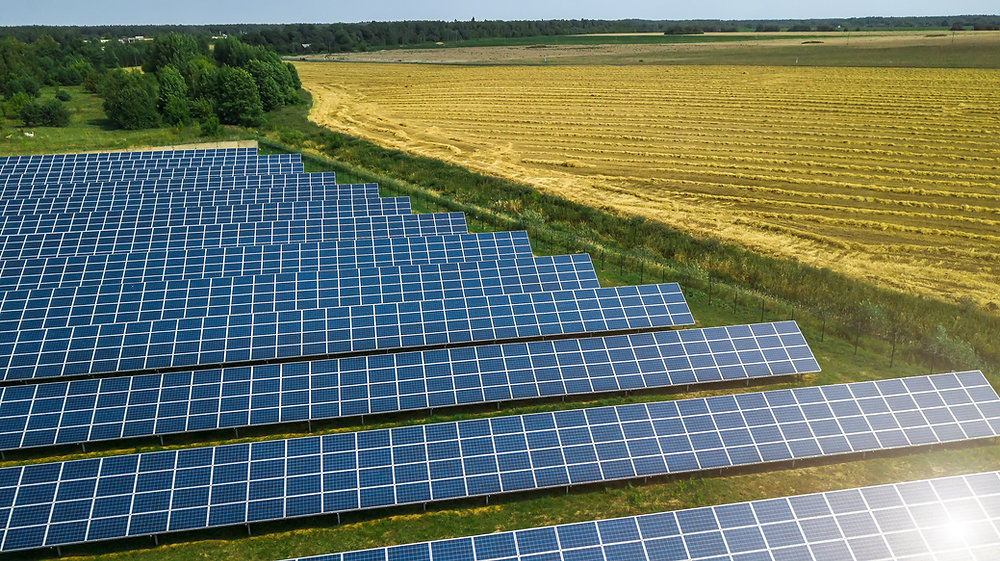 Renewable Energy & Solar
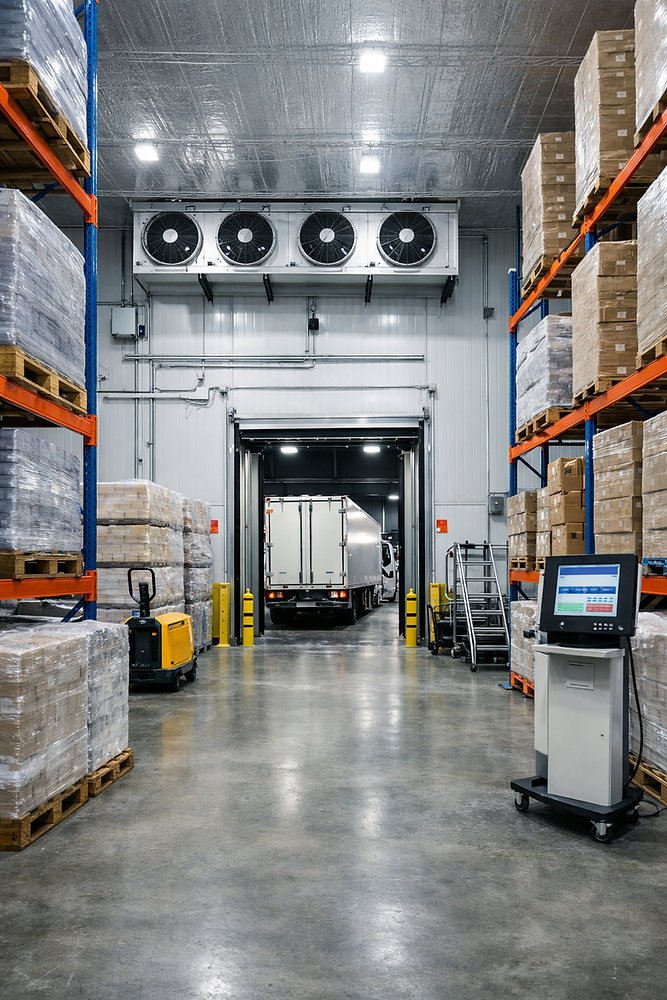 Cold Storage & Logistics
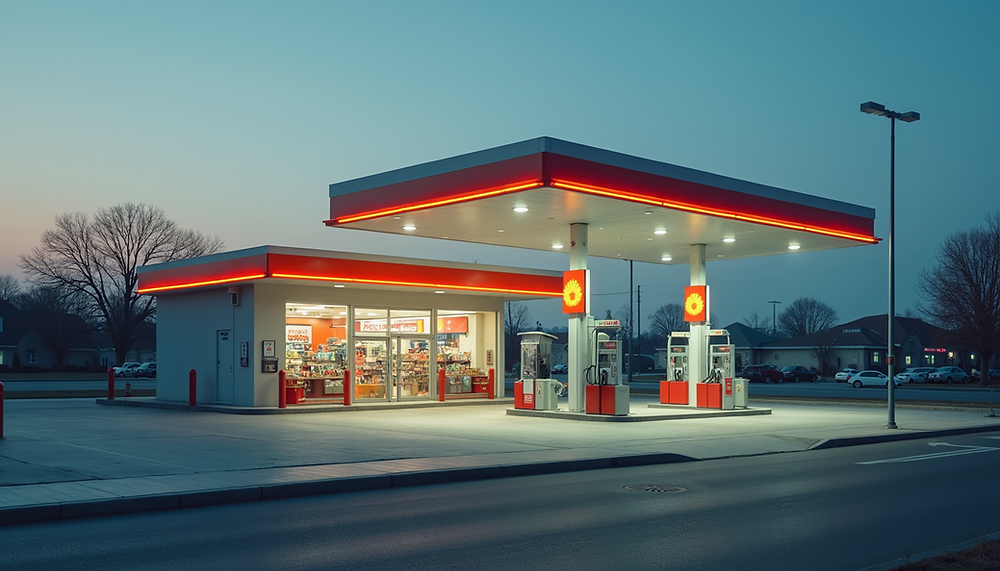 Gas Station & C-Store
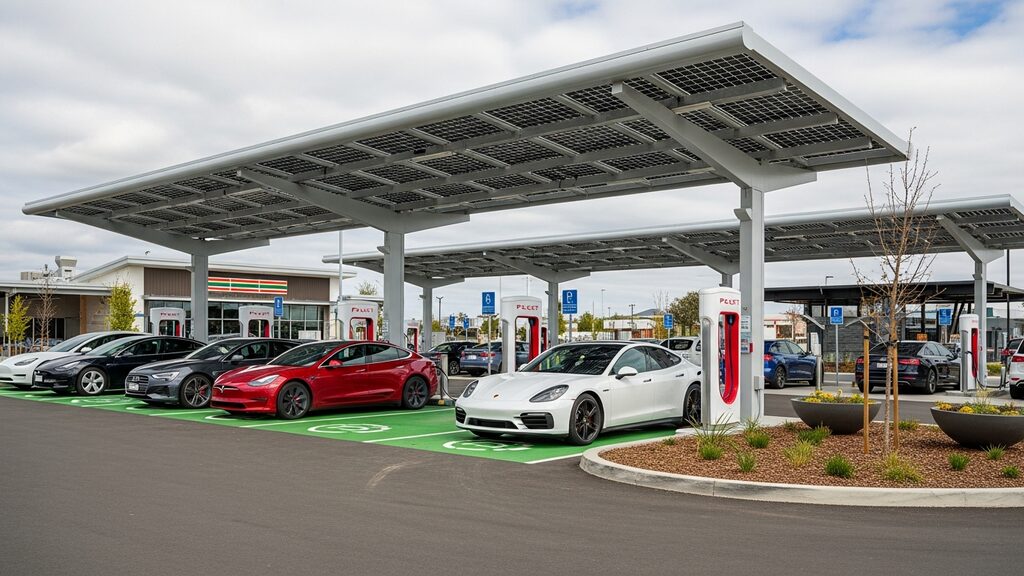 EV Charging
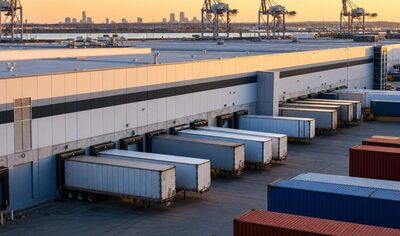 EXIM Bank & Export Manufacturing
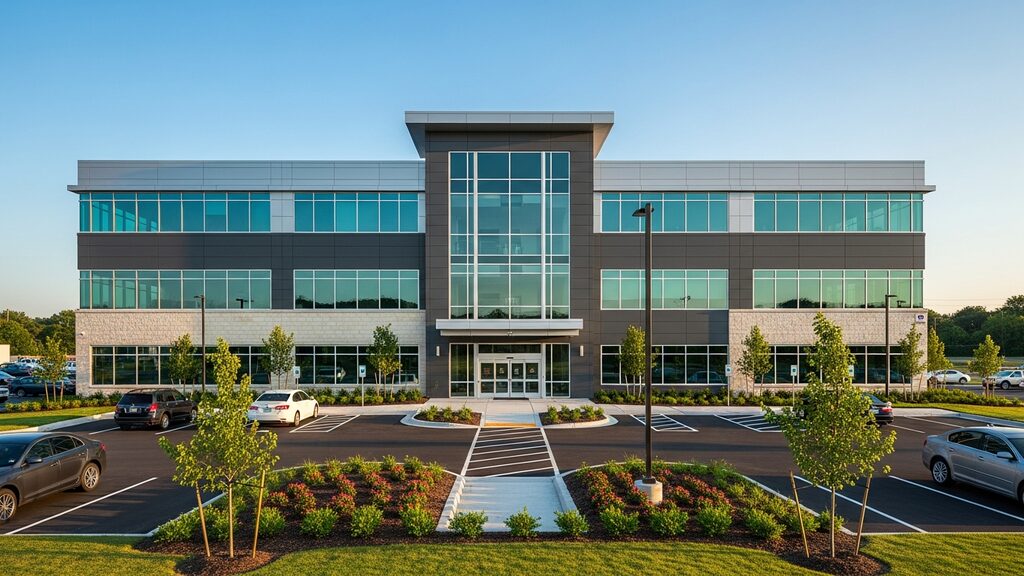 Medical Office
An independent third-party USDA feasibility study, organized to the five factors Rural Development reviewers look for — economic, market, technical, financial and management. 950+ USDA-program studies since 1998, in all fifty states, each delivered with a fixed fee quoted up front.
Seven fixed-fee packages from $1,950 — county, regional, state, and multi-state market intelligence on hospitals and ambulatory surgery centers. Configure your report online, see the price instantly, and receive lender-grade analysis in 3–5 business days. Fifty percent of the purchase price, up to $5,000, may be credited toward a full feasibility study.
Beyond all fifty U.S. states, Wert-Berater prepares bank- and development-finance-grade feasibility studies, market studies, and valuations for projects across the United Kingdom, the European Union, Asia, the Middle East, South and Central America, Canada and Mexico — delivered remotely, in English, to international lender and development-finance standards.
Wert-Berater, Inc. is an independent feasibility study company founded in 1998. The firm has completed 4,000+ engagements and more than 4,000 total engagements across all fifty states and internationally, evaluating $43.8 billion in project value for lenders, agencies, sponsors and investors. The practice is national and remote-delivered: the same analysts, the same evidentiary standard and the same fixed-fee model apply whether a project sits in a major metropolitan market or a rural county.
What distinguishes this feasibility study firm from a business-plan writer or a general consultancy is where the duty runs. The fee is quoted in writing before the work begins and never varies with the finding, so an unfavourable or conditioned determination costs the same as a favourable one — and the firm has delivered all three. Every engagement ships a fully linked financial model with no hard-coded results as a standard deliverable, so an underwriter can change an assumption and watch debt-service coverage move rather than accepting a conclusion on trust. Every determination carries principal sign-off.
Work is organised by the programme that will review it and by the asset being built. Sponsors and lenders financing outside the guarantee programmes should start with conventional bank and commercial lending studies; guaranteed credits are covered on the the applicable SBA SOP requirements and USDA OneRD pages. Where the question is which use a site should carry rather than whether one project works, that is a highest and best use study. Power-constrained and specialised assets such as data centres have their own analytical requirements, and shorter fixed-fee market reports are available where a full study is not yet warranted. The complete practice by project type lists every asset class the firm underwrites, and the published completion record shows the work itself.
Alongside feasibility studies, the firm prepares independent market intelligence: what supply exists, what demand supports it, what pricing and occupancy the market has actually held, and what is being added. Reports are commissioned for a named market and asset type, priced by package, and written by the same analysts who prepare our study work. They are research instruments — they describe a market rather than reaching a feasibility conclusion on one project.
Purchasable packages start at $1,950, county to multi-state, for the seven property-type families in the report builder; other asset classes and site-selection work are commissioned at a fixed fee agreed before work starts. Where the decision needs a conclusion on a specific project rather than a picture of the market, a feasibility study is the right instrument.
Firm-wide engagement figures are distinct from project-specific findings and their stated source periods.
Established in 1998, Wert-Berater, Inc. provides independent, bankable feasibility studies for projects where financing approval, regulatory compliance, and capital risk are material considerations. Over more than a quarter century the firm has completed in excess of four thousand engagements, and its work has supported lender, agency, and institutional decision-making across a wide range of complex, capital-intensive projects, including those subject to SBA, USDA, and conventional bank underwriting review. That body of experience spans commercial real estate, hospitality, marina and recreation, fuel and convenience retail, healthcare and senior living, manufacturing, renewable energy, and agricultural processing, in markets across all fifty states and, on a case-by-case basis, internationally.
Feasibility analysis is our core focus. Supporting disciplines — including commercial appraisal, valuation, and highest and best use analysis — are applied where required to strengthen underwriting credibility and risk assessment. The firm does not rely on borrower-supplied market data; it conducts its own primary and secondary research, benchmarks every operating assumption against recognized sources such as RMA and IBISWorld, and documents the basis for each conclusion so that the analysis survives third-party scrutiny.
What distinguishes the firm is the combination of institutional analytical rigor and genuine independence. Each study is built to institutional analytical standards, applying every necessary and accepted methodology with objectivity and documented reasoning. The financial model underlying every engagement is fully linked and free of hardcoded values, allowing any reviewing party to test the sensitivity of the conclusions to changes in the underlying assumptions.
We focus on delivering defensible, underwriting-credible analysis so decision-makers can allocate capital with confidence. Fiduciary duty runs exclusively to the lender and the agency, and determinations are never revised under commercial pressure. This discipline — independence that is non-negotiable, analysis that is sourced and auditable, and a determination that follows the evidence — is the foundation on which the reputation of the firm with lenders and agencies has been built.
The name Wert-Berater is German for “value advisor” — a deliberate statement of the firm’s function. Wert-Berater, Inc. was founded in 1998 on a conviction formed over sixteen years inside institutional finance: that capital allocation decisions fail not from a lack of optimism, but from a lack of independent, documented analysis. The firm’s founding business plan was narrow by design — serve the lender and the agency, not the borrower; build every conclusion on sourced evidence; and never revise a determination under commercial pressure. That plan has not changed in twenty-eight years.
 ⬇ Download the Firm Brochure
PDF · 23 pages, landscape · the firm, engagement experience, methods, team, and how to order studies. Opens straight after a short form.
⬇ Download the Firm Brochure
PDF · 23 pages, landscape · the firm, engagement experience, methods, team, and how to order studies. Opens straight after a short form.
The firm brochure is issued to named readers rather than published anonymously. Give us your details and both acknowledgements and the PDF opens straight away — there is nothing to wait for.

Mr. Safranek earned graduate qualifications in economics from the London School of Economics and in law from the University of London, following undergraduate studies in English Literature and Economics at Rollins College.
He began his professional career at Lehman Brothers in 1982 as a college intern and has subsequently worked in real estate investment, underwriting, financial analysis, feasibility analysis, and advisory services.
Mr. Safranek later held senior asset management and underwriting roles with Hatfield Philips, Inc., a division of Lehman Brothers, leading risk assessment, asset repositioning, and capital strategy across residential, hospitality, commercial, industrial, energy, and infrastructure assets in Europe, the Middle East, the Americas, and the Caribbean.

Bruce E. Jones has been involved in real estate since 1987, with deep expertise in complex, income-producing, and going-concern assets. He holds the MAI designation from the Appraisal Institute, where he has been a member since 2006. He is an Accredited Senior Appraiser with the American Society of Appraisers, including the ASA Going Concern specialty. A staff member of Wert-Berater, Inc., he is also the owner of Special Purpose Realty Valuation.
Mr. Jones brings more than 12 years of experience as a business and equipment appraiser, enabling comprehensive valuation support for feasibility studies involving real estate, operating businesses, and tangible assets. A Certified General Real Estate Appraiser licensed in multiple states, he has extensive experience providing valuation analysis in adversarial and highly scrutinized contexts, including litigation support and expert testimony.
Credentials: MAI, Appraisal Institute · Accredited Senior Appraiser (ASA), Going Concern specialty · Certified General Real Estate Appraiser (multi-state) · business and equipment appraisal expertise.
Wert-Berater feasibility studies are produced by a senior-led analytical team. While engagements are directed and reviewed at the senior level by the President, the analytical process is supported by experienced specialists who contribute domain-specific research, modeling, and validation. Team members are engaged exclusively on finance-driven feasibility assignments where accuracy, defensibility, and credibility are critical.

Bohdan Syvka leads the market and competitive analysis underpinning Wert-Berater feasibility studies. A degree candidate in Economics at the University of London, he conducts the independent primary and secondary research the firm relies upon in place of borrower-supplied projections.
His work spans trade-area definition, demographic and demand analysis, comparable rate and absorption studies, and competitive supply assessment across the firm's SBA, USDA, EB-5, and conventional engagements. He benchmarks each market against RMA and IBISWorld data and documents the sourcing behind every demand conclusion so the analysis withstands lender and agency review.
Focus: Market & competitive analysis · demand and absorption studies · demographic and trade-area research · RMA / IBISWorld benchmarking.

Able Taye serves as a senior market analyst supporting Wert-Berater's feasibility studies, contributing primary and secondary research, data analysis, and competitive assessment across the firm's program areas. He holds a BA from Lion Hotel and Tourism College, Ethiopia — hospitality training that informs his work on the firm’s lodging and tourism-related engagements.
His work reinforces the firm's commitment to independent, evidence-based conclusions, with market data drawn from recognized sources and benchmarked for credibility in lender- and agency-reviewed financing environments.
Focus: Market & competitive analysis · primary and secondary research · data and demographic analysis.

Alema Shaimerdenova has been with Wert-Berater since 2013, building the firm’s financial models and leading its risk analysis across every sector the practice serves — hospitality, fuel and travel centers, marinas and storage, healthcare and senior living, manufacturing, agriculture, and beyond.
She holds an MBA and a BS in Finance, and her work anchors the firm’s coverage, sensitivity, and stress analysis — the architecture that lets an underwriter change any assumption and watch the determination respond. A risk-analysis specialist, she pressure-tests every projection before it carries the firm’s signature.

Deyvid Stratev supports Wert-Berater’s feasibility engagements as a junior research analyst, contributing primary and secondary research, data collection and verification, and competitive-supply documentation across the firm’s program areas. He is currently attending the D.A. Tsenov Academy of Economics in Svishtov, Bulgaria, pairing formal economics training with the firm’s applied research practice.
His work feeds the evidentiary base of the firm’s studies — sourced demographics, verified comparables, and documented market evidence prepared to the standard lender and agency review requires.
Focus: Primary & secondary research · data collection and verification · competitive-supply documentation.

Martin Zlatev supports Wert-Berater’s feasibility engagements as a junior research analyst, contributing primary and secondary research, data collection and verification, and competitive-supply documentation across the firm’s program areas. He is currently attending the D.A. Tsenov Academy of Economics in Svishtov, Bulgaria, pairing formal economics training with the firm’s applied research practice.
His work feeds the evidentiary base of the firm’s studies — sourced demographics, verified comparables, and documented market evidence prepared to the standard lender and agency review requires.
Focus: Primary & secondary research · data collection and verification · competitive-supply documentation.

Travis Miller assists clients with feasibility studies and Wert-Berater’s other services. He holds a BA from Rollins College and brings a decade of experience in SBA and USDA loan-request placements.
As a Business Development Associate, he helps clients connect their project needs with the firm’s services and coordinate the next steps with the appropriate team.
Direct: (267) 746-0375
Email: tmiller@wert-berater.com
A defined, repeatable market risk report on any property type we work in, in one market. A question we have already framed and a published structure — useful for screening a market, monitoring a position, or supporting a file already in progress. We show what we already hold for your market before an order is taken, and the desk agrees the scope, the price and a delivery date with you.
See the product →For family offices, funds, lenders, and sponsors: the firm refreshes the fully linked model with each quarter’s actuals and reports variance, coverage, covenant compliance, and market trajectory — independent, principal-reviewed, fixed quarterly retainers. Learn about monitoring engagements →
Every quantitative claim in a Wert-Berater study traces to a published, independently verifiable source — and the citation appears where the claim does. A reviewer who can pull the same table from the same agency and reach the same figure extends the study a trust no narrative can manufacture.
The core is the federal statistical system: the Census Bureau for demographics, establishments, and the permit pipeline; the Bureau of Labor Statistics for employment, wages, and escalation; the Bureau of Economic Analysis for regional income and the RIMS II multipliers behind economic-impact and EB-5 work.
Sector evidence comes from the agency that actually measures the sector — state DOT traffic counts for fuel and roadside studies, EIA energy series, FEMA flood determinations, USDA data for agriculture, CMS and state licensure records for healthcare, and state registration files for marina and storage demand.
Above the public record sit the recognized benchmarks — RMA Annual Statement Studies, IBISWorld, and national association series — plus the firm’s own field surveys, rate shops, and assessor verification, documented to the same audit standard.
Every assumption carries its source and vintage, so the reviewer can check both the figure and its freshness. Material findings are triangulated: one source is a hypothesis; two independent sources — a DOT count and observed volumes, a registration base and competitor occupancy — make a finding.
Published coefficients feed the accepted formulas with the arithmetic shown, and every operating ratio is tested against its benchmark corridor — any figure outside the range is justified in writing or revised. The fully linked model preserves the chain from cited input to coverage ratio, so evidence and conclusion can never drift apart.
The firm applies every analysis and evaluation methodology its reviewing audience accepts, matched to the asset class rather than forced onto it — and the formulas appear in the study so the committee can audit the computation.
On the market side: traffic-count capture for fuel and roadside retail; penetration and fair-share analysis for lodging; saturation and absorption arithmetic for storage; age- and income-qualified penetration for senior housing and healthcare; registration-base capture for marinas; demonstrated absorption pace for condominium sell-outs; probabilistic P50/P90 resource assessment for energy; and supply-shed mass balance for processing and agriculture.
On the financial and evaluation side: ten-year discounted cash flow with valuation reconciliation; direct capitalization cross-checked against the appraisal’s approaches; sensitivity analysis at ±5, 10, and 15 percent; interest-rate stress to +3.0 percent; Monte Carlo simulation with disclosed input distributions; Altman Z-Score trajectory; full ratio analysis with written interpretation; liquidation analysis of orderly and forced recovery; and RIMS II input-output modeling for economic impact and job creation. Whatever methodology the program, the lender, or the asset demands — it is in the toolkit, and it is shown in full.
The studies are checkable. An underwriter can reproduce any demand figure independently, which converts review from an argument about credibility into a fast verification exercise — fewer committee question cycles, cleaner files for loan review and participations.
The same discipline holds in adversarial settings where weak sourcing collapses: audit, agency oversight, litigation, secondary-market diligence. Investors read it identically — a projection built from the public record is an instrument they can underwrite. Credibility here is not rhetorical; it is architectural.
SBA feasibility scope and repayment tests depend on the program, transaction and applicable instructions; see the SBA feasibility study guide for source-qualified distinctions rather than a universal study mandate or coverage floor. USDA’s 7 CFR Part 5001 requires each feasibility factor evidenced for agency review; the firm’s studies map source-by-source onto that framework, which is why 823 have passed through Rural Development financing.
EB-5 findings rest on the BEA RIMS II methodology adjudicators recognize. Conventional credits meet the interagency expectation of documented market analysis, with sourcing aligned to the appraisal’s USPAP evidence standards — reviewed by the firm’s MAI-designated valuation advisor — so the two documents in the credit file corroborate each other. One evidentiary standard satisfies every reviewer who will ever open the file.
Due to space constraints, this map presents only about 10% of our completed project experience—a representative selection, not a complete record of our completed reports. Wert-Berater complies with applicable non-disclosure agreements (NDAs), and confidential client and project information is not disclosed.
Wert-Berater experience spans SBA, USDA, EB-5, conventional, institutional, and tribal financing environments across commercial real estate, energy, manufacturing, hospitality, marina, and agricultural projects. The following is a representative selection.

The fastest way to start. Tell us the project type, location, and financing program — a fixed-fee quote is emailed to you within one business day. No call required.
Fees are quoted per engagement — no success fees, no contingent pricing. Tell us the program, the approximate total project cost, the state, and your timing, and Donald Safranek, MSc will respond with an engagement-specific quote within one business day. Rush delivery is accepted on a case-by-case basis for an additional fixed fee — quoted up front, never contingent on findings.
For questions, scope discussions, or anything that is not yet a quote request. Your message goes directly to the President’s desk.
Send plans, budgets, financial statements, or appraisals securely. Files arrive attached to your name and project — nothing is shared outside the engagement.
For institutional procurement — formal solicitations, qualifications packages, and sole-source engagements.
Wert-Berater regularly supports municipalities, public agencies, and tribal governments and enterprises — RFPs, RFQs, and sole-source inquiries are welcome, and studies are prepared to the procurement and review standards public and tribal financing requires.
Issuing a request for proposal for an independent feasibility study? Submit it here with any attachments — a substantive response, proposal or qualification questions, follows within one business day. Rush engagements for deals already in underwriting are accepted case by case for an additional fixed fee.
Confidentiality before you share anything: e-sign in one minute and a fully counter-signed PDF is emailed to you instantly.
Before sharing confidential project information, you may execute a mutual NDA with Wert-Berater, Inc. instantly. Complete the form below and type your full legal name as your electronic signature; the Agreement is counter-signed automatically by Donald Safranek, MSc, President, and a fully executed, branded PDF — including the legal disclosure required for your state — is generated and emailed to you on the spot. A copy is retained by the firm.
Summary of the Mutual NDA you are executing (the PDF contains the complete text): mutual confidentiality of non-public information exchanged to evaluate a potential feasibility engagement; standard exclusions (public, previously known, independently developed, or third-party information); a permitted-disclosure carve-out reflecting the firm’s fiduciary duty — the firm may disclose Counterparty information to the lender, CDC, or government agency involved in the contemplated financing, and either party may disclose as required by law; no license granted and no obligation to proceed; a 3-year confidentiality term from last disclosure; injunctive relief available; a state-specific electronic-signature disclosure under the federal E-SIGN Act and your state’s electronic transactions law (UETA, or ESRA for New York); governing law California, venue Orange County.
Prefer to call, write, or visit? Direct lines, the firm’s address, and response standards.
| Principal | Donald Safranek, MSc — President |
| California office | 1968 South Coast Hwy, Ste 2382, Laguna Beach, CA 92651 |
| New Jersey office | 111 Town Square Pl Ste 1238 PMB 657834, Jersey City, NJ 07310 |
| Texas office | 539 W. Commerce St #8486, Dallas, TX 75208 |
| Florida office | 66 W Flagler Street, Suite 900, PMB 12704, Miami, FL 33130 |
| Telephone | +1 310-857-2443 ext. 800 |
| Website | www.wert-berater.com |
| International | Accepted case-by-case · experience is global |
California, New Jersey, Texas, and Florida — with engagements nationwide and, on a case-by-case basis, internationally.
The SBA feasibility study establishes whether a proposed project is economically viable and capable of supporting the requested debt. Wert-Berater prepares the study to the analytical depth expected by Certified Development Companies, participating lenders, and the SBA Loan Guaranty Processing Center, anticipating the questions a credit officer and an SBA reviewer will raise and answering each with sourced, defensible analysis.
Both the 504 debenture program and the 7(a) general business loan program require independent feasibility analysis where the project involves a new business, a change of ownership, or where the lender exercises discretion under the applicable SOP. The study covers market feasibility, financial feasibility, and a complete project financial model, with every operating assumption benchmarked to RMA and IBISWorld data.
On the market side, the analysis defines the trade area, quantifies demand, profiles the competitive supply, and reconciles the project program against what the market will absorb. On the financial side, it carries the project through a 10-year pro forma, operating and global debt-service coverage, sensitivity at three stress levels, interest-rate stress testing, Monte Carlo simulation, discounted cash flow, and an Altman Z-Score.
The result is a determination a lender and the agency can rely upon — favorable, favorable with conditions, or unfavorable — with the basis for that determination documented in full so it withstands review at every level without rounds of revision.
| Governing authority | the applicable SBA SOP |
| DSCR minimum | 1.15x operating / 1.00x global |
| Deliverable | PPTX study + linked XLSX model |
| Typical timeline | 10–15 business days |
USDA Rural Development requires independent feasibility analysis for guaranteed loans and grants under its business and community programs. Wert-Berater prepares each study to the structure and evidentiary standard expected by the Rural Development State Office and the national office, in full conformity with RD Staff Instruction 5001.
The study documents market demand, technical and operational viability, management capacity, and financial sustainability, with every conclusion supported by independent research rather than borrower-supplied projections. Each operating assumption is benchmarked to recognized industry data and any deviation is explained with market-specific evidence.
Because USDA engagements frequently involve rural markets where comparable data is thinner than in metropolitan areas, the firm places particular emphasis on primary research — direct investigation of the trade area, the competitive set, and the demand drivers — so that the demand conclusion rests on evidence rather than assumption.
The financial analysis carries the project through a 10-year pro forma, debt-service coverage measured to the applicable program requirement, sensitivity and stress testing, and a plainly stated risk analysis, producing a determination structured for direct submission with the lender or borrower application.
| Governing authority | USDA RD Staff Instruction 5001 |
| DSCR minimum | Program-dependent |
| Programs | B&I · CF · REAP · VAPG |
| Typical timeline | 10–20 business days |
The EB-5 program requires that each qualifying investment create or preserve at least the statutory minimum number of jobs. Wert-Berater prepares feasibility studies that document the commercial viability of the underlying project and support the job-creation methodology used in the economic analysis, to a standard consistent with securities-grade due diligence.
The study is structured to integrate with the business plan, economic impact report, and offering materials prepared by immigration and securities counsel, so that the feasibility conclusion, the job-creation model, and the offering disclosures present a single, internally consistent picture of the project.
Commercial viability is the foundation of any defensible EB-5 analysis: if the project cannot succeed on its own economic merits, the job creation that supports the petition is at risk. The firm therefore tests the project as it would any other financing-critical engagement, with independent market analysis and a complete financial model.
From that foundation the study addresses targeted employment area context, the methodology underlying direct and indirect job creation, investment viability, and the risk factors that counsel must disclose, producing analysis that supports both the immigration filing and the investor diligence process.
| Governing framework | USCIS / INA 203(b)(5) |
| Job standard | 10 jobs per qualifying investment |
| Deliverable | Feasibility study + supporting model |
| Typical timeline | 15–25 business days |
The highest and best use study tests development alternatives against the four classic criteria — legally permissible, physically possible, financially feasible, and maximally productive — and identifies the use that produces the greatest supportable value. Wert-Berater applies appraisal-grade rigor, with each scenario carried through a full financial model rather than a back-of-envelope estimate.
HBU analysis is frequently required where a lender, agency, or institutional investor must understand the optimal program for a site before committing capital, particularly on land assemblages or transitional properties where the existing use may not represent the property to its best advantage.
The analysis begins with what the law and the physical site permit, then narrows to what is financially feasible given current market conditions and construction economics, and finally identifies which of the feasible alternatives is maximally productive. Each candidate use is modeled independently so the alternatives can be compared on a consistent basis.
The study concludes with a reconciliation that explains why the selected use prevails over the alternatives, documented to a standard defensible in lender, agency, or litigation review.
| Methodology | All necessary and accepted methodologies |
| Output | Multi-scenario comparison + conclusion |
| Deliverable | Study + model per scenario |
| Typical timeline | 12–20 business days |
Conventional lenders increasingly require independent third-party feasibility analysis for complex or higher-risk transactions, particularly construction, single-tenant, and specialized-use projects where the bank cannot rely on a simple comparable. Wert-Berater prepares studies to credit-committee standards, with a debt-service-coverage floor of 1.20x and full sensitivity analysis.
The study is designed to integrate directly into the credit memorandum and underwriting file, presenting the market and financial analysis in the form and at the depth a credit committee expects so that it strengthens rather than complicates the approval process.
The market section establishes demand and competitive position through independent research; the financial section carries the project through a 10-year pro forma, coverage analysis, three-level sensitivity, and interest-rate stress testing sized to the proposed structure.
Because conventional transactions are not bound by a single agency standard, the firm tailors the analysis to the specific concerns of the lender and the transaction, while holding to the same independence and documentation discipline applied across every engagement.
| Standard | Bank / credit committee grade |
| DSCR minimum | 1.20x |
| Deliverable | PPTX study + linked XLSX model |
| Typical timeline | 10–15 business days |
Many projects benefit from an independent planning study before financing is sought. Wert-Berater evaluates site characteristics, market demand, and preliminary financial feasibility so owners and developers can refine the program, test their assumptions, and approach lenders with confidence rather than discovering a fatal flaw during underwriting.
The planning study is structured so its analysis can be carried forward into a full SBA, USDA, or conventional feasibility study when financing is pursued, avoiding duplicated work and preserving the research investment as the project advances.
At this stage the emphasis is on identifying the questions that will determine whether the project is financeable: Is there genuine demand? Does the site support the intended program? Do the preliminary economics clear the coverage thresholds a lender will require?
The deliverable gives the owner an honest, independent read on these questions and a clear path to financing, including the additional analysis and documentation a formal feasibility study will require.
| Stage | Pre-financing planning |
| Output | Planning study + preliminary model |
| Carries forward | Into full feasibility study |
| Typical timeline | 7–15 business days |
Where a project is funded through equity rather than, or in addition to, debt, Wert-Berater prepares an investment prospectus to institutional documentation standards. The analysis covers market opportunity, project structure, pro forma returns, and risk-adjusted performance, presented in the form institutional capital expects.
The prospectus is designed to integrate into institutional diligence processes and supports equity structuring for joint ventures, family offices, pension funds, and private capital, giving each party a common, independently prepared basis for evaluating the opportunity.
The returns analysis spans internal rate of return, net present value, cash-on-cash yield, and equity multiple, modeled across base, conservative, and upside scenarios so that the distribution of outcomes — not merely the expected case — is visible to the investor.
Because equity capital bears first loss, the analysis gives particular attention to the downside: the assumptions that matter most, the sensitivity of returns to each, and the conditions under which the investment thesis would fail. This candor is what distinguishes an independent prospectus from a marketing document.
| Standard | Institutional documentation |
| Audience | Institutional / private equity |
| Metrics | IRR · NPV · CoC · equity multiple |
| Typical timeline | 15–25 business days |
Economic impact studies quantify the broader economic contribution of a project to its region, measuring not only the jobs and output created directly by the project but the indirect and induced activity that follows through the regional economy. Wert-Berater produces these analyses using IMPLAN, RIMS II, or REMI frameworks and cites them to recognized state and federal standards.
Economic impact analysis is frequently required as a component of USDA Business & Industry and EB-5 submissions, and is used independently by public agencies, economic development authorities, and institutional investors evaluating the public and private benefit of a project.
The analysis distinguishes the construction phase from the ongoing operating phase, reports employment, output, value-added, and fiscal (tax revenue) effects, and documents the multiplier methodology so that the results can be independently verified rather than taken on faith.
Where the study supports an EB-5 petition, the job-creation figures are developed to integrate directly with the feasibility study and the business plan, ensuring the immigration filing rests on a single consistent economic model.
| Frameworks | IMPLAN · RIMS II · REMI |
| Measures | Employment · output · fiscal |
| Common use | USDA B&I · EB-5 · public agency |
| Typical timeline | 10–18 business days |
Every Wert-Berater model is built so that no value is hardcoded: all figures derive from a single Assumptions tab, every cell is formula-driven, and the entire workbook recalculates to zero errors. Models span 37 or more tabs and are audited against a 22-point checklist before release, so the deliverable is an auditable analytical instrument rather than a static spreadsheet.
The model can be delivered as a component of a feasibility study or as a standalone deliverable for projects that require institution-grade pro forma architecture, including sponsor-side planning, investor diligence, and lender underwriting support.
The architecture is deliberately transparent: because every output traces to a documented input, a reviewing party can change any driver and watch coverage, returns, and break-even respond immediately. This is the difference between a model that can be interrogated and one that must simply be trusted.
The analytical suite includes a 10-year year-by-year pro forma, construction draw schedule, sensitivity at three stress levels, interest-rate stress testing, Monte Carlo simulation, discounted cash flow valuation, Altman Z-Score, and complete ratio tables, each accompanied by narrative commentary explaining its meaning for the decision at hand.
| Architecture | 37+ tabs, fully linked |
| Discipline | Zero hardcode, formula-driven |
| QC | 22-point model audit, zero-error recalc |
| Delivery | Standalone or with study |
The SBA 504 program finances owner-occupied real estate and long-life equipment through a Certified Development Company debenture paired with a third-party lender loan, giving small businesses access to long-term, fixed-rate financing on favorable terms. Independent analysis may be requested according to the program, transaction and lender/CDC or SBA instructions. Projection reliance, a startup or a special-purpose property alone does not establish an automatic independent-study mandate.
Wert-Berater has prepared 504 studies across the full range of eligible project types, including hospitality, marina and recreation, fuel and convenience retail, food and beverage, healthcare and senior living, industrial, and commercial real estate, in markets nationwide.
Each study tests the project against the operating and global coverage thresholds the program requires and documents the market demand, competitive position, and management capacity on which the projections depend.
The deliverable is structured for the CDC, the participating lender, and the SBA processing center, anticipating the standard areas of review so the analysis moves through approval efficiently.
| Authority | the applicable SBA SOP |
| DSCR | 1.15x operating / 1.00x global |
| Structure | CDC debenture + lender loan |
| Use | Owner-occupied fixed assets |
The 7(a) program is the primary and most flexible loan guaranty program administered by the SBA, supporting working capital, business acquisition, real estate, and equipment financing under a single structure. Feasibility requirements parallel the 504 program under the applicable SBA SOP, with independent analysis expected for new businesses, changes of ownership, and higher-risk transactions.
Wert-Berater prepares 7(a) studies for franchises, specialty retail, professional services, and complex acquisition transactions, each structured for lender underwriting and SBA Loan Guaranty Processing Center review.
Acquisition and change-of-ownership transactions receive particular attention, since the projections must reconcile historical performance with the buyer business plan and demonstrate that the combined entity can service the proposed debt.
As in every engagement, the market and financial conclusions rest on independent research and a fully linked model, producing a determination a lender can carry into committee with confidence.
| Authority | the applicable SBA SOP |
| DSCR | 1.15x operating / 1.00x global |
| Structure | Lender loan with SBA guaranty |
| Use | Broadest SBA eligibility |
The USDA Business & Industry program guarantees loans that create or preserve employment and improve the economic and environmental climate in rural communities. Feasibility requirements are governed by RD Staff Instruction 5001, and the study must demonstrate both market and technical viability to the satisfaction of the Rural Development State Office.
Wert-Berater has prepared B&I studies for marina expansions, agricultural processors, rural healthcare, food distribution, manufacturing, and utility-scale projects across a wide range of rural markets.
Because B&I projects often anchor employment in smaller communities, the analysis gives close attention to the durability of demand and the resilience of the project under adverse conditions, documented through sensitivity and stress testing.
The financial analysis is sized to the coverage expectation appropriate to the guarantee, and the entire study is structured for direct submission through the participating lender to the agency.
| Authority | USDA RD Staff Instruction 5001 |
| DSCR | Varies by guarantee level |
| Eligibility | Rural areas, defined population |
| Use | Business development / job creation |
The Community Facilities program finances essential community facilities — healthcare, public safety, educational, and other public-benefit infrastructure — in rural areas. Feasibility studies address community need, service-area demographics, and financial sustainability, demonstrating that the facility is both warranted and able to sustain itself over the life of the financing.
Wert-Berater prepares CF studies to document the demand for and sustainability of the proposed facility under the requirements of the program, with conclusions grounded in independent demographic and service-area analysis.
Because these facilities serve a public function rather than a purely commercial one, the analysis frames sustainability in terms of the revenue sources available to the borrower, whether fees, tax support, or program reimbursement, and tests their adequacy against operating cost.
The study is structured for the lender or public and non-profit borrower and for submission to USDA Rural Development, with the community-need case documented to agency expectations.
| Authority | USDA RD Staff Instruction 5001 |
| Focus | Essential community facilities |
| Eligibility | Rural areas, public benefit |
| Use | Healthcare · safety · education |
The Rural Energy for America Program provides grants and loan guarantees for renewable energy systems and energy efficiency improvements at agricultural operations and rural small businesses. Feasibility studies document energy production projections, payback periods, and technical viability to the standard the program requires.
Wert-Berater prepares REAP feasibility and technical reports to the standard required for program application and lender review, integrating the energy analysis with the financial case for the investment.
The analysis quantifies expected energy production or savings, translates that into a financial return and payback period, and assesses the technical viability of the proposed system so that the application rests on engineering as well as economics.
Where the project also requires debt, the study carries the supporting financial analysis to the depth a participating lender expects, producing a single document that serves both the program application and the credit review.
| Authority | USDA RD Staff Instruction 5001 |
| Focus | Renewable energy / efficiency |
| Eligibility | Ag producers, rural small business |
| Output | Energy + financial feasibility |
The Value-Added Producer Grant program supports agricultural producers who are entering value-added processing activities — converting raw commodities into higher-value finished or intermediate products. Feasibility studies document market demand, operational viability, and the benefit accruing to the producer from the value-added enterprise.
Wert-Berater prepares VAPG feasibility studies to the structure and evidentiary standard required for program application, with conclusions supported by independent market research.
The market analysis establishes that genuine demand exists for the value-added product and that the producer can reach it; the operational analysis confirms that the processing activity is viable at the scale proposed; and the financial analysis quantifies the resulting producer benefit.
Together these elements form the evidentiary basis the program requires, presented in the form expected for application review.
| Authority | USDA RD Staff Instruction 5001 |
| Focus | Value-added processing |
| Eligibility | Agricultural producers |
| Output | Demand + viability feasibility |
The EB-5 program grants conditional permanent residency to foreign investors whose qualifying investment creates the statutory minimum number of jobs. Feasibility studies document investment viability, job-creation methodology, targeted employment area qualification, and project risk, forming part of the evidentiary record before USCIS.
Wert-Berater prepares EB-5 feasibility analysis to a standard consistent with securities counsel and USCIS adjudication requirements, structured to integrate with the business plan, economic impact report, and offering materials.
The viability analysis tests the project on its own commercial merits, since the job creation that supports each petition depends on the project actually performing as projected. The job-creation methodology is then developed transparently so that the basis for the employment figures is clear to the adjudicator.
The study addresses the project risk factors that counsel must disclose to investors, producing analysis that supports the immigration filing and the investor diligence process alike.
| Authority | USCIS / INA 203(b)(5) |
| Job standard | 10 jobs per investment |
| Focus | Foreign investor financing |
| Output | Viability + job creation |
Conventional financing covers bank and credit union commercial real estate and business acquisition loans made outside the SBA and USDA guaranty programs, where the institution bears the full credit risk. Studies are produced to credit-committee standards with a debt-service-coverage floor of 1.20x and full sensitivity analysis.
Wert-Berater prepares conventional studies that integrate directly into the credit memorandum and underwriting file, presenting the analysis in the form and at the depth a credit committee expects.
Because conventional transactions are not bound by a single agency standard, the firm tailors the scope to the specific concerns of the lender and the transaction — construction risk, single-tenant exposure, specialized use, or absorption — while holding to the same independence and documentation discipline applied throughout.
The market and financial sections together give the institution an independent read on whether the project supports the proposed debt, with the conclusions traceable to documented research and a fully linked model.
| Standard | Bank / credit committee grade |
| DSCR | 1.20x minimum |
| Structure | Conventional bank / CU loan |
| Use | CRE / business acquisition |
For equity-funded projects, Wert-Berater prepares investment prospectuses and capital feasibility analyses to institutional documentation standards. The analysis spans internal rate of return, net present value, cash-on-cash yield, and equity multiple modeling across base, conservative, and upside scenarios, so the full distribution of outcomes is visible rather than a single expected case.
These engagements support joint ventures, family offices, pension funds, and tribal financing environments evaluating complex project structures, providing each participant a common, independently prepared basis for the decision.
The analysis gives particular attention to the downside, identifying the assumptions that most affect returns and the conditions under which the investment thesis would fail, because equity capital bears first loss and informed investors require that candor.
The result is documentation that withstands institutional diligence and supports the structuring of the equity, presented to the same standard the firm applies to its lender- and agency-reviewed work.
| Standard | Institutional documentation |
| Audience | Institutional / private equity |
| Metrics | IRR · NPV · CoC · equity multiple |
| Use | Equity / JV structuring |
The experience of the firm extends beyond domestic United States markets. International assignments — including cross-border infrastructure, foreign investment review, and internationally sourced EB-5 projects — are accepted on a case-by-case basis following a scope and data-availability review at qualification, since the depth and reliability of market data vary considerably by jurisdiction.
The same institutional analytical standards apply regardless of geography, and the firm is candid at intake about where data limitations would constrain the analysis so that expectations are set before the engagement begins.
Leadership experience spans Europe, the Middle East, the Americas, and the Caribbean, drawn from senior asset-management and underwriting roles across residential, hospitality, commercial, industrial, energy, and infrastructure assets in those regions.
That background allows the firm to assess cross-border projects with an understanding of the currency, regulatory, and market-structure considerations that distinguish international work from domestic engagements, while holding to the same independence and documentation discipline throughout.
| Basis | Case-by-case acceptance |
| Standard | Institutional analytical standards |
| Experience | Europe · MENA · Americas · Caribbean |
| Qualification | Scope + data review required |
| Direct | +1 310-857-2443 ext. 800 |
| Format | 30-minute Zoom · conducted by the principal |

A completed municipal hotel feasibility assessment in Belle Glade, Florida, received a FAVORABLE WITH CONDITIONS determination. The analysis found lodging demand, while an unsubsidized new build did not meet the required equity return; a public-capital path and an existing-property conversion remain conditional alternatives.
This is an anonymized summary of a completed engagement. The full anonymized case study — market analysis, financial structure, and the feasibility determination — is published on our blog.

Wert-Berater, Inc. prepared an independent feasibility study for a $32.2 million pyrolysis and biochar enhanced-efficiency fertilizer manufacturing expansion at an operating plant in Jacksonville, Duval County, Florida, supporting a USDA FIELDS cost-share grant application and a USDA Business & Industry guaranteed term loan. The study evaluated economic, market, technical, financial, and management feasibility against federal program standards, rendering a weighted score of 3.72 of 5.00 and a determination of Conditionally Favorable, restating to Favorable upon satisfaction of three conditions precedent. Steady-state projections reflect $56.3 million in operating revenue, a 65.1% EBITDA margin, and first-production-year global debt-service coverage of 2.66x under a deliberately harsh full-payment convention against a 1.25x covenant.
This is an anonymized summary of a completed engagement. The full anonymized case study — market analysis, financial structure, and the feasibility determination — is published on our blog.
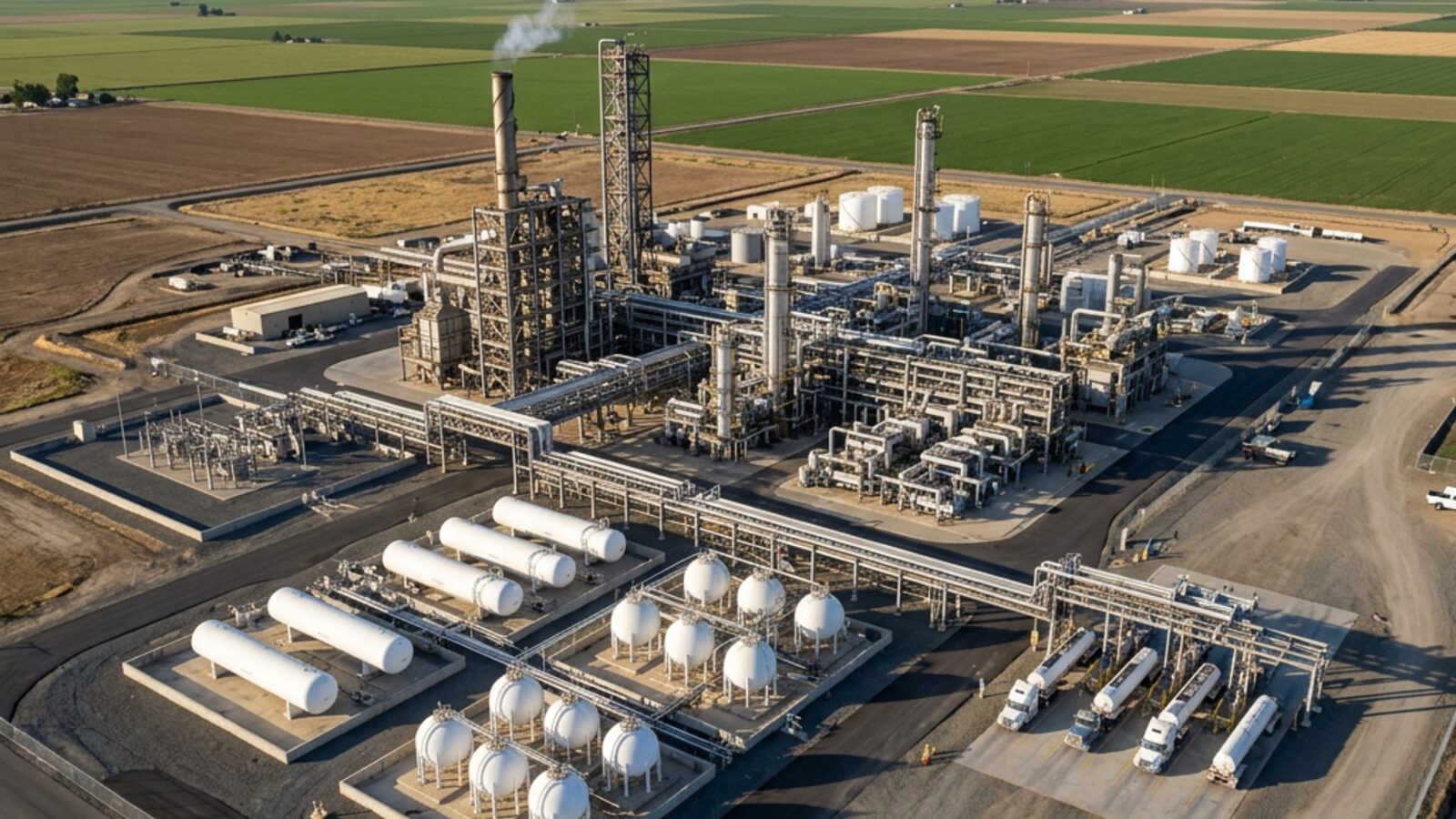
Wert-Berater, Inc. prepared an independent feasibility study for a proposed low-carbon anhydrous ammonia production facility in Kern County, California, in support of a USDA Fertilizer Investment and Expansion for Long-term Domestic Supply (FIELDS) program application and for prospective lender review. The facility is designed to produce approximately 196,000 metric tonnes of anhydrous ammonia per year using a patented partial-oxidation process with carbon capture and geologic sequestration, qualifying for federal clean-hydrogen production credits. The overall determination rendered is Conditionally Feasible, with each of five analytical sections returning Favorable With Conditions against the FIELDS Feasibility Study Guide's prescribed elements.
This is an anonymized summary of a completed engagement. The full anonymized case study — market analysis, financial structure, and the feasibility determination — is published on our blog.
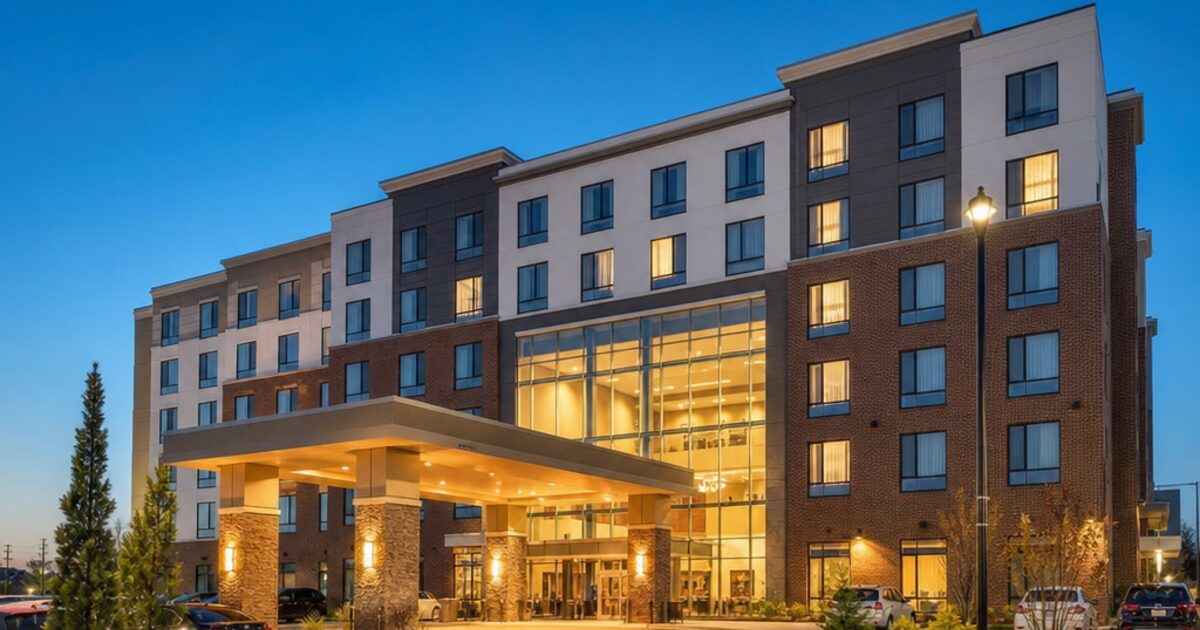
Wert-Berater prepared an independent SBA 504 feasibility study for a proposed 44-room ground-up select-service hotel with café and event room in downtown Seward, Alaska. The study evaluated economic, market, technical, financial, and management feasibility against SBA SOP 50 10 8 standards, replacing the sponsor's unsupported assumptions with analyst-developed figures throughout. The determination is Feasible Subject to Stated Conditions, contingent on verification of total project cost, program-minimum equity injection, a funded two-year debt-service reserve, and nine additional documented conditions precedent.
This is an anonymized summary of a completed engagement. The full anonymized case study — market analysis, financial structure, and the feasibility determination — is published on our blog.

Wert-Berater, Inc. completed an independent feasibility study for a proposed wedding and event venue on a seven-acre site in the Tomball corridor of Harris County, Texas, evaluating a conventional first-mortgage loan against a total project cost of approximately $15.7 million. The study's determination is Favorable Subject to Conditions, as the project clears the lender's 1.20x debt-service coverage covenant under the borrower's demand case but fails materially under the study's own evidence-based demand case. Five conditions precedent—led by a pre-sold pipeline of signed wedding contracts with deposits—must be satisfied before the full loan amount can be supported.
This is an anonymized summary of a completed engagement. The full anonymized case study — market analysis, financial structure, and the feasibility determination — is published on our blog.

Wert-Berater, Inc. completed an independent Highest and Best Use Study for two contiguous parcels totaling approximately 1.89 acres on a suburban commercial corridor in Mundelein, Lake County, Illinois. Applying Appraisal Institute four-test methodology, the study concluded that small-format commercial redevelopment emphasizing restaurant and small-shop retail uses represents the highest and best use of the combined assemblage, supported by an 8.0 percent stabilized yield on cost and a 17.7 percent ten-year equity IRR. A hybrid concept preserving a wedding and event venue component was also tested at the client's request and ranked fourth among ten alternatives examined.
This is an anonymized summary of a completed engagement. The full anonymized case study — market analysis, financial structure, and the feasibility determination — is published on our blog.

Wert-Berater, Inc. prepared an independent six-site investment feasibility study for a proposed freestanding commercial truck wash in Northeast Ohio, evaluating candidate locations across four counties on fleet demand, corridor traffic, competitive gap, access, financial performance, and development risk. Applying weighted multi-criteria decision analysis, fatal-flaw screening, a bottom-up FMCSA fleet-demand model, and a 5,000-iteration Monte Carlo simulation, the study identified a Mahoning County site along a major interstate corridor as the clear first-ranked candidate. That recommended site was the only location among the six to clear a 15 percent equity IRR in the base case and held its top ranking under every weighting variant tested.
This is an anonymized summary of a completed engagement. The full anonymized case study — market analysis, financial structure, and the feasibility determination — is published on our blog.
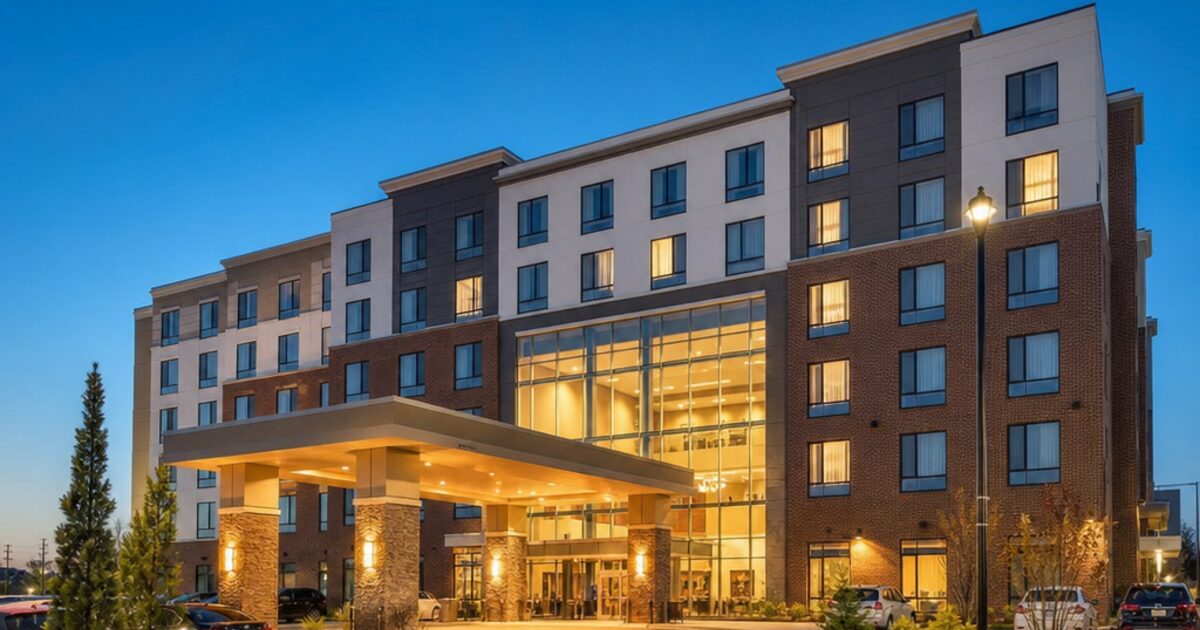
Wert-Berater prepared an independent SBA 504 feasibility study for a proposed 120-key, new-construction, upper-midscale all-suite hotel in Montgomery County, Alabama, with a total project cost of approximately $21.9 million. The analysis evaluated economic, market, technical, financial, and management feasibility against SBA SOP 50 10 8 standards, producing a determination of Feasible — Subject to Stated Conditions following a mid-engagement capital-structure revision. Stabilized Year-3 operating DSCR reached 1.365x under the revised structure, passing the SBA 1.15x minimum, conditioned on independent equity verification, a recorded land transfer, an executed management agreement, and guarantor financial statements.
This is an anonymized summary of a completed engagement. The full anonymized case study — market analysis, financial structure, and the feasibility determination — is published on our blog.
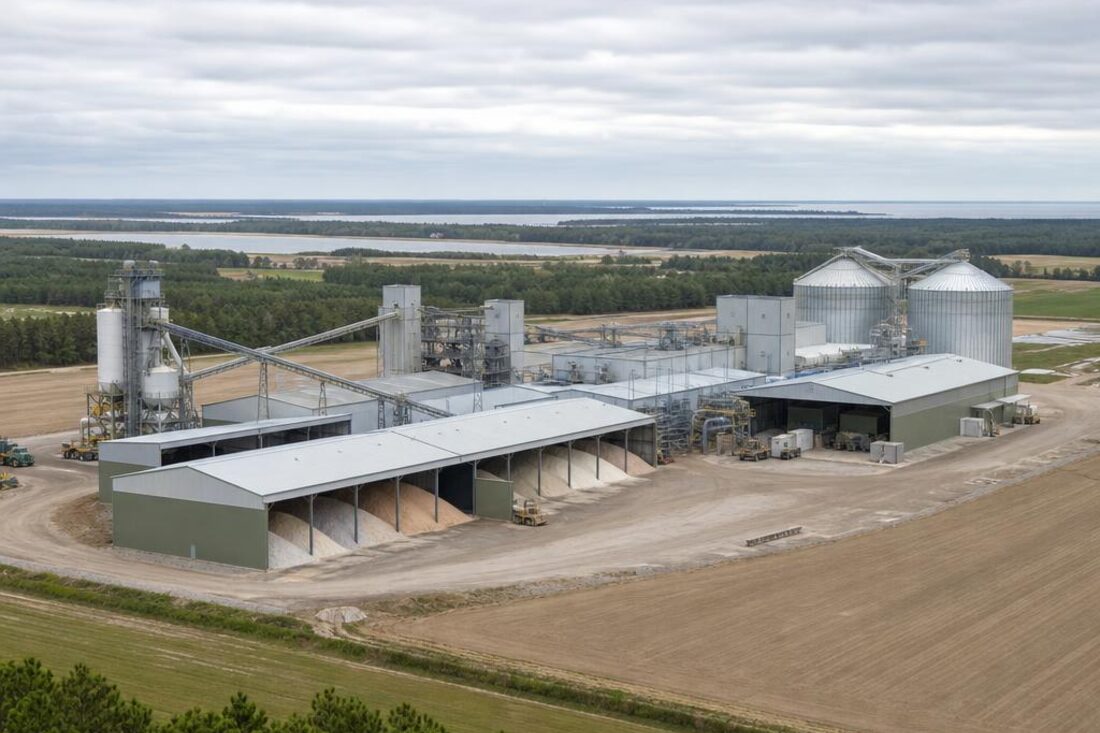
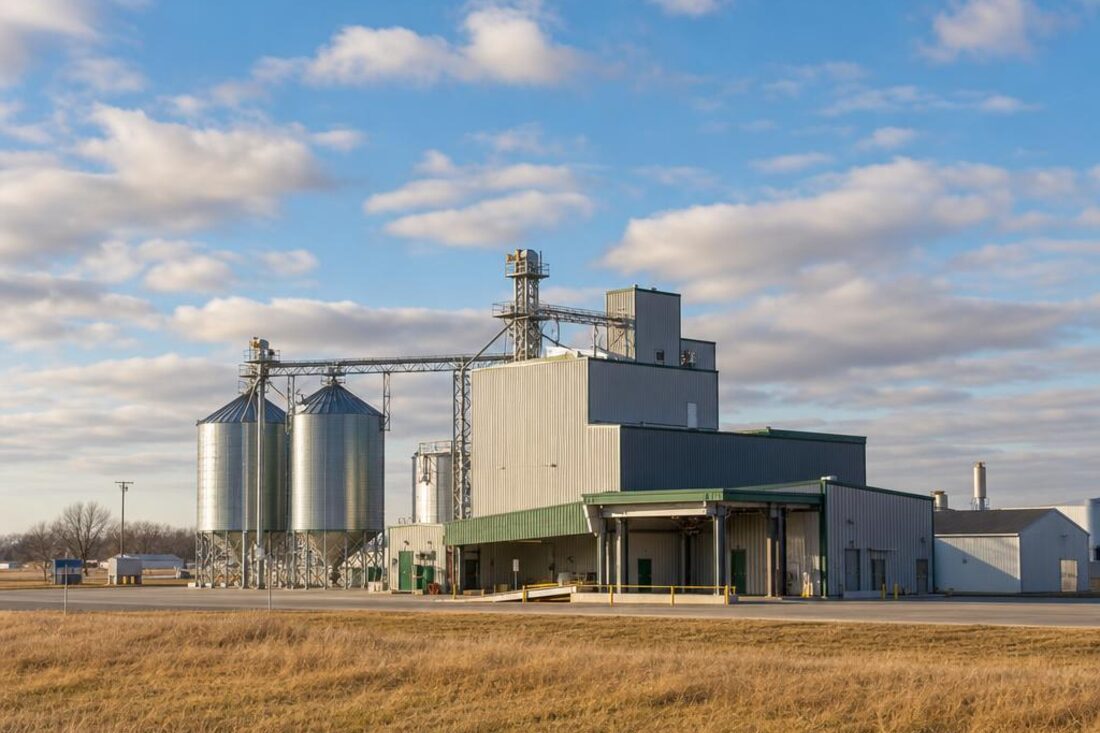
A $70,000,000 expansion of an operating rural fertilizer production business, funded on a 50/50 cost-share basis under the federal fertilizer program: a $35,000,000 grant against a $35,000,000 applicant match. The study tested the expansion on its own documented merits — verified capital budget, contracted input supply, and a stabilized operating forecast in which sources equal uses at the study date — and reached a favorable determination subject to conditions precedent carried into the executed report.
Added finished-goods production capacity at an existing fee-owned site, expanded post-processing and material handling, and the supporting site infrastructure required to operate the added capacity year round.
$70,000,000 total project cost — a $35,000,000 federal cost-share grant (50 percent) against a $35,000,000 applicant match (50 percent).
The analytical work turned on ramp risk rather than stabilized economics. Stabilized coverage is comfortable at 5.73×, but first-year coverage of 1.68× leaves materially less room, so the study conditioned its determination on contracted input supply, committed offtake at the pricing carried in the forecast, and completion of the added capacity before the first full production year. Sensitivity testing ran price and volume together, in steps, rather than one variable at a time.
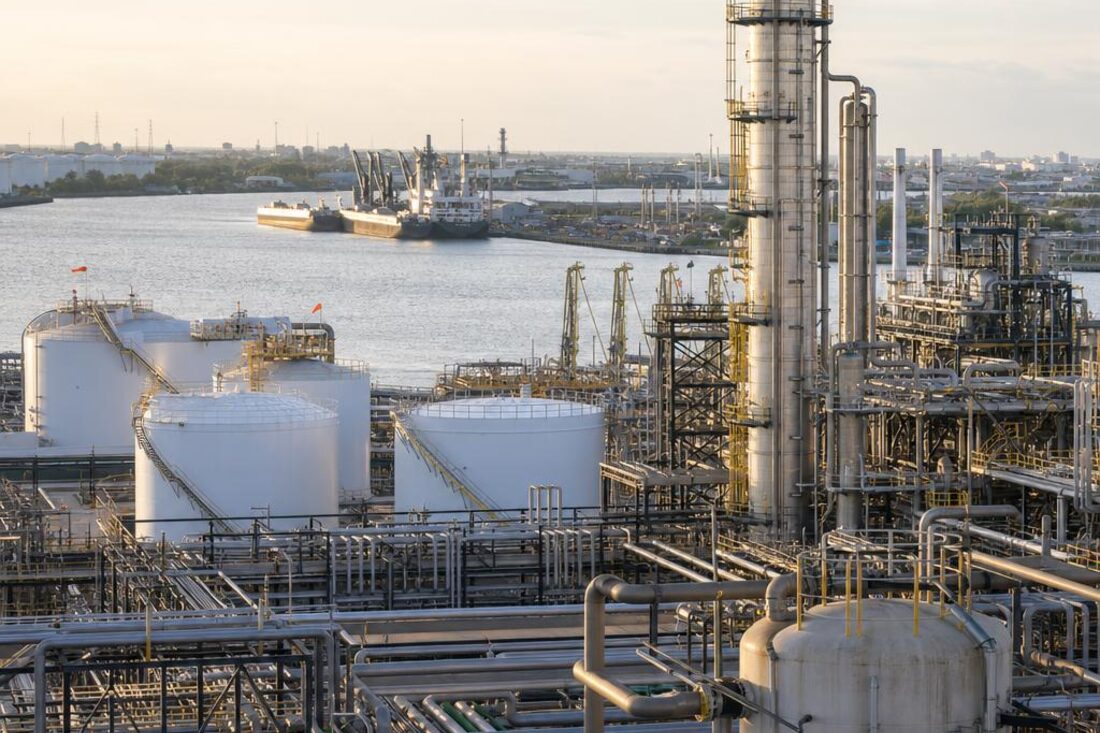
A $41,395,349 two-site fertilizer manufacturing program on the Texas Gulf Coast — a new-construction plant in one county paired with an expansion of an existing plant in the next — funded fifty percent by federal grant and fifty percent by applicant match. Because no project debt is proposed, the binding feasibility question is not coverage of a loan but coverage of the match: whether the applicant can actually fund its half, on the schedule the program requires.
A new-construction production facility, an expansion of an existing plant in a neighboring county, and the process, utility, and logistics infrastructure connecting the two into one operating program.
$41,395,349 total project cost — a 50 percent federal cost-share grant against a 50 percent applicant match of $20,697,674.50. No project debt is proposed.
Three items carried the file. First, match sufficiency: the study verified 1.85× coverage of the required match at the study date rather than accepting a certification at face value. Second, cost basis: the budget was tested against front-end engineering pricing rather than allowance figures. Third, downside recovery: the study priced a liquidation floor against total project cost so the agency could see what remains if the program stops mid-construction.
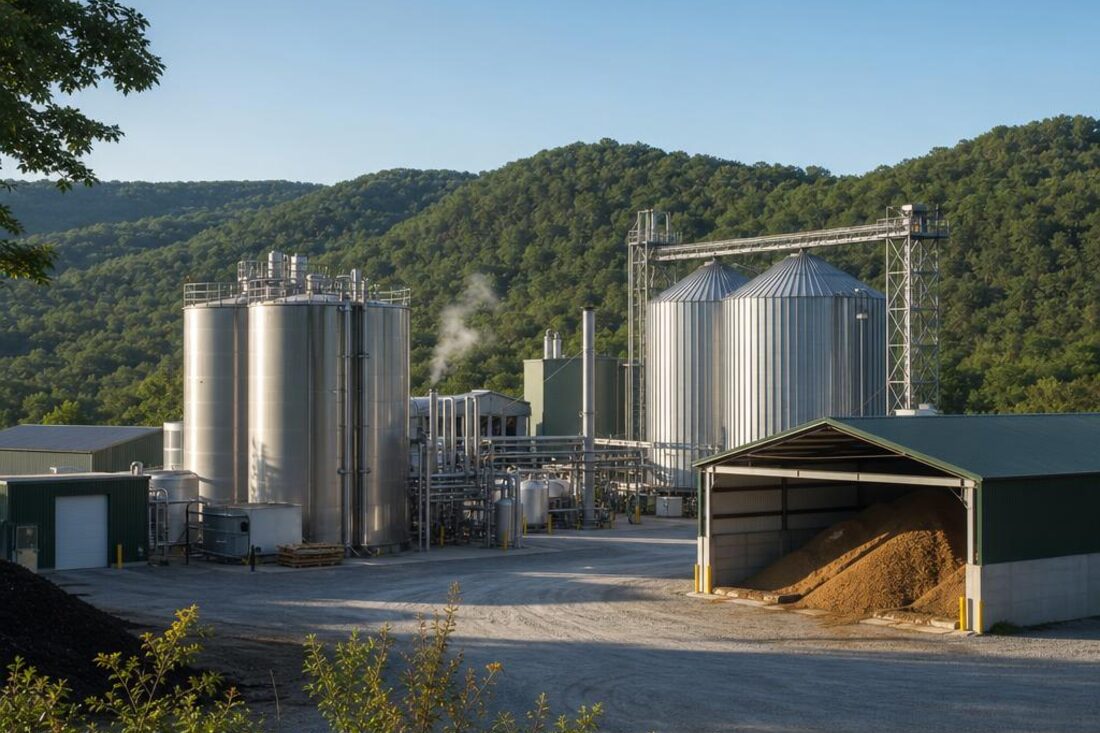
A $244,098,940 production facility on a rural Arkansas site, of which $208,479,813 is program-allowable under the grant's fertilizer-scope screen. The study separated the two questions the agency actually has to answer — whether the fertilizer scope stands on its own, and whether the wider facility can be executed — and answered them independently.
Fertilizer production capacity with supporting on-site energy generation, together with the receiving, process, storage, and outbound logistics infrastructure the site requires.
$244,098,940 total project cost, of which $208,479,813 is program-allowable under the fertilizer-scope screen; the balance sits outside program scope and is carried by the sponsor.
The study priced execution risk explicitly rather than treating the facility as routine. Coverage was reported three ways to keep the record honest: 1.52× fixed-charge coverage against obligations that actually exist, an illustrative 2.52× against a note that does not yet, and roughly nine times coverage of the one recurring maintenance reserve. The favorable determination is conditioned on execution gates — scope conformance, phased commissioning, and entity conformance — not assumed away.
A $47,371,560 distributed fertilizer manufacturing platform anchored in one rural Minnesota community and extended to two more across Minnesota and Wisconsin, funded by a $19,685,780 federal share (41.56 percent) against a $27,685,780 applicant match (58.44 percent). The study asked the narrow question the program requires — not whether the platform is attractive, but whether it is feasible on its documented merits — and answered it on verified figures with sources equal to uses.
An anchor production site acquired and placed into service, two additional community-scale production sites, and the shared logistics and offtake arrangements that let the three operate as one platform.
$47,371,560 total project cost — $19,685,780 federal share requested (41.56 percent) against a $27,685,780 applicant match (58.44 percent), with a single leverage event at the Year 5 refinancing.
A distributed platform fails site by site, not all at once, so the study modeled each site's contribution separately before consolidating. The single leverage event is the Year 5 refinancing, covered 12.45× against a 1.20× lender requirement; the study still tested what an insolvency case would cost a lender rather than treating the coverage cushion as the end of the analysis. Match composition — secured versus unsecured — was verified against the program's eligibility screen, because unsecured match does not count.
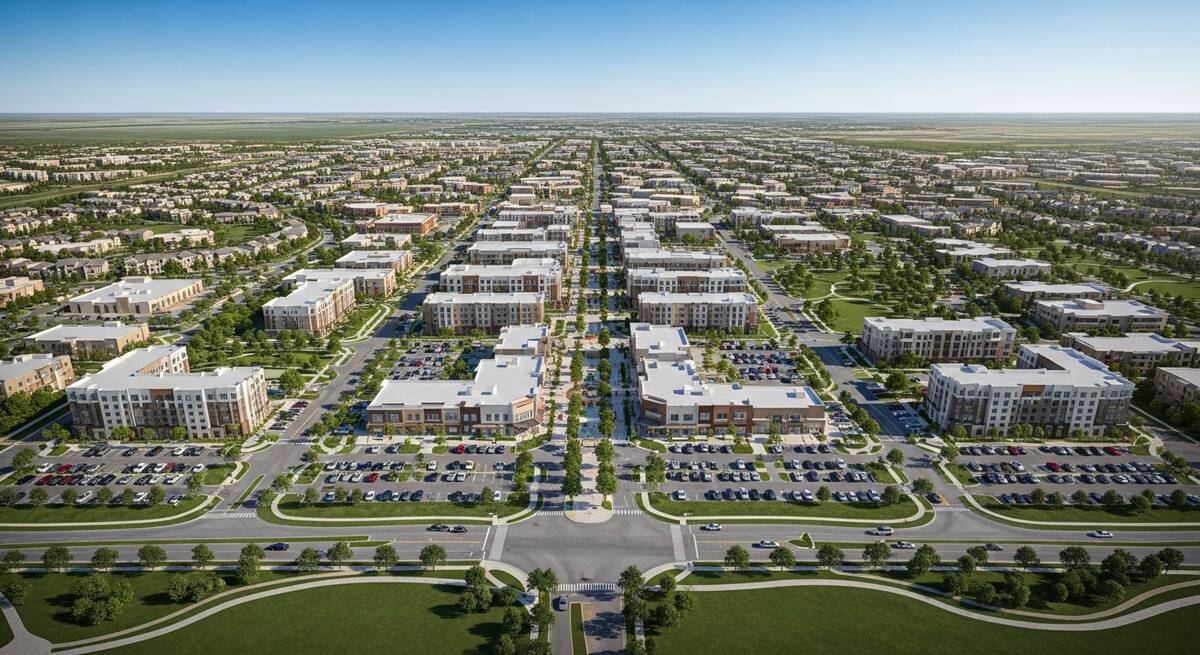
A citywide community development plan for the City of Laredo, Texas evaluating a large, phased program of residential, commercial, and ancillary uses with a total program value of approximately $5.3 billion. Wert-Berater served as independent feasibility consultant, testing market demand, absorption, and financial feasibility across the full program so the City could stage development in line with population growth, infrastructure capacity, and market depth.
Approximately 17,000 residential units spanning a range of housing types, roughly 500,000 square feet of commercial development, and ancillary uses supporting the residential and commercial core — including the civic, institutional, and public-realm components typical of a master-planned community district.
Wert-Berater analyzed demand and supportable absorption for each major use independently — residential by product type, commercial by category, and the ancillary uses that depend on rooftops and daytime population — then phased the program so infrastructure and faster-absorbing components lead and demand-sensitive uses follow. The result gave the City a defensible basis for sequencing, sizing, and prioritizing public and private investment across the plan.
The central task was scaling a multi-billion-dollar, multi-year program to a single border-region market without overstating near-term absorption. Key risks identified: pacing 17,000 residential units to real household growth, timing 500,000 SF of commercial to established rooftops, and carrying infrastructure and ancillary costs ahead of the revenue they enable — addressed through use-by-use demand analysis, conservative absorption, and phase-gating tied to demonstrated demand.
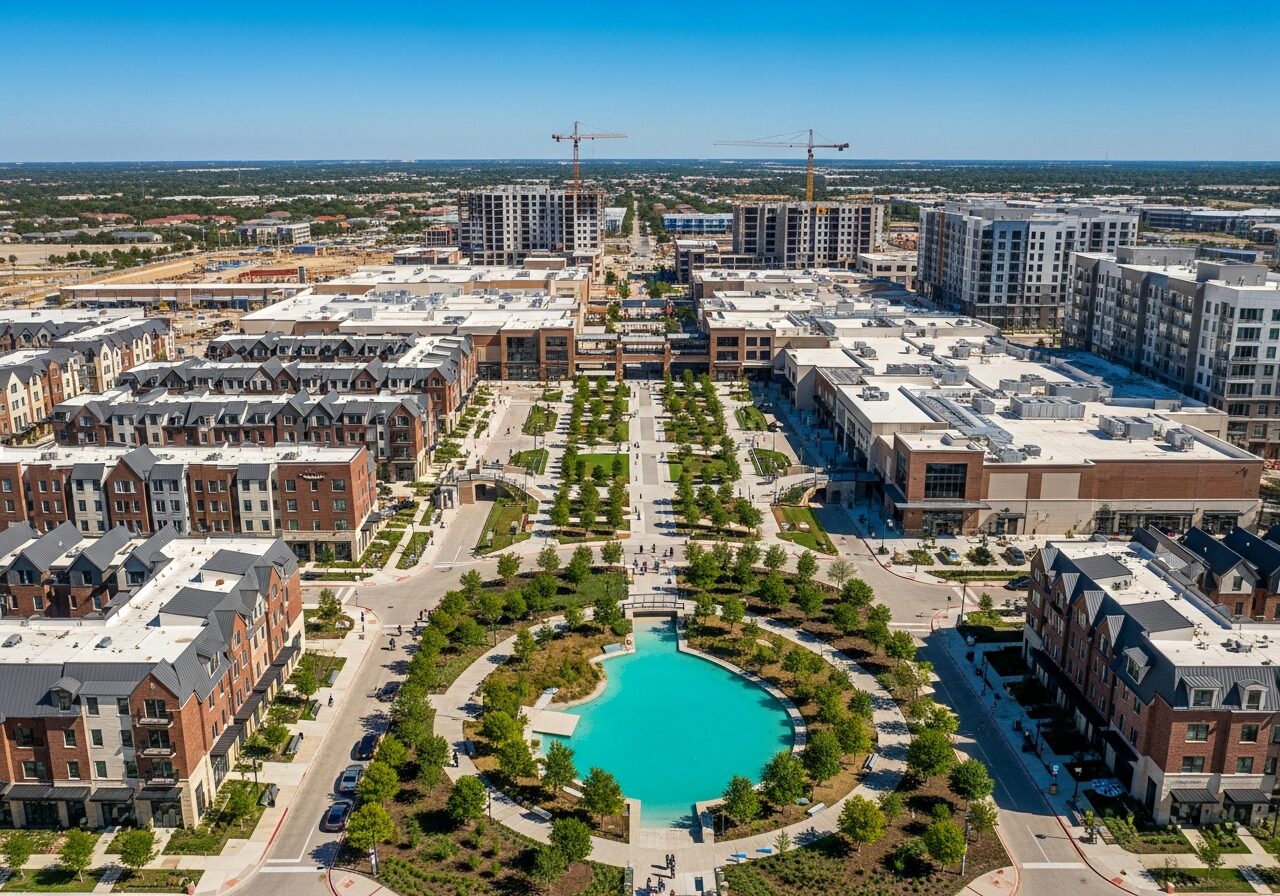
An approximately $1 billion redevelopment converting a 37-year-old, 100-acre regional shopping mall into a phased, mixed-use district combining for-sale residential, rental apartments, an open-air retail and dining atrium repurposed from the original enclosed structure, a hotel, senior living, and extensive public open space. The program is deliberately staged so that faster-absorbing residential and infrastructure phases establish the district before higher-risk retail, hospitality, and senior-living components come online.
Brownstone-style for-sale townhomes, a 412-unit apartment block, an open-air retail and restaurant promenade created from the repurposed mall, a 200-room luxury hotel, a senior-living community, a 2,000-space structured (underground) parking system, and a public realm anchored by an 8-acre central park, a crystal lagoon, and roughly 1.6 miles of walking trails.
Wert-Berater prepared land residual valuations for each parcel across all proposed uses — testing residential, multifamily, retail, hospitality, senior-living, and structured-parking scenarios so the master plan allocated every parcel to its highest and best use. The residual framework isolates supportable land value by backing developer profit, construction cost, and absorption timing out of each parcel’s projected completed value, giving ownership and its capital partners a parcel-by-parcel basis for phasing, pricing, and disposition.
The central analytical task was reconciling a single, billion-dollar master plan with staggered absorption across six distinct product types on one site. Key risks identified: adaptive-reuse execution on a 37-year-old structure, phasing risk if early residential absorption lagged, retail and hospitality demand timed years into the build-out, and cost exposure on structured parking and shared infrastructure carried ahead of vertical revenue — addressed through phase-gating tied to demonstrated absorption, parcel-level residual testing, and conservative treatment of later-stage retail, hotel, and senior-living components.

A three-phase, approximately $115 million public sports district structured so that no phase is required to financially carry facilities belonging to a later stage of maturity. Phase I establishes demand through participation-driven outdoor facilities financed primarily with public-purpose capital; Phase II expands capacity only after utilization confirms absorption; Phase III introduces higher-revenue indoor and event facilities once the campus operates as a year-round destination. The approved ten-year operating forecast produces an unlevered project-level IRR of 17.9 percent.
A regional, multi-sport destination combining outdoor tournament fields with weather-independent indoor capacity: an arena, three indoor basketball/volleyball courts, and seventeen pickleball courts, with hard construction representing approximately 59 percent of total project cost concentrated in durable, long-lived sports assets.
$115,000,000 single tax-exempt municipal bond issuance — 100% of total project cost, including capitalized interest and funded reserves.
The study's principal analytical task was proving that a $115 million single-issuance bond could be reconciled with phased absorption. Key risks identified: construction execution at district scale, utilization variability, revenue concentration during tournament periods, and operating cost inflation — mitigated through phase-gating tied to demonstrated absorption, diversified programming, fixed-rate debt, and funded reserves stress-tested under downside scenarios.
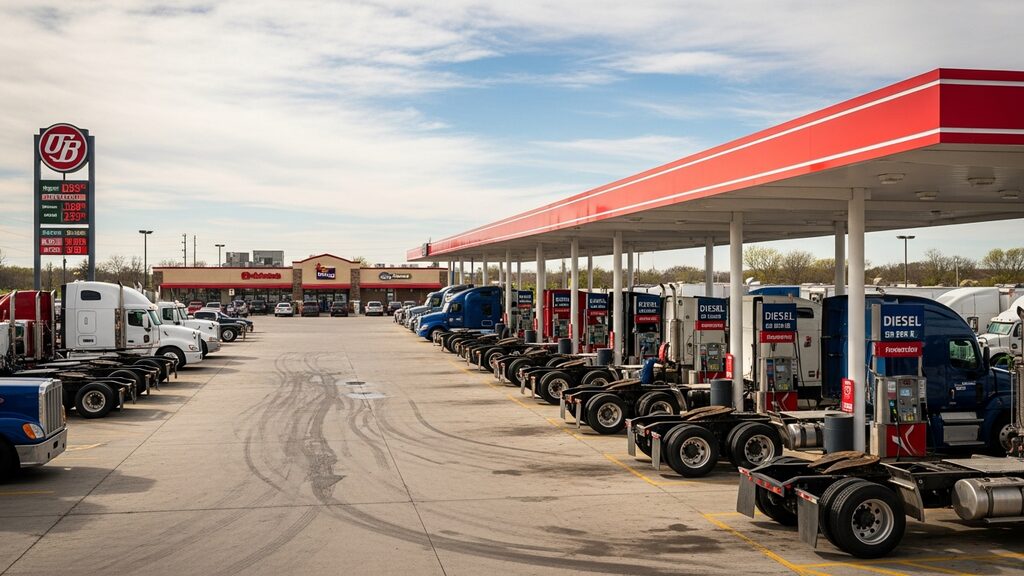
A corridor-based freight-service asset — not a conventional highway retail outparcel — evaluated under USDA Regulation 5001 for whether the site, at scale, can convert national truck-parking scarcity into durable operating revenue. The approximately 60-acre build envelope sits within a 366-acre tract at a major interstate interchange, with the largest capital allocations directed at exactly the elements that drive freight-service economics: parking, fueling, and the driver-services building.
1,000 truck parking spaces, 30 high-speed diesel pumps with storage and canopy, 20 gasoline lanes, a main building of approximately 50,000 square feet, a truck wash, and CAT scales — a program built around parking and driver utility rather than fuel sales alone, positioned to capture FHWA-documented overnight and mandated-rest demand.
$25,000,000 proposed loan plus $9,000,000 imputed land equity identified at study date — leaving a $14,571,365 capital-stack gap (≈30% of TPC) documented as the principal open item.
The defining challenge was capital-stack honesty: against $48.6 million of total project cost, identified sources covered roughly 70 percent. The study states this plainly — the project is economically justified in concept and projected operating scale, but cannot be characterized as fully financeable without qualification until the $14.6 million gap is resolved. Strong operations do not by themselves establish feasibility when the capital stack is incomplete.
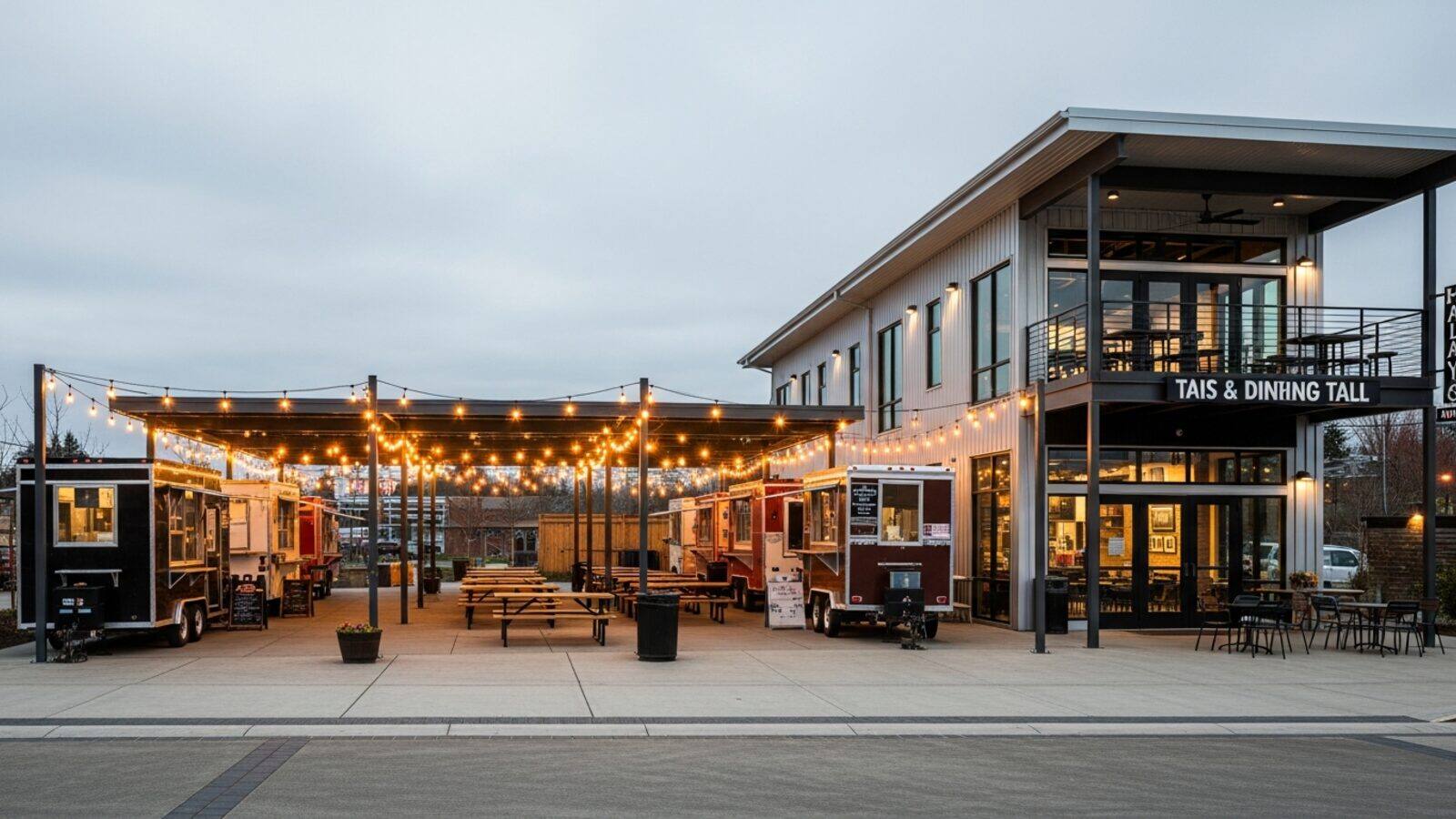
Ground-up development of an eighteen-pad food-cart pod anchored by a two-story, 9,801-square-foot pre-engineered metal taproom and dining hall in the eastern Portland metropolitan market. The study underwrote the asset as a specialty hospitality property whose income depends on cart-pad rents, taproom sales, and shared common-area throughput, concluding an indicated value of approximately $6.92 million against total project cost of $6,333,516 — a loan-to-value near 57 percent at the evaluated loan amount.
Eighteen serviced food-cart pads with utility hookups, a two-story taproom and indoor dining hall, shared restrooms and covered seating, parking, and full site improvements — a managed food-hall platform rather than a single-tenant restaurant.
Conventional bank financing of $3,958,000 — roughly 57 percent of indicated value with a 12.2 percent debt yield — against borrower equity funding the balance of the development budget. Specific facility terms are withheld consistent with engagement confidentiality.
The credit turns almost entirely on one input: the pad rent the pod can actually achieve. Rather than adopt the sponsor’s pro-forma rate, the study concluded an independent, market-supported pad rent and stress-tested coverage against it — stabilized coverage of 1.51x at the underwritten rate compressing to roughly 1.34x at the study’s more conservative concluded rate, still above conventional coverage minimums. Management feasibility was rated favorable with conditions given the operating intensity of a multi-vendor food hall, where common-area management, vendor turnover, and taproom execution drive the difference between the base and downside cases.
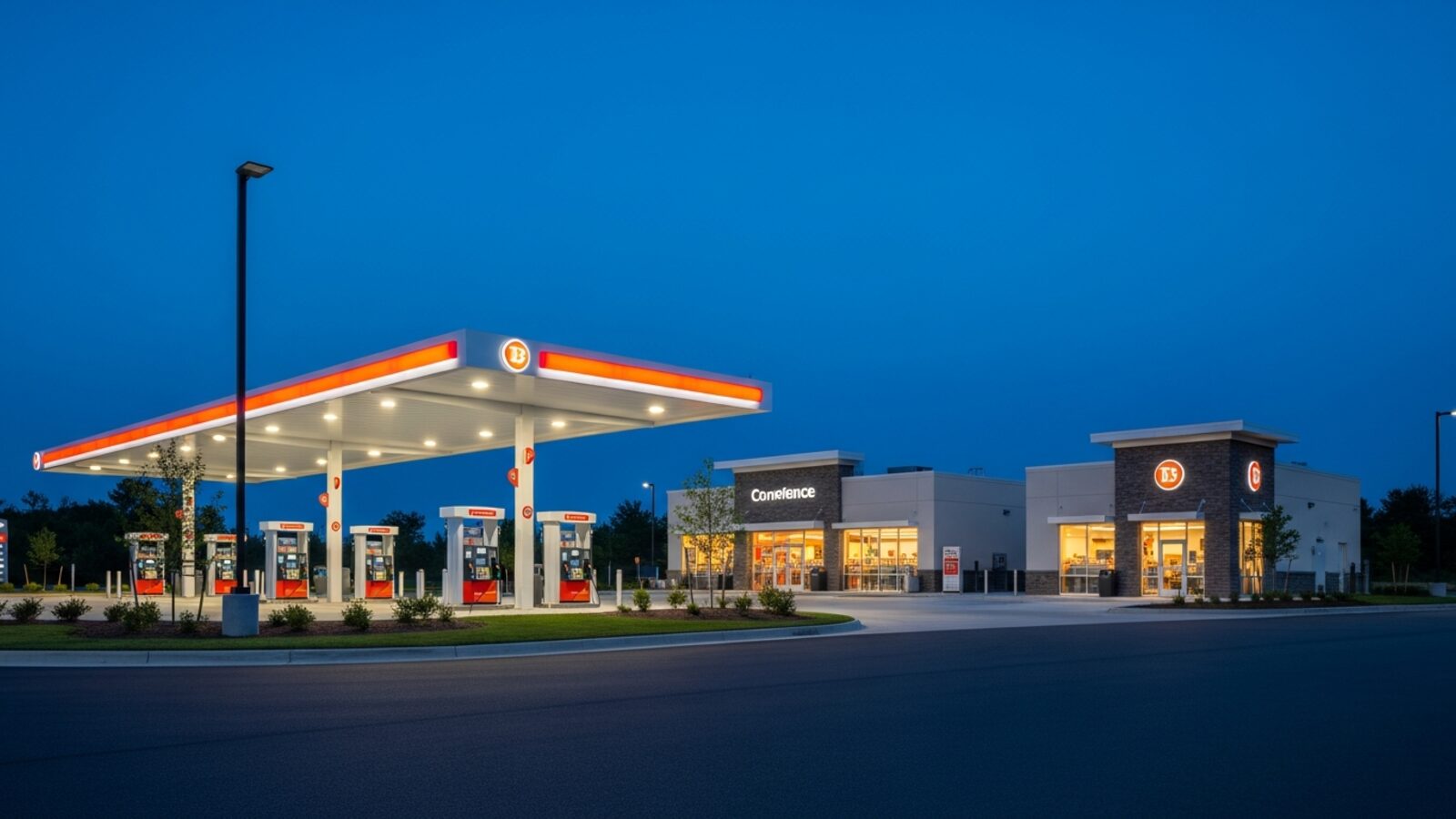
Ground-up development of a 5,600-square-foot facility — a 4,400-square-foot fuel and convenience store with an adjoining 1,200-square-foot packaged-liquor store — with five multi-product dispensers (ten fueling positions), canopy, prepared foodservice, and site work on a corner parcel in one of the fastest-growing submarkets of the Huntsville metropolitan area, anchored by Redstone Arsenal, Cummings Research Park, and the regional Mazda-Toyota plant. The surrounding trade area is affluent and growing, with five-mile median household income near $105,000 and a confirmed 23,748 average annual daily traffic count on the primary frontage.
Fuel canopy and ten fueling positions, a full-format convenience store, an adjoining packaged-liquor store, a quick-service foodservice program under concept evaluation, and signalized corner-access improvements on an up-to-4.25-acre parcel.
Total project cost of $4,144,020 funded by a $3,500,000 loan and $644,020 of borrower equity, evaluated at 7.25 percent over a 25-year amortization. The determination is conditioned on an additional debt-service and interest reserve of approximately $225,000 being fully funded.
The demographic case for the site is strong; the caution is site-specific and stated plainly. On a conservative pass-by demand case the project does not clear the 1.15x SBA or 1.20x conventional coverage floors, producing coverage of roughly 0.89x to 1.05x. On a destination-adjusted case — reflecting deliberate trip generation from the liquor store and add-on services — coverage clears both floors in all ten years at 1.25x to 1.49x. The study therefore returned a determination of feasible subject to conditions rather than softening the assumptions: the diesel dispenser and self-serve dog wash being built, the liquor store being merchandised and marketed as a destination, direct signalized access confirmed by civil plan and ALDOT driveway permit, the reserves being fully funded, and documented owner-operator experience.
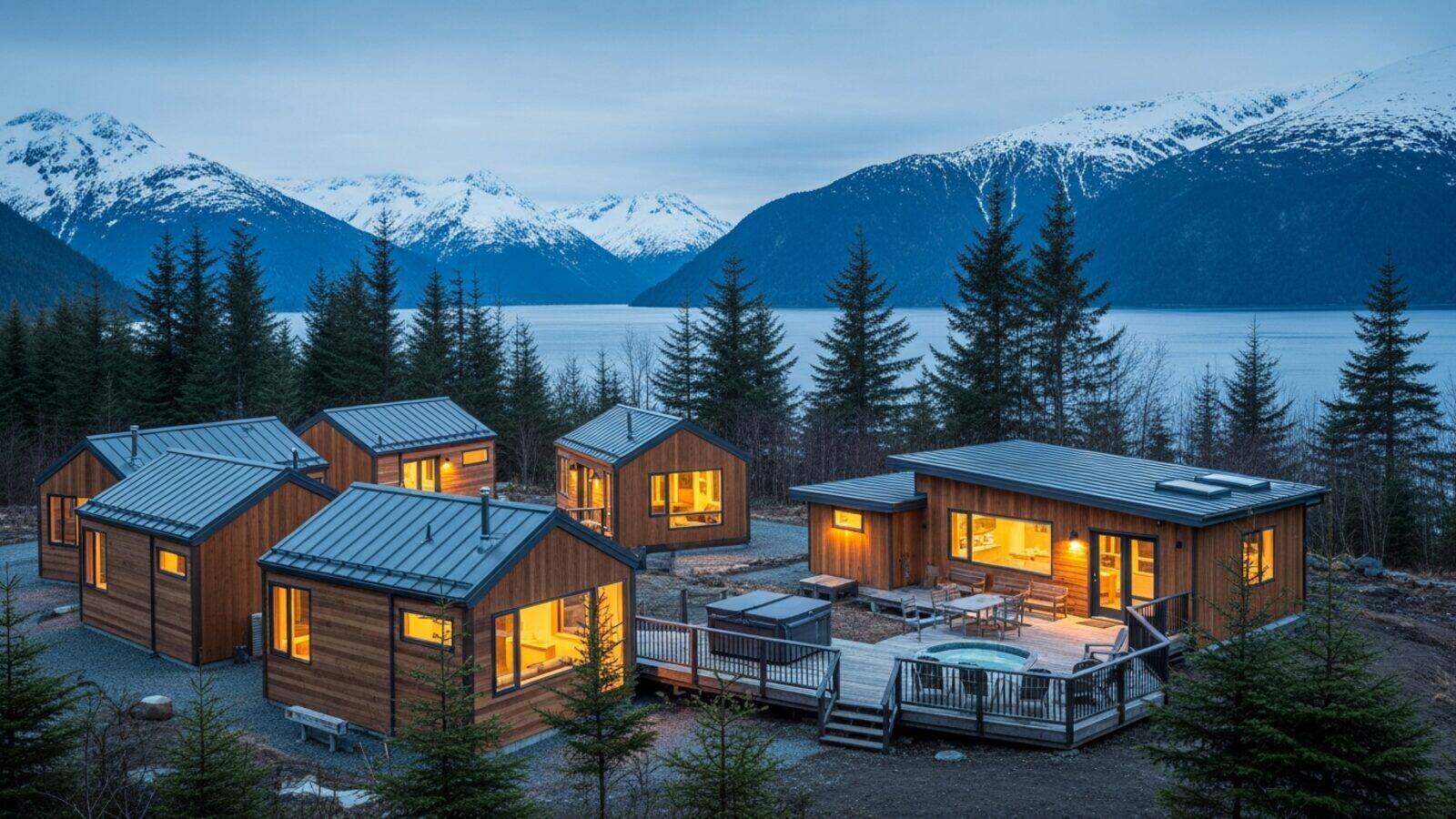
Ground-up development of a six-cabin owner-operated boutique hospitality lodge in the Prince William Sound tourism market — five standard guest cabins and one larger flagship cabin — supported by a guest-services building with a shared hot tub, sauna, and outdoor gathering area. The study underwrote a blended average daily rate near $370 and occupancy ramping to a stabilized 62.5 percent, producing coverage sufficient to return a favorable determination against the SBA 7(a) framework.
Six purpose-built guest cabins across two room types, a central guest-services building, shared amenities including a hot tub, sauna, and outdoor gathering area, and full site improvements on a compact parcel positioned for seasonal Prince William Sound tourism demand.
$2,890,461 SBA 7(a) facility (85.4 percent of total project cost) at 8.00 percent over 300 months, with $494,730 of borrower equity (14.6 percent) — total project cost of $3,385,191 against annual debt service of $267,709.
A six-key lodge in a short, seasonal Alaskan market has little margin for rate slippage, so the study’s central task was testing whether the underwritten average daily rate could actually be realized rather than assumed. Coverage of 1.37x in the first stabilized year is favorable but not generous, and the determination was returned as favorable with conditions: an ADR rate-realization covenant tying the credit to achieved rate, a funded debt-service reserve, and standard closing items including property-tax confirmation, a guarantor personal financial statement, a not-to-exceed construction contract, and Alaska State Fire Marshal plan review. The conclusion was conditioned, not softened.
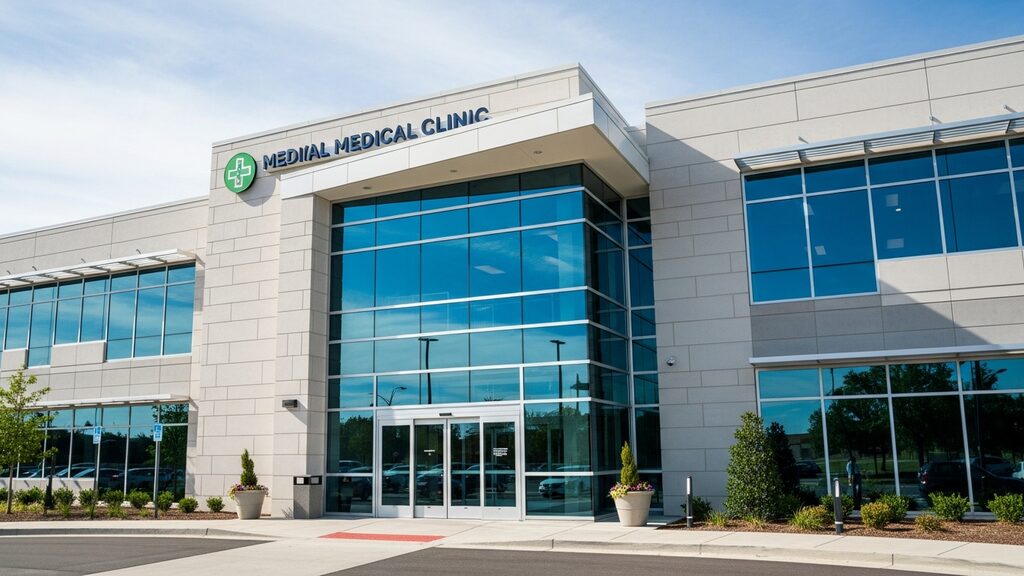
A 12.18-acre suburban medical village proposing approximately 68,000 square feet of medical office space distributed across nineteen buildings of 3,500 to 4,920 square feet — a deliberately decentralized campus design serving physician practices that favor identity, signage, and potential ownership over space in a consolidated MOB. Tenant interest at study date was oversubscribed, including specialties favoring condominium-style ownership, supporting a hybrid lease-and-sale absorption strategy.
Nineteen medical office pads with full site infrastructure: internal roadways, parking fields, stormwater systems, and utility laterals, with pad-consolidation flexibility engineered in — adjacent 3,500 SF pads sharing utility laterals can convert to 7,000 SF suites if demand favors larger tenants.
The study evaluated the proposed financing structure against program coverage minimums under base-case and stressed assumptions, with sources and uses reconciled to the development budget across the hybrid lease-and-sale absorption program. Specific facility terms are withheld consistent with engagement confidentiality.
The multi-building format carries a structural per-square-foot cost premium: infrastructure, lobbies, and utility connections are duplicated across nineteen structures, and the village consumes acreage faster than a consolidated design. The study's value-engineering pass — rationalized parking, consolidated stormwater basins, clustered utilities, phased roadways, reduced ornamental landscaping — identified $2.0–2.5 million in upfront savings and $2.5–3.0 million in ten-year operating efficiencies, cutting total project cost by nearly 8 percent without compromising the patient or provider experience.

A Phase I cold storage and logistics facility integrated with the region's international airport, evaluated under USDA Regulation 5001 across six alternative building programs from 110,000 to 250,000 square feet using a 90+ tab financial model. The recommended 125,000-square-foot configuration carries a total project cost of $33,656,250 ($269.25/SF), reaches 84 percent stabilized utilization in Year 2 with a 41.7 percent EBITDA margin, and supports 65–85 permanent jobs with $3.2–4.5 million in annual payroll.
Temperature-controlled warehouse and logistics space with ammonia refrigeration, 72-hour backup diesel generation, building design exceeding local wind-load standards, and full regulatory compliance programs (EPA Risk Management Plan, OSHA Process Safety Management), supported by a 10 percent construction contingency of $2,923,296.
$17,481,604 senior secured loan (51.9% of TPC) at 9.50% on 25-year amortization, sized to a Year 2 DSCR floor of 1.40x; equity of $16,174,646 (48.1%).
Three challenges shaped the determination. First, leverage discipline in a 9.50 percent rate environment: at the 1.40x DSCR floor, a 5 percent revenue shortfall thins coverage to 1.07x and a 10 percent shortfall breaches it — the study sized the loan at 51.9 percent of cost rather than maximizing proceeds. Second, Gulf Coast hurricane and flood exposure, addressed through hardened design, comprehensive windstorm/flood coverage, and FEMA zone analysis. Third, ammonia-system regulatory compliance, budgeted explicitly at $75,000–150,000 initial and $30,000–50,000 annually.

New construction of a 4,971-square-foot convenience store with sixteen fueling positions, two quick-service food concepts, and electric-vehicle supercharging at a signalized arterial intersection in one of Palm Beach County's fastest-growing residential corridors. Year 1 pro forma: $13,480,000 total revenue and $1,287,214 EBITDA, producing an operating DSCR of 3.87x against the 1.15x SBA minimum — 4.67x standalone before accounting for the companion station across the intersection.
Ground-up development: fuel canopy and sixteen positions, full-format convenience store, dual QSR build-outs, EV supercharging infrastructure, site work, and signalized-corner access improvements.
$5,052,768 permanent loan (including capitalized construction interest) on $4,920,000 of construction-to-permanent financing; borrower equity well above the SBA 10% minimum.
The analytically interesting problem was cross-corner cannibalization: the same intersection hosts a companion development on the opposite corner, so the study modeled the station both standalone (4.67x DSCR) and with the companion operating (3.87x) — feasibility holds decisively in both states. Monte Carlo simulation across 10,000 iterations varying fuel volume, margin, store revenue, QSR revenue, and expenses produced a 0.0 percent probability of breaching the SBA floor. Phase I ESA remained pending at the determination date.
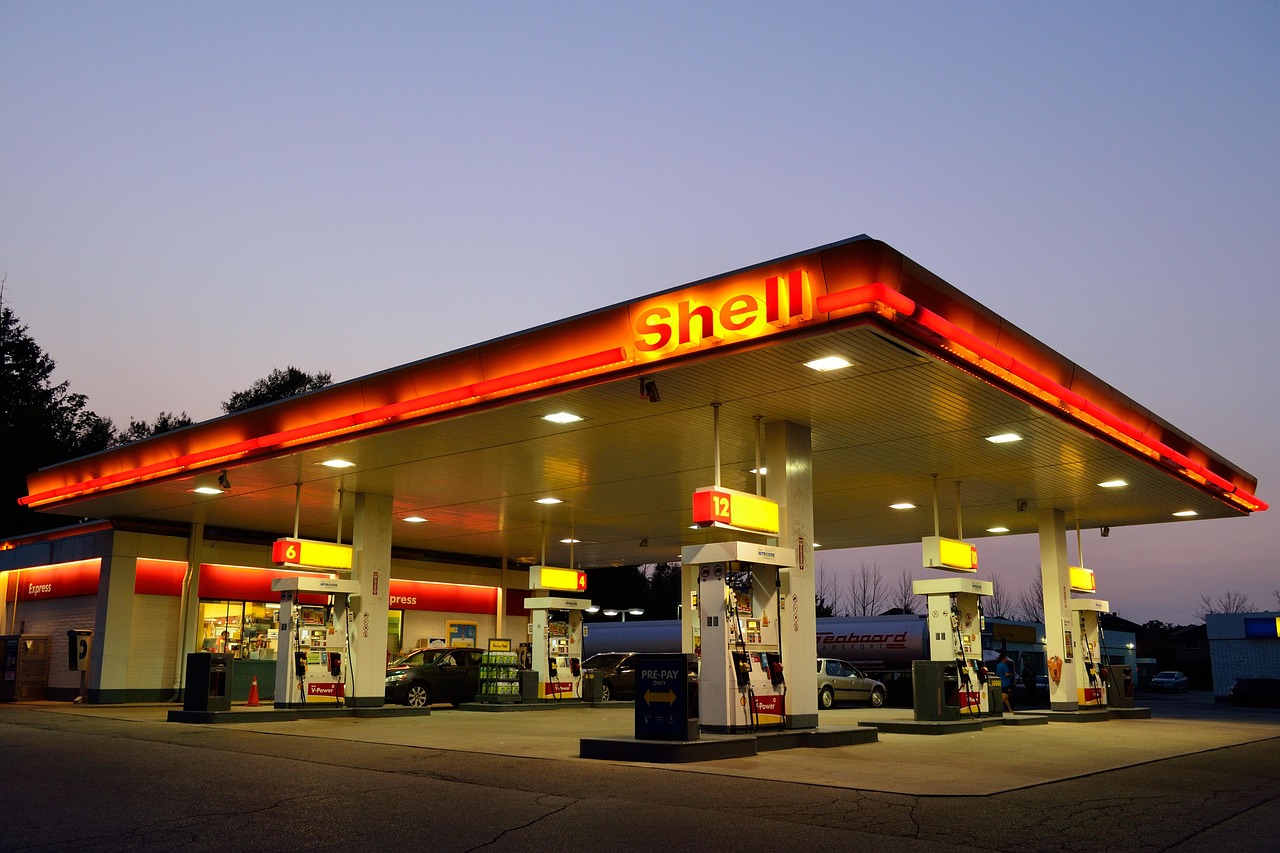
Demolition and new construction of a 4,623-square-foot convenience store with fourteen fueling positions and a national-brand quick-service restaurant at the same signalized intersection. Year 1 pro forma: $15,720,182 total revenue and $1,732,117 EBITDA, producing an operating DSCR of 4.65x — 304 percent above the SBA minimum.
Full redevelopment: demolition of the existing improvements, fuel canopy with fourteen positions, branded convenience store, in-store QSR, and complete site reconstruction at the corner.
$4,596,198 permanent loan at 6.50% over 25 years ($372,407 annual debt service); $2,075,000 borrower equity — 31.7% of TPC, more than three times the SBA minimum injection.
Monte Carlo simulation across 10,000 iterations — simultaneously varying fuel gallons ±25%, fuel margin $0.35–0.65, store revenue ±25%, QSR revenue −50% to +20%, and operating expenses — produced a minimum DSCR of 2.14x and a 0.0 percent probability of breaching 1.15x: even the worst randomly generated combination never approached the floor. Open items at the determination date were the pending Phase I ESA and final lender/CDC identification.

Acquisition of an operating 26-unit, single-story assisted living facility by an experienced regional operator, evaluated under USDA 7 CFR Part 5001. Year 1 revenue of $1,152,029 assumes 90.5 percent average occupancy — conservative against the 100 percent occupancy confirmed by appraisal at study date — and the acquisition preserves nine rural healthcare jobs with $551,400 in annual local payroll.
Going-concern acquisition of the real property, furniture, fixtures and equipment, and intangible going-concern value of an established rural assisted living operation, with single-story construction purpose-suited to resident safety and line-of-sight staff supervision.
$1,350,000 USDA B&I guaranteed loan with an 85% federal guaranty (79.4% of TPC); $200,000 cash equity (11.8%); $150,000 subordinated seller note at 9.0% interest-only with a 24-month balloon.
Small-balance rural healthcare deals live or die on cushion, and the study quantified it: break-even occupancy of 63.0 percent means the facility covers all costs including debt service with only 16.4 of 26 units occupied — a 27.5-point cushion below projected Year 1 occupancy. The structural watch-items were the 24-month balloon on the subordinated seller note, which must be refinanced or retired from cash flow, and the standard pre-closing conditions: Phase I ESA, flood-zone determination, and zoning confirmation.

Acquisition of a two-building, 48,560-square-foot industrial property on 1.85 acres, structured as a hybrid owner-user strategy: the 28,560-square-foot front building operated as a contractor overflow logistics platform serving Bay Area specialty trade subcontractors, with the 20,000-square-foot rear building generating stabilizing triple-net lease income. Owner occupancy of 58.8 percent exceeds the SBA 504 minimum of 51 percent by 7.8 percentage points. The $13,752,000 purchase price was validated against a contemporaneous MAI appraisal of $13,800,000 and against replacement cost of $350–$500 per square foot versus the $283.20 contract basis.
A 1,200-position pallet storage operation configured across five functional zones with a seven-stream service revenue model — base pallet storage, accessorial handling, reserved blocks, rush retrieval, contractor mini-bays, logistics coordination, and ancillary services — alongside the contractual NNN lease. The competitive analysis mapped six named facilities in the ten-mile market area with zero direct overlap: no existing operator provides integrated pallet storage, handling, and project tagging for the contractor segment.
$6,975,702 senior first mortgage at 8.84% over 30 years (50.00%); $4,864,000 SBA 504 debenture at 4.64% over 25 years (34.86%); $2,063,000 subordinate note at 0% interest; $48,702 cash injection — total borrower contribution of $2,111,702 or 15.14% of sources. Annual debt service: $993,006.
Two analytical problems defined the study. First, SOP 50 10 8 dual-coverage discipline: passive NNN income had to be excluded from the primary operating test, so the startup logistics business alone was required to clear 1.15x — it achieved 1.72x in Year 1, and Monte Carlo simulation across 1,000 iterations showed only a 4.2 percent probability of breaching the floor. Second, pricing defensibility: the $100-per-pallet-per-week rate is 21.7 times commodity warehouse rates per square foot, so the study validated it on three independent bases — per square foot, per cubic foot, and avoided remobilization cost of $500–$2,000 per event — concluding the customer purchases logistics services, not square footage. The October 2028 rear-lease expiration was stress-tested to a 1.46x no-lease floor case.
Refinance of a repositioned hospitality asset transformed from a legacy 25-unit roadside motel into a 60-unit hybrid resort combining lodge rooms, rustic cabins, modern cabins, tiny homes, and Airstream-style accommodations, with approximately $7.0 million already deployed by ownership since 2022. Rather than relying on borrower-provided historicals, the study built a market-supported underwriting framework: differentiated ADRs of $176–$248 by unit type producing a blended stabilized ADR of approximately $217, occupancy ramping from 57.0 percent to a stabilized 64.5 percent, and stabilized revenue of approximately $3.19 million with NOI of $1,147,623 after a 2.0 percent reserve allowance — a 36.0 percent margin.
A mixed-format, experience-driven lodging platform positioned above traditional motels, competitive with boutique and short-term-rental supply, and below luxury resort pricing in a small, seasonal Northern California tourism market driven by Mount Shasta, river access, and outdoor recreation.
$4,990,438 bank first mortgage at 8.100% over 300 months; $4,436,000 SBA debenture at 5.725% — total refinance debt of $9,426,438 with annual debt service of $800,260.
The study's defining task was distinguishing stabilized supportability from ramp-period risk — and stating both without softening. Projected coverage of 0.96x in Year 1 and 1.17x in Year 2 falls below the 1.25x lender-comfort threshold, so the study quantified the required interim DSCR reserve at $295,827 ($235,666 Year 1; $60,161 Year 2) rather than adjusting assumptions to make the problem disappear. When SBA-related review requested a coverage case excluding the twelve Airstream units, the addendum recomputed the deal on a 48-unit basis — stabilized DSCR of 1.16x, below threshold through Year 6 — and concluded plainly that the no-Airstream case is not supportable on the original stabilized basis without additional structural credit support or reduced leverage. The determination was narrowed, not revised, under underwriting pressure.
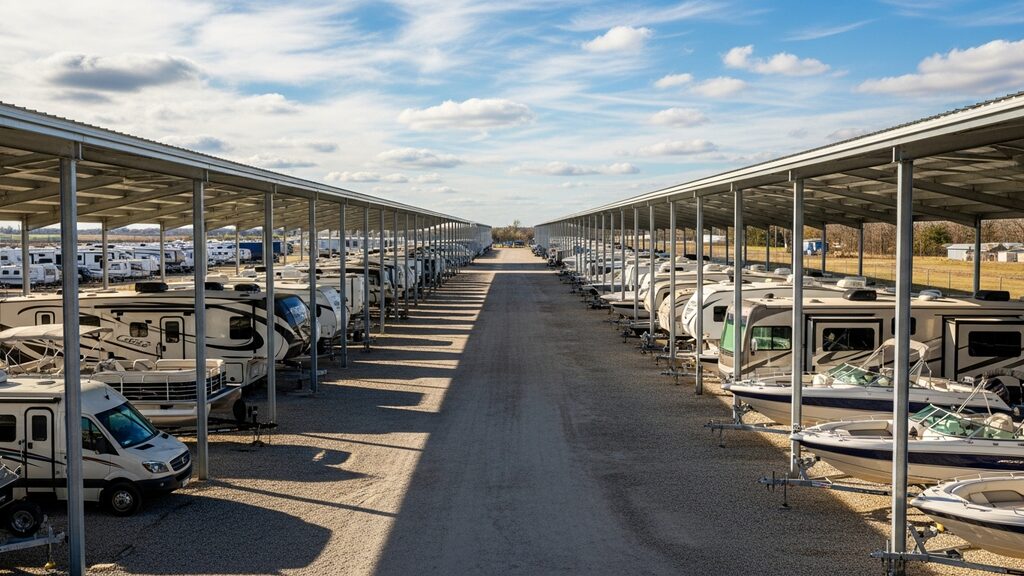
Ground-up development of a 437-space marine and recreational-vehicle storage facility on 3.871 acres of industrial-zoned land: 350 dry-stack boat positions inside a 79,864-square-foot hurricane-rated pre-engineered metal building, plus 87 RV and trailer spaces. The site sits in FEMA Zone X (minimal flood hazard) — a meaningful underwriting distinction for coastal Florida marine assets. The construction budget was validated at $143.99 per square foot for the PEMB structure, at the low end of the applicable RSMeans range, with a 5 percent contingency.
A demand-driven storage platform serving the Sarasota boating market, underwritten on a Year 1 average occupancy ramp of 47.5 percent rising to stabilization in Year 2 — deliberately conservative entry assumptions rather than stabilized-day-one optimism.
Classic 50/30/20 SBA 504 stack: $11,875,000 bank first mortgage at 6.10% with one year interest-only; $7,125,000 CDC debenture at 5.45% over 20 years; $4,750,000 equity ($3,562,500 investor; $1,187,500 sponsor). Annual principal and interest from Year 2: $1,512,592.
The determination was favorable but conditioned, and the conditions were stated as conditions — not buried. The Phase I ESA was 44 months old at the study date, beyond regulatory currency, and its update was made a condition precedent to closing rather than a footnote. Three further conditions followed: lender and CDC confirmation of the SBA 504 operating-business determination, personal guaranties from all owners of 20 percent or more, and confirmation of SBA eligibility for the development management fee. The study also flagged the sponsor's dual role as developer and property manager as a governance consideration. Coverage discipline anchored the analysis: a full 49-combination stress grid across interest-rate and occupancy scenarios, every combination through +2.5 percent passing SBA minimums, with the +2.5 percent rate case still producing 1.30x.

Expansion financing for an established oilfield well-servicing company — founded 2012, more than 150 field personnel — operating across five major U.S. producing basins: Permian, Williston, Eagle Ford, Appalachian, and Haynesville. The expansion is anchored by two long-term master service agreements with a supermajor and a large-cap independent producer, representing approximately $60 million in contracted revenue over sixty months and more than 65 percent of projected revenue through 2030. Company revenue grew roughly 200 percent in the twenty-four months preceding the study.
Fleet and equipment expansion to service contracted multi-basin demand under a USDA Business & Industry guaranteed structure — an operating-company credit underwritten on contract quality and coverage durability rather than real-estate collateral.
Project IRR of 22.4 percent; NPV of $41.3 million at a 12.5 percent weighted average cost of capital; payback in 2.6 years. Ten-year debt-service coverage averages 3.19x with a minimum of 2.48x and a Year 6 peak of 4.28x — no non-coverage periods in any projection year.
Oilfield services is a cyclical, commodity-exposed sector, and the study treated that exposure as the central underwriting question rather than an inconvenience. The analysis rested coverage on contracted rather than speculative revenue — the two master service agreements were evaluated for counterparty quality, term, and concentration, with the offsetting concentration risk stated plainly: contracts representing 65 percent or more of revenue are both the credit's strength and its single largest dependency. Monte Carlo simulation demonstrated a greater-than-85-percent probability of maintaining DSCR above 1.25x across commodity-cycle scenarios, and the rapid 200-percent revenue growth was stress-examined for operational scalability rather than extrapolated forward uncritically.

A $52,688,000 integrated bio-carbon (biochar) pyrolysis manufacturing facility producing approximately 28,750 metric tons annually — approximately $1,915.93 of invested capital per annual ton. Base-case revenue of approximately $34,375,000 is anchored by an industrial biochar offtake of $20,500,000 (59.7 percent of revenue) and carbon-credit monetization of $8,900,000 (25.9 percent), with the balance in specialty, energy, and soil-amendment channels. Projected EBITDA of $16,500,000 against annual debt service of approximately $4,012,000 yields a baseline coverage of 4.11x, with the Year 1 monthly ramp moving from 1.92x in January to 5.18x by December.
One of the first feasibility studies prepared under the USDA Timber Production Expansion Program (TPEP) framework in combination with a Business & Industry guarantee under 7 CFR Part 5001 — a dual-program structure for timber-feedstock bio-industrial manufacturing.
Continuous-pyrolysis vertical retort technology with more than thirty industrial installations, supplemented by fourteen traveling-grate systems deployed since 1986 — more than forty years of documented industrial operation, evaluated as proven process equipment rather than venture-stage technology.
Biochar sits at the intersection of commodity manufacturing and an immature carbon-credit market, and the study refused to let the second category carry the first. Revenue quality was tiered: contracted industrial offtake was underwritten as the load-bearing element, while carbon-credit revenue — a quarter of the top line in a market without mature price discovery — was stress-tested rather than capitalized at face value. Coverage holds above 2.5x even with EBITDA reduced 10 percent or rates up 200 basis points, and breakeven revenue of $21,884,566 sits 36 percent below base case. Equipment risk was addressed through deployment history rather than vendor representations. The favorable recommendation was explicitly conditioned on final underwriting validation, independent engineering confirmation, and covenant structuring — scope boundaries stated, not blurred.

Repositioning analysis of a vacant 17-story, 184,960-square-foot tower in Durham, North Carolina — a full highest and best use study built around ten redevelopment scenarios spanning market-rate apartments, condominium sell-out, medical and life-sciences conversion, mixed-use, upper-upscale hotel, senior living, demolition with land resale, and continuation as Class A office. Each scenario was modeled through discounted cash flow with IRR, MIRR, XIRR, DSCR, ROE, and residual land value calculations, then ranked on capitalized value, land residual, debt capacity, and risk.
The comparative grid put hard numbers against every path: market-rate apartments at $95,000,000 total project cost producing $121,000,000 of capitalized value and a 13.90 percent IRR; condominium sell-out at a 14.10 percent IRR; an upper-upscale hotel generating the highest revenue but carrying $110,000,000 of cost; demolition and land resale at $22,000,000; and Class A office conversion at a negative ten percent IRR — the decisive evidence that continuation in office use is not the highest and best use in today’s leasing market.
Each scenario was capitalized at approximately 65 percent loan-to-cost debt with the balance — 35 percent of total project cost — as sponsor equity, with hard costs, soft costs, sales and lease-up costs, and entrepreneurial profit expectations carried separately so that the residual land value under each program could be compared on a consistent basis.
The analytical problem was discipline against wishful thinking: a highly visible tower invites every reuse idea, and the study’s job was to eliminate most of them. Heavy commercial allocations and all-large-unit residential mixes drove land residuals to breakeven or below; the hotel scenario carried the largest absolute cost and flag-related lease-up expense; and the office-continuation case, far from supporting any land value, produced a negative residual in the prevailing leasing market. The concluded apartment-anchored program won on the combination of land residual, financeability, and risk diversification rather than on any single headline figure.
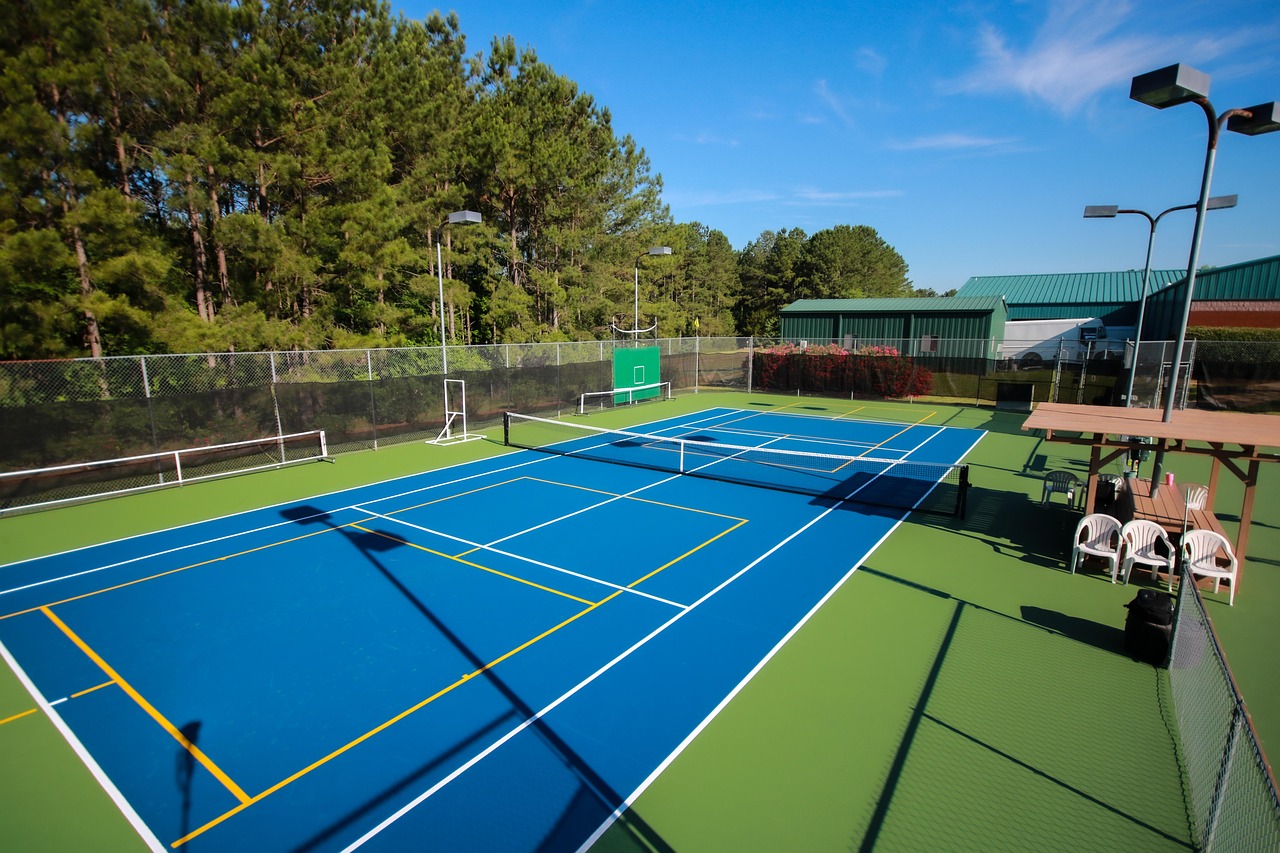
Proposed development of a purpose-built indoor pickleball and padel sports complex at stabilization comprising 20 total courts — 18 pickleball and 2 padel — supported by mezzanine-level food and beverage service, structured league and instructional programming, and event capability within a single integrated facility. The 25-minute drive-time trade area contains 966,341 residents and 386,789 households, more than one quarter of Connecticut’s population, with median household incomes supporting premium pricing for indoor court access.
The market analysis quantified a structural supply deficit: Connecticut is estimated to hold fewer than 90 dedicated indoor courts statewide, and Middlesex County only 5 to 7, against the fastest-growing sport in the United States for three consecutive years. Using a conservative planning ratio of one dedicated court per 250–300 active players, regional equilibrium demand supports roughly 190–270 courts. The study also modeled the national saturation question directly — the conditions under which court supply growth overtakes participation — concluding that cold-weather markets such as Connecticut retain premium pricing power longest because outdoor play is limited to roughly April through October.
Annual debt service of approximately $783,100 was tested against a pro forma that intentionally constrains early-year coverage during the membership and league ramp-up period, consistent with SBA SOP 50 10 8 underwriting discipline, before coverage builds well above the 1.25x–1.35x SBA minimum guideline at stabilization.
Two issues carried the underwriting weight. First, ramp-up realism: the feasibility conclusion is explicitly not predicated on aggressive growth or ideal operating conditions, so the early years were modeled with deliberately constrained coverage and the conditions precedent attach there. Second, saturation risk: the study confronted the question every lender asks about a boom sport — what happens when supply catches up — and answered it with a regional equilibrium model, break-even analysis showing an approximately 24 percent revenue cushion, and stress cases holding DSCR above 2.0x in all downside scenarios tested.

Acquisition of an established greenhouse and nursery enterprise in Radium Springs, Doña Ana County — more than 20 acres of geothermal-heated greenhouses with secured groundwater rights providing 2.3 times the water required at full production, evaluated for a USDA Business & Industry guaranteed loan under Regulation 5001. The site sits 20 minutes from Las Cruces, 1.5 hours from El Paso, and within same-day distribution reach of markets across New Mexico, Texas, and Arizona, in a national nursery and garden industry generating more than $54 billion annually.
The economic feasibility analysis confirmed labor availability through the county’s agricultural workforce and the plant- and soil-science graduate pipeline from the nearby land-grant university; the technical analysis confirmed that geothermal heating materially reduces energy-price exposure while the secured water rights neutralize the binding constraint on greenhouse operations in the arid Southwest; and the market analysis benchmarked the operation against regional and national competitors, most of which operate with limited capital reserves.
Purchase of business assets of $16,500,000 funded by the USDA-guaranteed loan plus equity; $100,000 of working capital contributed by the borrower; and $750,000 of closing costs and fees funded from loan proceeds, consistent with USDA B&I norms — a total project cost of $17,350,000.
The rate structure carried the principal risk: the B&I loan floats on a Wall Street Journal prime-based adjustable rate, so the study stress-tested coverage against rate movement and a five percent operating-cost increase, with DSCR remaining above the USDA minimum in each case. Competitive pressure from regional growers and the seasonality of nursery demand were addressed through capacity-utilization analysis and a distribution strategy spanning three states, and the break-even calculations required under 5001.203(i) confirmed solvency margins throughout the projection period.

Proposed development of a 102,471-square-foot refrigerated cold storage facility with 28-foot clear height and 2.77 million cubic feet of storage capacity on a 19.97-acre industrially zoned site in the Amarillo logistics corridor, positioned on Interstate 40 with rail service. The facility is designed around automated pallet handling, warehouse management software, and continuous temperature monitoring, operating a lean five-to-seven-employee model with food-safety compliance to federal regulatory and HACCP standards.
Demand was anchored rather than assumed: a letter of intent from a regional dairy processor (party withheld) commits up to 25 million pounds of bulk cheese annually, with non-member volumes conservatively projected at 2 to 5 million pounds in year one. The ten-year pro forma builds revenue from $3,957,594 toward $5,174,877 across storage fees, handling and ancillary services — shrink wrapping, labeling, cross-docking — and spot-market activity, with discounted cash flow analysis at an eight percent rate supporting the financial feasibility determination.
Opening long-term debt of $13,353,508 amortizing to $11,542,298 by Year 10 against fixed annual debt service of $1,185,721, with net worth building from $559,629 to $16,816,682 over the ten-year horizon as cash accumulates and principal retires. Property taxes were modeled at full assessment on the $16,000,000 construction basis with no abatement assumed, despite available county incentives.
The structural challenge was concentration: a lean automated staffing model magnifies key-person risk, addressed in the study through cross-training, redundancy in critical roles, and succession planning requirements; and the anchor-supplier relationship concentrates demand, addressed through the conservative non-member volume assumptions and competitive demand analysis for the Amarillo region.
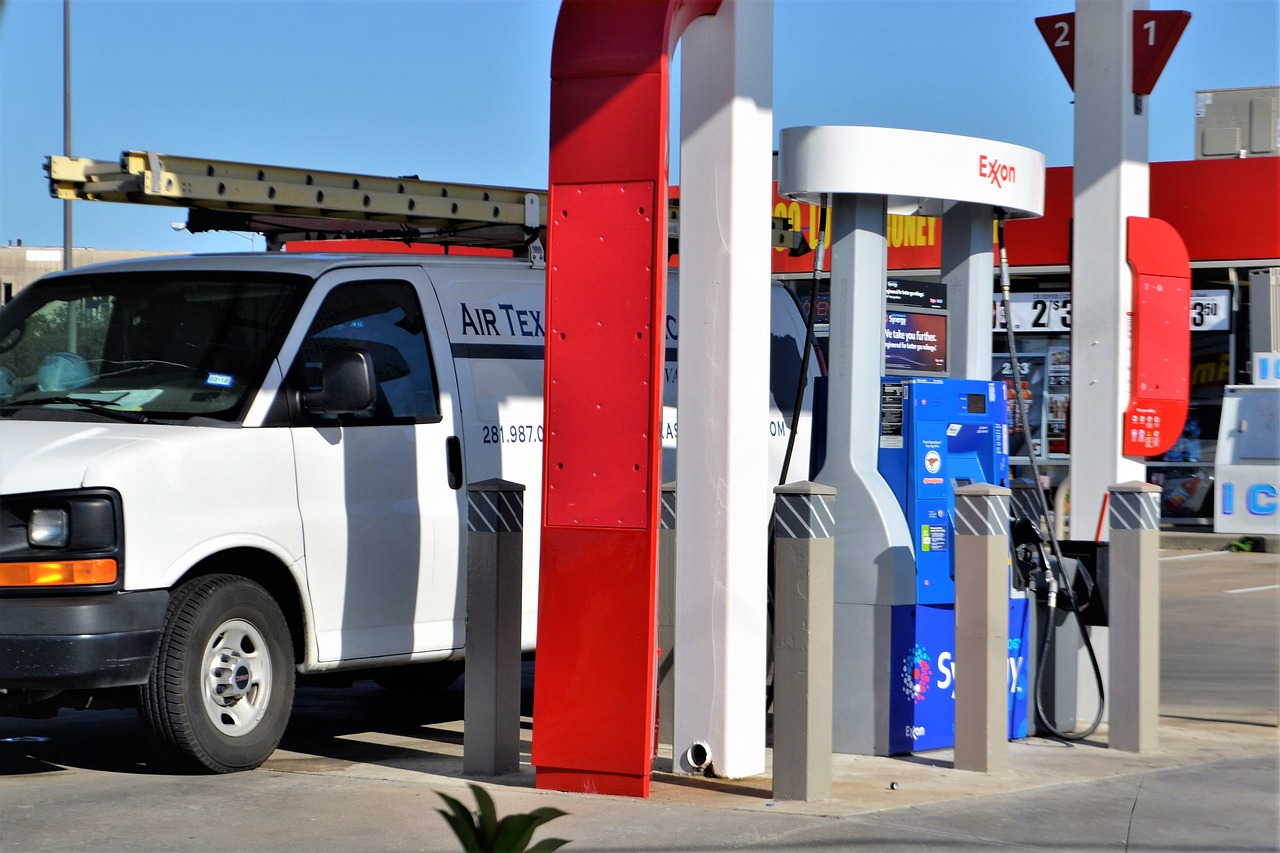
Proposed development of a major-brand truck stop on a 6-acre parcel at the southeast corner of CA-99 and Shanks Road in Delhi, Merced County — a 4,000-square-foot convenience store with a 4,000-square-foot gasoline canopy and a 3,000-square-foot diesel canopy serving the Golden State Highway truck corridor between the Bay Area and Southern California. Year 1 sales are projected above $61,000,000, growing three percent annually, with total revenues exceeding $60,000,000 at stabilization.
The market analysis was built on corridor truck-traffic counts along CA-99, a captive and diverse demand base with limited direct competition in the immediate trade area, and seasonality patterns specific to Central Valley freight movement. Fuel gross margins were set at the ten percent industry standard, the technical analysis confirmed soils, grading, and drainage suitable for cost-effective construction, and a Phase I Environmental Site Assessment completed under CEQA returned no recognized environmental conditions.
Financing through a combination of equity and long-term SBA-backed debt at a conservative loan-to-value ratio, with annual debt service of $675,000 covered by projected EBITDA at better than 4.0x in every projection year — coverage headroom that holds under the cost-inflation, competition, and margin-compression scenarios tested.
High-revenue, thin-margin fuel retail lives on the margin line, so the sensitivity analysis concentrated there: per-gallon margin reduction scenarios, competitive entry, and economic-cycle stress all left debt service comfortably covered, and no adverse scenario tested threatened the ability to meet obligations. The remaining work identified by the study is execution — finalizing the SBA-backed financing structure and phasing staffing to actual traffic capture as the site ramps.
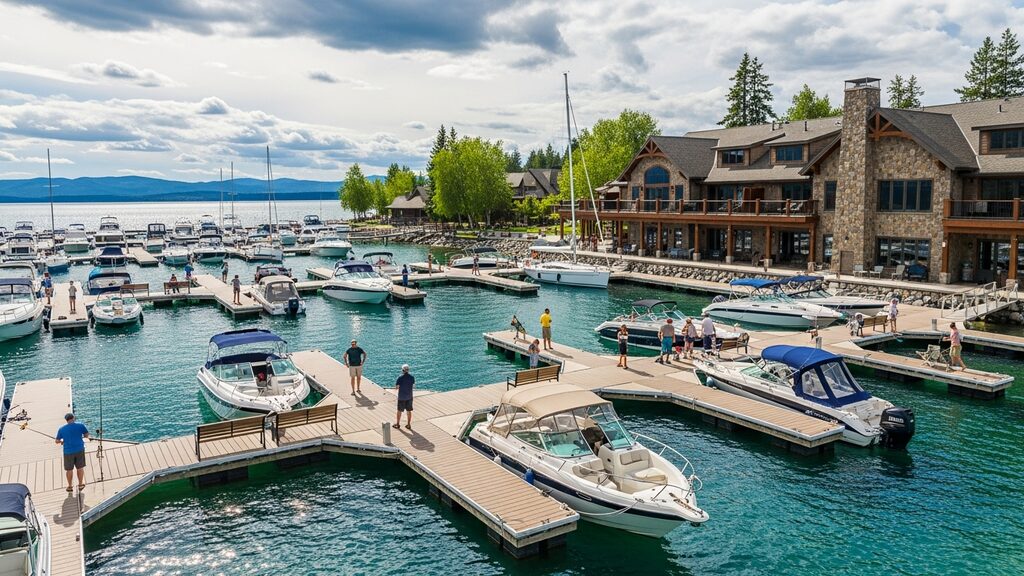
Redevelopment of an existing Hudson River waterfront marina site in Catskill, Greene County, into a professionally managed boutique hospitality operation combining upland luxury suites with purpose-built floating lodging units — an integrated, revenue-generating hospitality business rather than a passive real estate investment, intentionally positioned between high-end boutique hotels and experiential lodging. The absence of a full-service restaurant reduces operational complexity, and staffing is structured to comparable boutique benchmarks.
The floating lodging units are the competitive core: a product type scarce in the regional market and increasingly sought by experiential travelers, centrally owned and managed unlike peer-to-peer floating accommodations. The study evidenced the typology premium from a national comparable set of floating-lodging operators, supporting an ADR adjustment of $150–$250 over land-based equivalents, with phased deployment of additional floating units providing concept scalability. Eligibility screens confirmed compliance with the program’s ineligible-business rules and, where an Eligible Passive Company structure is used, conformance to the applicable operating-control and lease-term requirements.
A proposed SBA-guaranteed loan of approximately $6,991,250 — roughly 75 percent of total project cost — with the balance funded through borrower equity of approximately $2,308,750. Sources and uses were reviewed to confirm all costs relate directly to the eligible operating business, with no allocation to speculative land holding or passive investment.
The underwriting tension was typology risk against coverage cushion: a floating-lodging product with no direct local comparable had to be priced from national evidence, while early-year DSCR of 1.26x sits closer to program minimums than the stabilized 1.53x — so the ten-year DSCR analysis, marina and waterfront permitting pathway (state environmental and federal dock permitting), and phased capital deployment carried the conditions.

Investment prospectus and advanced capital feasibility analysis supporting a physician equity offering for the repurposing and clinical refitting of an existing four-story, 62,259-gross-square-foot medical office building in the Maitland–Winter Park–Orlando corridor into a licensed ambulatory surgery center — among the larger physician-aligned ASC platforms modeled at up to 30 operating rooms and procedure suites at full buildout. The analysis was prepared to the standard of scrutiny applied in private placements under Regulation D and in SBA-financed healthcare transactions.
The phasing logic drives the economics: Phase I refitting of approximately $5,800,000 activates operating rooms on the first and second floors; Phase II adds capacity to roughly 15–18 active rooms at approximately $2,200,000 — about 24 percent of total capitalization — because core systems and shared clinical infrastructure are already installed; and a final phase brings capacity to the low-to-mid 20s at approximately $1,000,000, with incremental cost per operating room declining materially at each step. Revenue modeling spans payer mix, reimbursement differentials between hospital outpatient departments and ASCs, and an aggregate contractual adjustment of approximately 15 percent.
Total capitalization of approximately $9,000,000 comprising SBA-backed senior debt of approximately $6,500,000 and physician equity, with leverage intentionally conservative relative to projected cash flow. The waterfall analysis modeled equity raise scenarios, ownership dilution, and distribution timing across operating and exit cases, including the personal-guarantee considerations that attach to SBA-backed financing.
A prospectus for physician investors demands different discipline than a lender study: every return figure had to be presented with its risk counterpart. The analysis therefore separated IRR from equity multiple explicitly — early exits trade total dollars for IRR while long-term holds reverse the trade — stressed the regulatory exposure of Medicare conditions for coverage and state healthcare regulation, and confined downside scenarios to return compression rather than capital impairment or debt stress. The engagement’s purpose was an informed determination of whether the project warrants investment, not a sales document.
Proposed development of a best-in-class privately owned wedding and event venue on approximately 29.6 acres of gently rolling, well-drained land on Old Clearpond Road in Conway, Horry County — roughly twenty minutes from the Myrtle Beach tourism engine that generates more than 19 million annual visits. Within a 100-mile radius the Myrtle Beach–Conway region hosts over 6,000 major weddings annually plus corporate, nonprofit, and social events, against limited high-quality competitive supply.
Revenue is diversified across venue rental at approximately 65 percent of total, bar and beverage service at 25 percent, and add-on services at 10 percent, with event counts ramping from 133 in the first full operating year to 290 by Year 10 and total sales building from $3,951,850 to $9,125,000 across the same horizon. The technical analysis confirmed nearly 30 buildable acres with favorable soils, dual ingress and egress, and minimal topographic or environmental encumbrance, and the operating plan was benchmarked against industry data for repayment, liquidity, and profitability.
A capital stack blending conventional bank and SBA 504 loans with owner equity of approximately 15 percent of the total — satisfying lender and SBA injection requirements — producing total annual debt service of $451,403 beginning after project completion. The opening balance sheet carries $5,450,000 of debt against $950,000 of equity, with the debt-to-equity ratio improving from 5.74 to 1.03 by 2028 as principal retires and earnings accumulate.
Event venues are absorption stories, and the study’s credibility rests on the ramp: the event-count buildout from 133 to 290 annual events was tied to quantified regional demand rather than aspiration, scenario and sensitivity analysis confirmed economic feasibility even under conservative demand projections, and Monte Carlo testing supported the liquidity and ratio profile. Seasonality of coastal South Carolina event demand and the post-pandemic rebound in consumer event spending were modeled explicitly rather than assumed away.
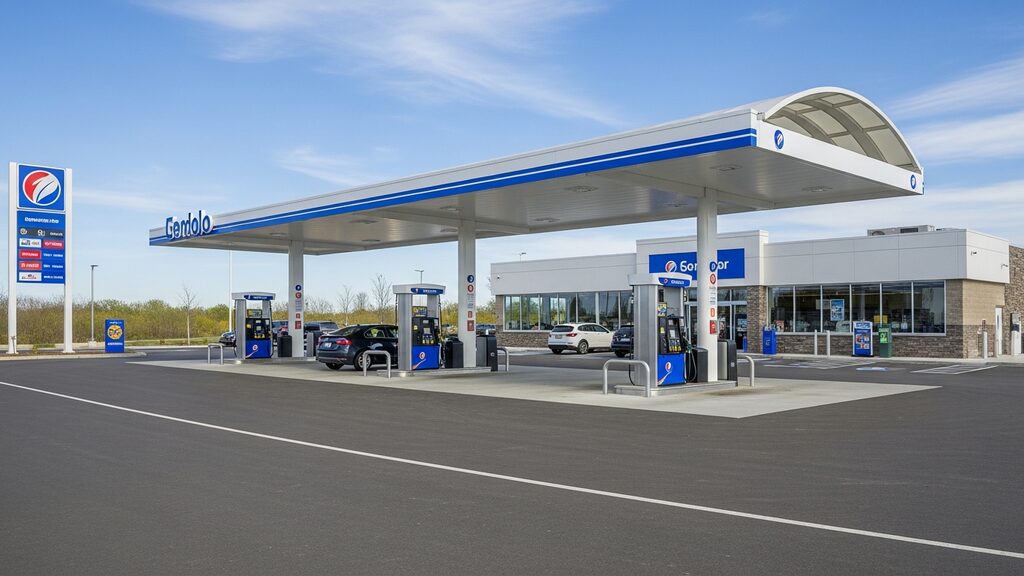
Feasibility study of a proposed SBA-financed expansion at an established major-brand fuel site in Mountain Home, Elmore County — razing a structure dating to 1962 and constructing a new 2,200-square-foot convenience store to capture inside-sales margin at a location whose fuel business is already proven. Stabilized Year 1 operations are projected at approximately $4,200,000 in revenue and approximately $246,000 of net operating income, confirming that the core business is viable before the expansion premium is counted.
The budget allocates $1,200,000 to the new convenience store building — 82.8 percent of total project cost, or $545 per square foot — a concentration the study defended explicitly: inside sales, not fuel, generate the majority of gross margin, so directing capital to the dominant revenue driver is the correct underwriting posture. SBA and lender fees of $85,000 represent a conservative 5.9 percent of cost for a multi-party 504 structure, and $120,000 of initial working capital — 8.3 percent — sits inside the five-to-ten percent range lenders treat as reasonable without overcapitalization.
An SBA 504 loan of $1,235,000 amortized over 25 years at an assumed 10.75 percent interest rate against $1,450,000 of fixed, known, and fully funded project costs, producing annual debt service of approximately $142,582 covered at 1.73x from initial stabilized operations.
The discipline in this study was scale honesty: the pro forma deliberately does not project demand beyond what is feasible within a neighborhood-scale convenience format, the 10.75 percent rate assumption builds in rate stress rather than optimism, and the sensitivity analysis tested whether the business as it exists — not as it might become — sustains the proposed debt. Coverage at 1.73x initial, improving thereafter, answered the question affirmatively under SBA SOP 50 10 underwriting standards.

Highest and best use analysis of an 8.343-acre, 363,429-square-foot commercial assemblage fronting N State Road 19 in Eustis, Lake County — a site whose developable footprint is defined by its constraints: 6.054 upland acres suitable for development, two wetland areas totaling approximately 2.3 acres (1.869 and 0.420 acres), and a portion lying within FEMA Flood Zone AE, producing a net buildable envelope estimated at 4.5 to 4.8 acres, or roughly 195,000 square feet after parking and stormwater requirements.
Each candidate use — medical office, flex space, bank branch, self-storage, urgent care, grocery, and combinations — was run through discounted cash flow modeling with residual land value calculation, terminal value discounting, entrepreneurial profit expectations, and submarket rent evidence averaging approximately $24.70 per square foot. Medical office and flex space emerged as the strongest single uses, bank branches as stabilizers, storage and urgent care as feasible but lower-productivity, and grocery as unsupportable on residual land value as a primary format.
Twenty single-use scenarios were costed in the feasibility ranking table at total costs of $5,550,000 to $7,550,000 — the highest and best use emerging not from any one of them but from the phased mixed program: Phase 1 delivers the flex space and bank pad for early income and equity recycling at roughly 65% loan-to-cost with a 1.30x DSCR sizing constraint, and Phase 2 delivers the medical office once tenants are secured. Each scenario carried site acquisition, preparation, hard and soft costs, and a twelve percent entrepreneurial profit, so the residual land values compare on a consistent, financeable basis.
Constrained-site HBU work is subtraction before addition: wetlands and the Zone AE floodplain had to be carved out and stormwater compliance engineered before any program could be sized, and only a subset of uses that achieve positive residual land value also produce returns above market expectations — the study’s ranking framework was built to find that intersection. The conclusion is a defensible, supported program identification rather than a single-use bet.

Highest and best use study of three parcels in downtown Mountain Home held under common ownership — two fronting N Main Street and one fronting N 2nd East — determining, parcel by parcel, the uses that are legally permissible, physically possible, financially feasible, and maximally productive, both individually and for the ownership viewed as a coordinated but not unified holding. The report explicitly rejects the convenient assumption that proximate parcels on a sketch constitute a seamless development tract.
The analytical framework treated the public alley system as a real boundary, which reorganized the entire conclusion: the western parcels form the Main Street–oriented retail component while the N 2nd East parcel stands alone with its own use determination, each evaluated on frontage role, parcel geometry, likely tenancy, downtown rent creation, and traffic pattern including the one-way access logic. Scenario testing included a build-ready commercial pad for long-term ground lease against build-to-suit alternatives, compared on land residual, financeability, and equity return under the user’s requested financing assumptions.
Screening feasibility tables priced every concept per parcel — total project costs from $1,300,000 to $3,100,000 for vertical programs, sized against a 1.30x DSCR maximum loan, equity required, value at an 8% capitalization rate, and land residual — under the ownership’s requested financing assumptions of prime plus a margin. 470 N Main Street, at 14,985 square feet the largest parcel and the strongest long-term vertical opportunity, was concluded as the primary future redevelopment parcel while failing the immediate financial feasibility test for speculative development. The city’s development-incentive ordinance, requiring minimum qualifying investment of not less than $500,000, was factored as a threshold condition rather than a direct abatement.
The hardest part of small-market downtown HBU work is resisting overstatement: a ground-lease benchmark can flatter a parcel’s value while leaving the residual only marginally positive, and the study said so plainly, concluding where the ownership would leave value on the table through fragmented disposition versus coordinated development. The conclusion strengthens downtown identity goals while remaining anchored to what actual market conditions and actual parcel geometry support.

Feasibility analysis of a Class A condominium sell-out in Winter Haven, Polk County, evaluated for conventional construction lending — an engagement defined by the willingness to reject the program as submitted. The sponsor’s 170-unit base case at $60,250,000 of total development cost failed the feasibility test; the study’s concluded program restructured the project to 184 units at $48,456,000, converting an infeasible submission into a financeable one.
A full sell-out absorption analysis — unit mix, pricing, monthly absorption pace, and presale thresholds — built into a fully linked financial model alongside the development cost optimization work, with the comparison between base case and concluded program carried through every schedule so the lender could see exactly which cost and program decisions moved the determination.
Conventional construction financing repaid through unit sell-out proceeds, with the development budget, contingency, and absorption-driven repayment schedule restructured around the 184-unit concluded program.
Independence was the engagement: a feasibility consultant paid to validate a $60,250,000 program instead concluded it infeasible and demonstrated what would be feasible — a larger unit count on a substantially smaller budget. The analytical work sat in the cost optimization (an $11,794,000 reduction in total development cost) and in defending the absorption assumptions that make any condominium sell-out determination credible to a construction lender.
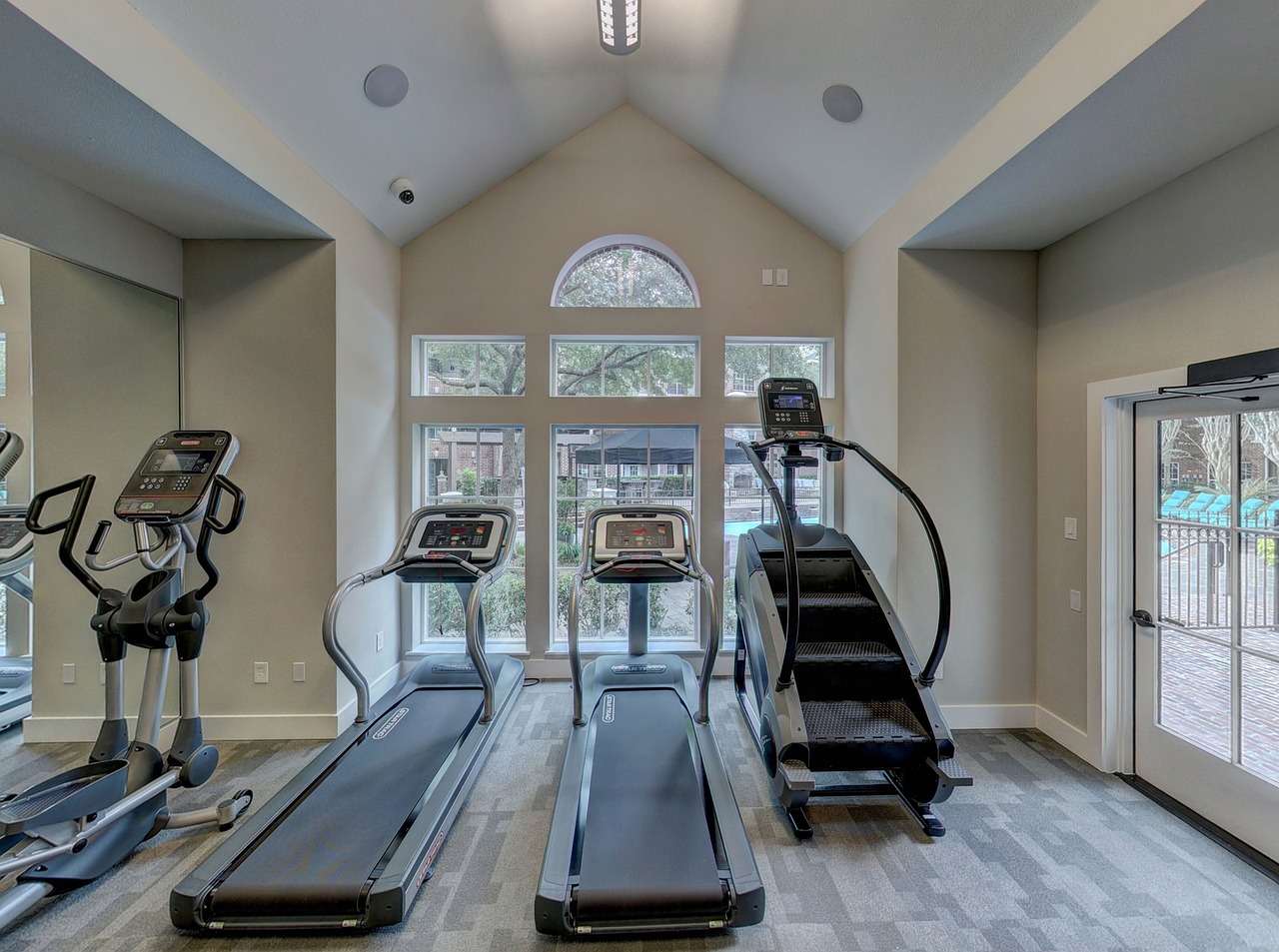
Feasibility analysis of a proposed 51,999-square-foot wellness center in Costa Mesa, Orange County, evaluated for SBA 504 construction-to-permanent financing — a large-format health, fitness, and wellness facility in one of Southern California’s most affluent and health-conscious trade areas.
Membership-model revenue analysis, trade-area demographics, competitive supply mapping across the Orange County fitness and wellness market, and construction-to-permanent underwriting consistent with SBA 504 requirements for special-purpose recreational property.
SBA 504 construction-to-permanent structure: senior bank construction loan converting to permanent first mortgage alongside the SBA debenture, with borrower equity injection per program minimums for special-purpose property.
Large-format wellness facilities are special-purpose buildings underwritten on the operating business, not the real estate — so the study’s weight fell on membership absorption, price-point defensibility in a market dense with boutique and big-box competitors, and the construction-period risk inherent in a 51,999-square-foot build carried on a construction-to-permanent structure.
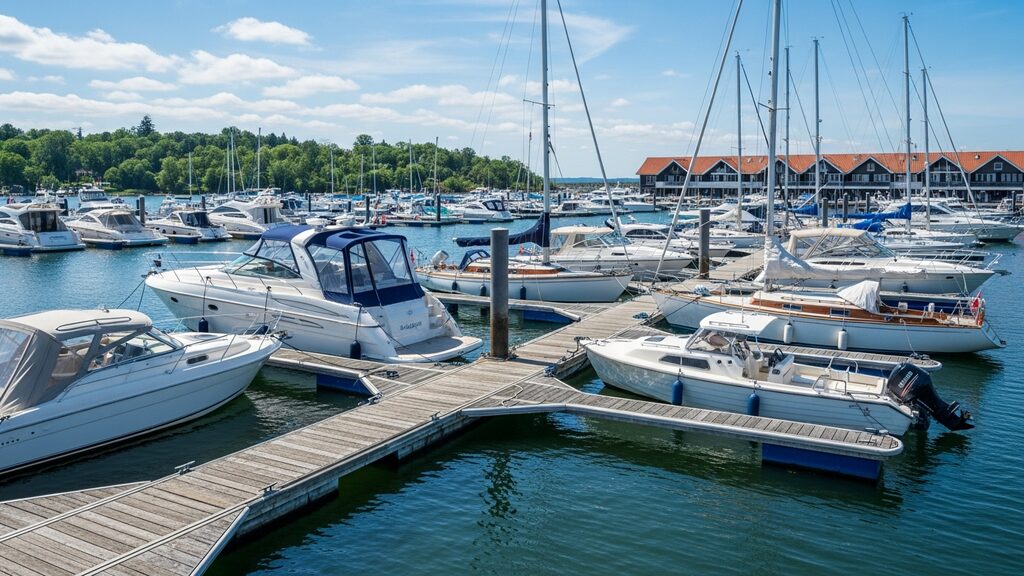
Feasibility analysis of a full-service marina and resort operation on Lake Cumberland — one of the largest reservoirs east of the Mississippi and among the busiest houseboating destinations in the United States — evaluated for a USDA Business & Industry guaranteed loan under Instruction 5001 in a rural Kentucky county where the marina is a primary economic anchor.
Multi-revenue-stream marina underwriting: wet-slip and dry storage rental, houseboat and watercraft rental fleets, fuel sales, service and repair, ship’s store, and food and beverage — each modeled against lake-level operating constraints, seasonality, and the destination tourism draw of the Lake Cumberland market.
USDA B&I guaranteed loan structure consistent with Instruction 5001 rural-area eligibility, collateralized by the marina’s real property, improvements, and operating assets.
Marina underwriting on a flood-control reservoir lives with the water level: seasonal drawdowns and multi-year lake-level management decisions directly drive slip utility, rental-fleet season length, and revenue timing, so the analysis had to demonstrate debt service capacity across the operating calendar rather than at a single stabilized point — alongside the concentration risk inherent in a destination market where the asset is both the business and the draw.
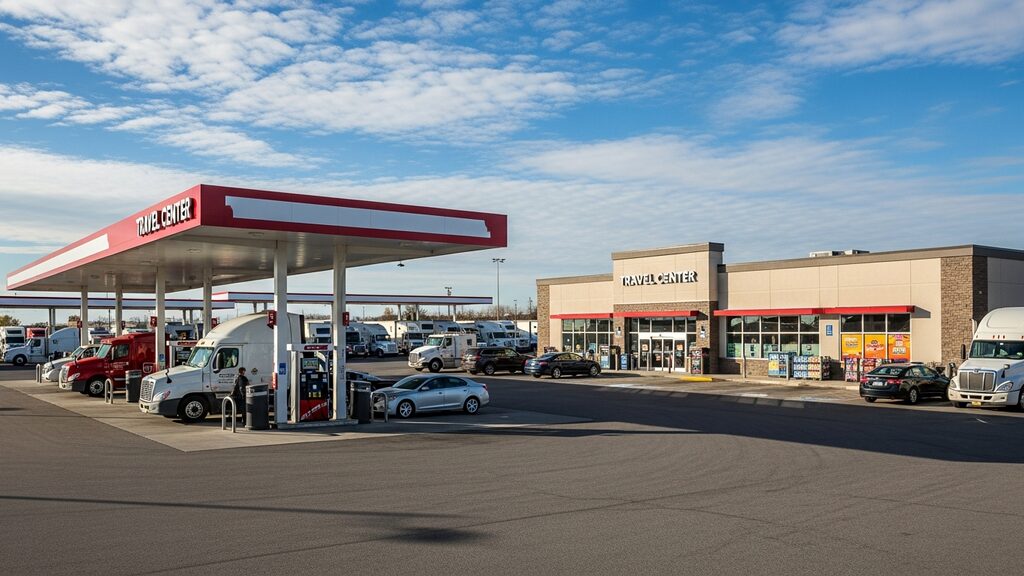
Feasibility analysis of a travel center combining branded fuel, convenience retail, and quick-service restaurant operations on the Interstate 5 corridor at Castle Rock, Cowlitz County — the I-5 gateway between Portland and Seattle traffic and the Mount St. Helens recreation draw — evaluated for SBA 504 financing.
Component-level revenue modeling across fuel gallons, inside sales, and QSR; corridor traffic capture analysis; and a complete 160-slide study supported by a 65-tab model in which every figure links to the assumptions tab — ten-year pro forma, sensitivity at ±5/10/15 percent, interest-rate stress, and the full ratio suite benchmarked against industry data.
SBA 504 structure: senior bank first mortgage, CDC debenture, and borrower equity injection, with fixed-asset eligibility and occupancy requirements confirmed under the program rules.
High-coverage deals carry their own analytical burden: a 3.12x Year 1 DSCR invites the question of whether the revenue model is too optimistic, so the study’s work was defending the fuel-volume and inside-sales assumptions against corridor traffic data and industry benchmarks — proving the coverage was earned by the site, not assumed by the model. Margin compression and competitive-entry scenarios left repayment capacity intact in every case tested.
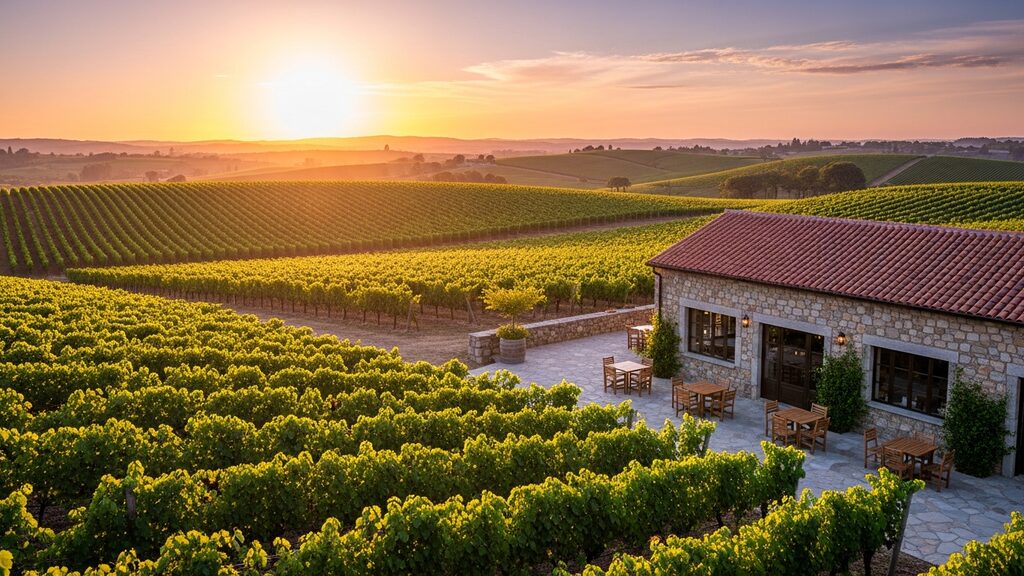
Feasibility analysis of a 17,771-square-foot luxury wedding and event venue with a 9-key boutique hotel in the Temecula Valley wine country — Southern California’s premier viticultural destination market — evaluated for SBA 504/7(a) financing on behalf of the lender and certified development company.
A dual-revenue hospitality model: high-margin wedding and event bookings anchored by the wine-country destination draw, with the boutique hotel keys capturing event-driven room nights and smoothing midweek utilization. Demand was benchmarked against the regional wedding market, venue comparables, and ADR evidence from the Temecula Valley lodging set.
Blended SBA 504/7(a) structure: senior bank financing, CDC debenture against the eligible fixed assets, and borrower equity injection consistent with special-purpose hospitality property requirements.
The study’s defining finding was physical, not financial: primary access runs over a one-lane unpaved road, and the analysis flagged it as the highest-priority conditional item — a constraint bearing on guest experience, emergency access, weather resilience, and ultimately the premium pricing the pro forma depends on. The determination was structured so the access condition had to be resolved before the otherwise favorable economics could be relied upon.
Feasibility analysis of a 100-site destination RV resort on 55 acres in Van Zandt County on the Interstate 20 corridor east of Dallas, evaluated for SBA 504 financing under SOP 50 10 8 — a ground-up outdoor hospitality development positioned for the East Texas leisure-travel and long-stay markets.
Site-by-site revenue modeling across transient, weekly, and extended-stay segments; capture-rate and leakage analysis quantifying the trade-area demand the resort can realistically absorb; and a complete 242-slide study with rebuilt global pagination, supported by a fully linked financial model through the standard sensitivity, rate-stress, and ratio suite.
SBA 504 structure: senior bank first mortgage, CDC debenture, and borrower equity injection, with the indicated value of $11,116,839 producing a 34.8 percent loan-to-value — a collateral cushion rarely seen in ground-up hospitality.
A favorable determination carrying twenty-three conditions precedent is a determination that does its job: the economics cleared comfortably — 2.758x Year 3 coverage on conservative absorption — but ground-up RV development stands or falls on execution items, so the conditions enumerated the permitting, utility, construction, and operational prerequisites one by one rather than waving at them. The capture-rate work carried the market case, tying projected occupancy to quantified regional RV demand rather than industry averages.

Feasibility analysis of a 7,200-square-foot dual-tenant retail building in Grain Valley, Jackson County — a fast-growing Interstate 70 suburb on the eastern edge of the Kansas City metropolitan area — evaluated for SBA 504 financing. The program pairs an owner-operated wine and spirits store with a national-franchise quick-service food tenant in a single new-construction building.
Trade-area demand analysis for both retail formats, franchise-system underwriting for the quick-service component, construction and equipment budgeting carried at line-item level, and a 271-slide master study assembled with full cross-referencing between the ownership structure, square-footage program, and financial schedules.
SBA 504 structure: senior bank first mortgage, CDC debenture, and borrower equity injection, with the equipment budget for both tenant spaces carried inside the eligible project cost basis.
Two businesses under one roof and one loan means every inconsistency compounds: the engagement included a dedicated consistency revision pass reconciling the ownership structure, standardizing the square-footage program across every schedule, aligning the equipment budget, and incorporating the franchisor’s multi-unit approval language as a documented condition — the unglamorous work that determines whether a study survives lender and SBA review without exception items.
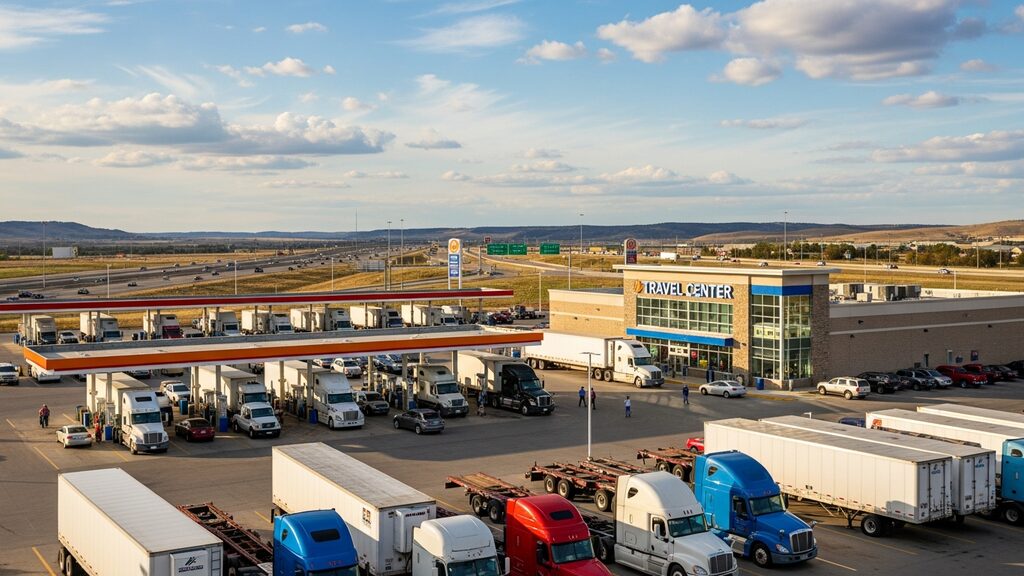
Feasibility analysis of a highway travel center — branded fuel, convenience store, quick-service restaurant, and a multi-tenant retail strip — on the US-50 corridor at Mound House, sponsored by a tribal Section 17 federal corporation, with the financing structured at the component level so each income stream is underwritten on its own merits.
A 170-slide study with 27 appendix exhibits, supported by a 57-tab fully linked model carrying 3,696 formulas, in which eight tribal sovereign tax exemptions are embedded directly in the base-case operating economics — fuel excise, sales, and property tax positions that materially alter both the margin structure and the competitive posture against off-reservation operators.
Component financing: the fuel and convenience component and the retail strip are sized, collateralized, and covenanted separately, allowing the lender to advance against the 8.38x-coverage fuel business without cross-subsidizing the slower-stabilizing retail strip at 1.50x.
Tribal sovereign structures demand underwriting discipline in both directions: the eight tax exemptions are real economic advantages that belong in the base case, but each had to be documented to its legal source so the lender relies on established sovereign positions rather than assumptions — and the Section 17 corporate structure required the analysis to address sovereign immunity, waiver scope, and collateral enforceability head-on, the questions every lender to Indian Country asks first.
Feasibility analysis of a 34-site waterfront RV resort at Navarre on Florida’s Emerald Coast — between Pensacola Beach and Destin in one of the Gulf’s strongest beach-tourism corridors — evaluated for SBA 504 financing. Direct water frontage positions the property at the premium end of the regional RV market.
Small-site premium-rate underwriting: with only 34 sites, the revenue case rests on rate rather than volume, so the analysis benchmarked nightly and seasonal rates against the waterfront RV comparable set, modeled the Gulf Coast seasonality curve, and quantified the snowbird long-stay segment that carries shoulder-season occupancy.
SBA 504 structure: senior bank first mortgage, CDC debenture, and borrower equity injection consistent with special-purpose outdoor-hospitality property requirements.
Coastal Florida underwriting starts with wind and water: flood-zone determination, named-storm insurance cost and availability, and elevation requirements bear directly on both the development budget and the operating expense load, and a 34-site property has no scale to absorb surprises — so the study’s discipline was in the expense side and the downside cases as much as the premium-rate revenue argument.
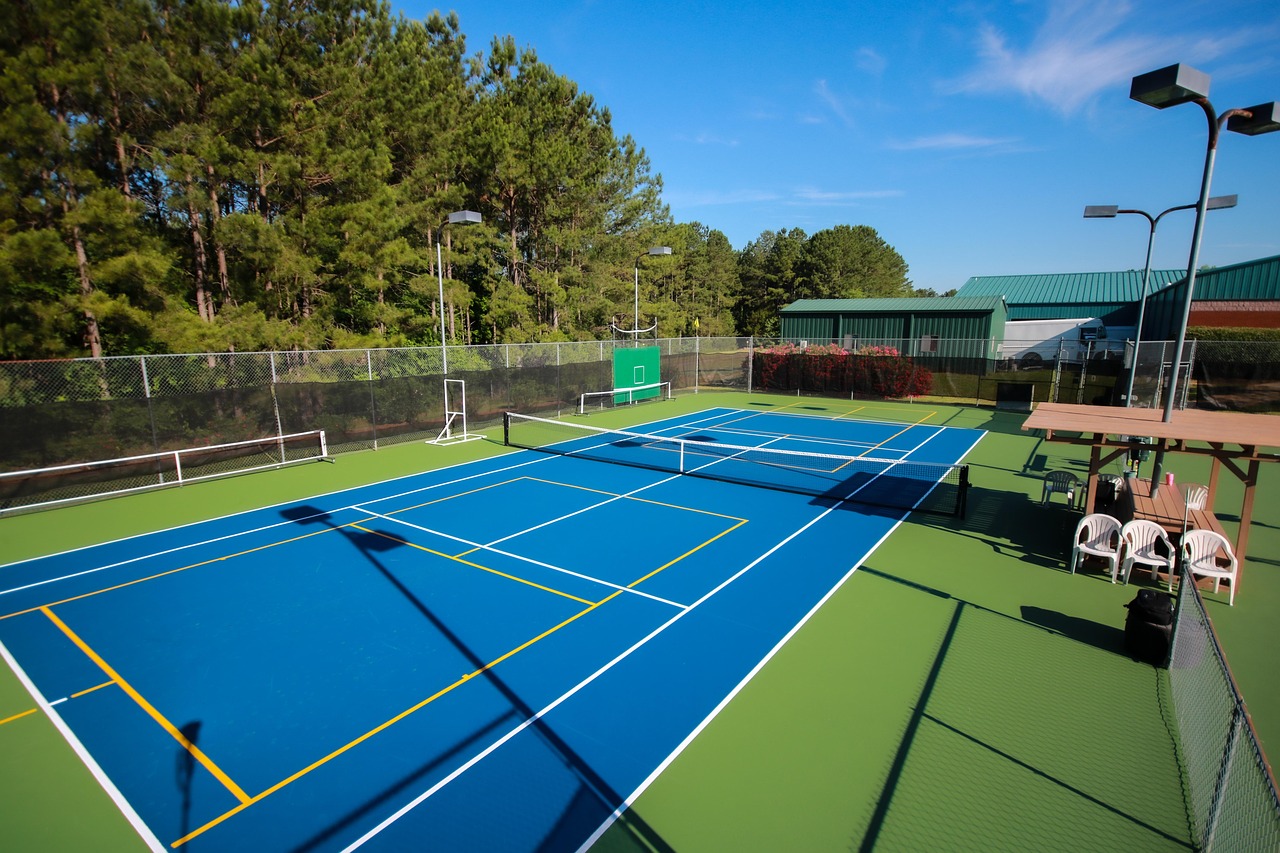
Feasibility analysis of a pickleball clubhouse and social venue in Buda, Hays County — on the fast-growing southern edge of the Austin metropolitan area — evaluated for SBA 7(a)/504 financing. The concept pairs dedicated court play with a club-format social, food, and beverage operation, positioning the venue as a membership destination rather than a court-rental commodity.
Membership and programming revenue modeling across leagues, open play, lessons, and events, with the social and beverage operation underwritten as a margin driver in its own right; trade-area demographics for the Austin MSA’s southern growth corridor; and competitive mapping of the regional indoor and outdoor court supply.
SBA 7(a)/504 structure sized to the real-estate and equipment program, with borrower equity injection per program requirements for special-purpose recreational property.
Early-cycle recreation concepts carry category risk in both directions — explosive participation growth against an unproven local revenue model — so the underwriting question was whether the membership and social-spend assumptions would hold once the novelty curve flattens, answered through conservative ramp assumptions and benchmarking against the operating clubs that preceded this market.
A consulting engagement commissioned in March 2026 to determine the highest and best use of a commercial parcel on East Colorado Boulevard in Pasadena. Four candidate development scenarios were modeled in full and ranked under the Appraisal Institute four-test sequential framework. The study is a consulting work product prepared under that framework; it is not an appraisal and renders no opinion of value.
Each scenario carried its own development budget, absorption schedule, financing structure, and return stack, with the concluded program differentiated on levered internal rate of return, equity multiple, and profit margin rather than on gross value alone. Conclusions were benchmarked against recent land sales in the corridor so that the residual implied by the concluded use is observable in the local market rather than purely model-derived.
A highest and best use determination of this kind gives a construction or bridge lender an independent, scenario-tested basis for the use assumption embedded in any subsequent appraisal — the analysis demonstrates not only that the concluded program is feasible, but that the competing programs are inferior and by how much.
The differentiation between scenarios was driven by structural factors — density achievable under the corridor zoning, parking ratios, and the cost-to-revenue relationship of each program — rather than by aggressive rent or pricing assumptions, which were held to market evidence across all four models.

Restoration of an idle sugar refinery in Santa Rosa, Texas to full production through infrastructure rehabilitation, modernization, and recommissioning. The property includes approximately 359,000 square feet of industrial buildings, warehouses, processing facilities, and cane yards together with supporting utility infrastructure. At design capacity the facility processes approximately 2.05 million tons of cane annually, equivalent to roughly 246,000 tons of refined sugar.
The refinery’s Rio Grande Valley location provides dual-market access: the Texas market, which consumes more than 500,000 tons of refined sugar annually, and the established refining corridor served by Louisiana and Florida producers located far from the border. This dual access materially enhances revenue stability relative to a single-market processor and underpinned the demand analysis.
Total capitalization of $38,110,000, funded by $25,000,000 of USDA Business & Industry guaranteed debt and $13,110,000 of equity provided by aligned sponsors. The structure places roughly one-third of the capitalization in equity ahead of the guaranteed facility, consistent with the tangible-balance-sheet expectations of 7 CFR Part 5001.
Restoring a dormant heavy-processing asset concentrates risk in the technical dimension: rehabilitation scope, commissioning schedule, and cane supply contracting all had to be evidenced rather than assumed. The analysis therefore weighted contractor capability, equipment condition, and grower-supply arrangements alongside the financial projections, and stated each dependency plainly as a condition of the program rather than absorbing it into base-case assumptions.

A highest and best use study of a commercial corridor parcel in Chino, California, evaluated under the four required tests of legal permissibility, physical possibility, financial feasibility, and maximal productivity. The candidate uses screened included retail-only development, mixed-use development, a gasoline station with ground-lease pad, and an express tunnel car wash with ground-lease pad, in both branded and unbranded configurations.
A land residual indications grid was constructed for each feasible use, deriving stabilized net operating income, applying market capitalization rates, and netting total development cost to an implied land residual. Retail-only development produced a comparatively low residual; mixed-use development at approximately $38 million of cost did not support land value at current cost and rent levels; the gasoline alternative performed strongly but carries environmental and fuel-margin volatility; and the branded car wash plus pad configuration produced the highest residual of the set.
The branded express tunnel car wash integrated with a national drive-through ground-lease pad demonstrated strong capital efficiency, balanced active and passive income, a manageable stabilization timeline, and favorable financing capacity — the configuration that generates the most value relative to cost among the tested programs. A corridor car wash saturation analysis was performed to confirm depth of unmet demand before the use was concluded.
The discipline of the engagement lay in keeping the screening honest: each alternative was carried through the full four-test sequence rather than eliminated early, so that the conclusion rests on a complete comparative record — including the finding that a financially feasible use (the gas station alternative) is nonetheless not maximally productive once environmental exposure and margin volatility are priced.
A Phase II hangar and aviation-services expansion at North Central West Virginia Airport in Bridgeport, West Virginia, with a total Phase II project cost of $9,201,736. The expansion completes an established maintenance, repair, and aviation-services operation, adding hangar capacity to a platform already generating revenue under existing contracts.
The analysis treated the incumbent operation as the central underwriting fact: existing customer relationships, contract coverage, and demonstrated execution capability materially de-risk the expansion relative to greenfield aviation projects. Customer base, contracts, and revenue concentration were examined explicitly, including the dependency profile created by anchor relationships.
Contractor capability, materials, and labor availability were reviewed against the construction plan and budget, with fire-protection scope and identified contractor records examined as part of the technical record. The plans and budget were found to be actionable as presented, with the conditions disclosed in the body of the study.
Aviation-services expansions concentrate two risks the study had to weigh against the platform’s incumbency: revenue concentration in a contracted customer base, and the schedule sensitivity of hangar construction at an operating airfield. Both were stated plainly and carried into the coverage analysis rather than netted away.

Development of a private Montessori school serving 120 students in the Avon and Edwards communities of Colorado’s Vail Valley, with a total project cost of $8,800,000. The program serves a resort-economy labor market in which year-round professional families face acute shortages of high-quality early and primary education capacity.
Enrollment demand was evidenced through the mechanisms that matter in a capacity-constrained market: waitlists with families paying deposits to secure future access, and employer partnerships with major Vail Valley employers for whom education capacity is a workforce-retention issue. Favorable demographic and economic conditions in Eagle County supported the tuition assumptions underlying the revenue model.
At capacity, tuition revenue of $3,435,000 against operating costs of $2,611,220 produces an operating cushion sufficient to service the contemplated debt of approximately $6,100,000 — 69 percent of the program — with the balance funded as equity. The ramp to full enrollment, rather than stabilized operations, is where the coverage analysis concentrated its attention.
Private-school feasibility turns on the enrollment ramp: tuition revenue arrives per enrolled student while costs are substantially fixed from opening day. The study therefore tested the early-year gap between staffed capacity and actual enrollment, and treated the waitlist and employer-partnership evidence as the principal mitigant to ramp risk rather than assuming capacity from the first term.
Development of a large-format liquor retail operation in Doraville, Georgia — a 32,829 square foot building with construction budgeted at $8,084,744 under a lump-sum contract. Total development cost equates to $404 per square foot inclusive of land, soft costs, furniture, fixtures, equipment, and working capital.
The Doraville location sits in a dense, demographically favorable section of the Atlanta metro: the analysis cited a favorable age distribution and favorable demographics within the one-mile and broader trade rings, alongside favorable distributor credit terms supporting inventory economics at large-format scale.
The projections indicated stabilized performance exceeding total project costs by 121 percent, with Monte Carlo simulation applied to validate the robustness of that margin across simultaneous variations in revenue, margin, and cost inputs — the dispersion analysis rather than the point estimate carrying the conclusion.
Large-format beverage retail concentrates risk in two places the study addressed directly: licensing — a binary regulatory gate that no financial cushion can substitute for — and inventory-carry economics, where distributor terms and turn rates determine working-capital adequacy. Both were stated as explicit dependencies of the program.
Ground-up development of an express tunnel car wash at 2424 West Main Street in Alhambra, California, in the heart of a primary arterial retail corridor. The total development budget of approximately $7,480,000 is financed under the SBA 504 program through a $3,225,000 bank loan in first position, an SBA debenture, and a $1,289,000 borrower equity injection on fixed 25-year amortizations.
The site’s trade area presents favorable demographics within the primary ring and a favorable competitive position: the analysis examined corridor traffic, membership-model penetration achievable at the location, and alignment with the industry’s documented success factors for express-tunnel operations in dense Southern California submarkets.
Drawings and conditional use permit approvals formed part of the evaluated record, placing the project beyond the entitlement-risk stage that defeats many car wash developments in California jurisdictions and allowing the construction budget to be assessed against an approved scope.
Express car wash underwriting in Southern California turns on saturation: membership economics are strong until a competitor opens inside the drive-time ring. The competitive analysis therefore mapped existing and pipeline tunnels within the trade area, and the coverage analysis was tested against membership-penetration assumptions held below the levels achieved by mature comparable sites.
Development of an off-airport parking facility in Humble, Texas serving George Bush Intercontinental Airport (IAH), with a total project cost of $4,600,000. Off-airport parking is a yield business: the facility competes on price, shuttle convenience, and security against both on-airport garages and established off-airport operators.
The study constructed a competitor table covering land area, capacity, and density for the existing IAH off-airport parking set, locating the subject’s capacity within the observed market rather than against abstract benchmarks. Zoning, land use, and regulatory compliance were reviewed alongside construction cost validation and schedule.
Monthly operating and cash flow summaries carried the early operating period, with discounted cash flow analysis and sensitivity testing applied over the projection horizon. The structure of the analysis was designed to address the question lenders ask of parking assets: how long the ramp to stabilized occupancy runs and what coverage looks like during it.
Airport parking demand is a derived demand — it moves with enplanements, airline scheduling, and ride-share substitution, none of which the operator controls. The analysis treated ride-share penetration and on-airport capacity pricing as the principal structural risks and tested the pro forma against adverse movements in both.

Acquisition, renovation, and reopening of a historically significant structure in Reading, Pennsylvania as a wedding and special events venue. The $250,000 acquisition basis is the project’s defining economic fact: combined with renovation-focused capital deployment, it produces a cost-to-income relationship that materially strengthens feasibility, with capital allocated to revenue-enabling improvements, regulatory compliance, and operational readiness rather than speculative enhancements.
At stabilization the venue is projected to generate approximately $441,000 in annual net operating income against annual debt service of approximately $127,000 — coverage exceeding 3.4x, evaluated on the full 25-year amortization schedule consistent with standard underwriting practice even though the stated loan term is seven years. A 42 percent EBITDA margin provides substantial cushion, and expenses are structured to scale with event volume, contracting during lower-volume periods.
The financing structure — a $1,500,000 fully amortizing facility at 7.00 percent fixed — aligns with the economic life of the improvements and the durability of event demand. Working capital and a conservatively sized contingency allowance are carried inside the project cost, reducing reliance on short-term borrowing or owner contributions during early operations.
Reopening a dormant historic asset places execution risk in the renovation scope: rehabilitating older buildings carries inherent uncertainty that the contingency must absorb without funding scope expansion. The early operating years also demand management accountability, consistency, and responsiveness before the booking pipeline matures — both risks were stated plainly and carried as the program’s principal conditions.
A feasibility study consultant prepares an independent analysis of whether a proposed project is economically viable and capable of supporting its financing. Wert-Berater, Inc. has served as feasibility study consultants since 1998 for SBA, USDA, EB-5, conventional, and institutional financing, with fiduciary duty to the lender and agency rather than the borrower.
Independent SBA feasibility analysis tests market, operating and financial assumptions when requested for the transaction. Startup or change of ownership alone does not establish an automatic study mandate. Program-specific repayment tests and source headings are explained in the SBA feasibility study guide.
For version-specific underwriting context, consult SBA SOP 50 10 8.1.
Fees scale with the lending program, asset class, capital-structure complexity, and data readiness, and are quoted per engagement after a brief qualification call. Across 4,000+ engagements since 1998, the study fee has typically represented a small fraction of one percent of total project cost — while determining whether the rest gets funded. What drives the cost →
A USDA feasibility study is an independent analysis prepared under RD Staff Instruction 5001 for USDA Business & Industry, Community Facilities, REAP, and VAPG programs, documenting market demand, technical viability, management capacity, and financial sustainability for Rural Development review.
Since 1998, Wert-Berater, Inc. has completed 4,000+ engagements supporting capital allocation decisions — including 1,300+ SBA feasibility studies accepted by lenders and 950+ USDA feasibility studies reviewed in agency financing — evaluating more than $43.8 billion in project value.
Standard studies are completed in 10 to 15 business days from receipt of complete project data; complex or international assignments may require 20 to 25 business days. Lenders sequencing the study early in the application — rather than after underwriting raises the question — routinely save weeks of loan-cycle time. When the applicable SBA SOP requires a study →
Legal disclosure. Wert-Berater, Inc. offices are mailing addresses only. Following the COVID-19 pandemic the firm has elected to work remotely; its office locations receive mail and are not staffed for visitors or in-person meetings. Headquarters mailing address: 1968 South Coast Hwy, Ste 2382, Laguna Beach, CA 92651.
Wert-Berater, Inc. is an independent provider of feasibility studies and other related services. The firm does not provide financing or equity investment advice, and does not arrange, broker, or place debt or equity capital of any kind.
All appraisal assignments are performed by Bruce E. Jones, MAI, ASA-GC, BCA, CMEA, a member of the Appraisal Institute since 2006, a staff member of Wert-Berater, Inc. and owner of Special Purpose Realty Valuation.
Thousands of real estate, business, and machinery appraisal and litigation assignments.