
Independent market, economic and financial feasibility analysis for critical-mineral extraction, processing, refining and advanced-material projects seeking financing under EXIM's Make More in America Initiative or limited-recourse project finance. Fixed fee, never contingent on the finding.
On August 7, 2026 the Export-Import Bank of the United States announced $58 million across three new critical-mineral transactions — a $25 million loan to Westwater Resources in Alabama for graphite, $25 million to Global Advanced Metals in Pennsylvania for tantalum and niobium, and an $8 million loan to 5E Advanced Materials, LLC in California for its 5E Boron Americas project. For sponsors in these sectors the signal is clear enough. What the announcement does not change is the underwriting question every one of these transactions still has to answer: can the project be shown to be technically achievable, commercially viable and capable of servicing its debt when assumptions deteriorate? That is the question an independent feasibility study exists to test. For the program mechanics, see the EXIM feasibility study hub, the MMIA feasibility study page and EXIM project finance.
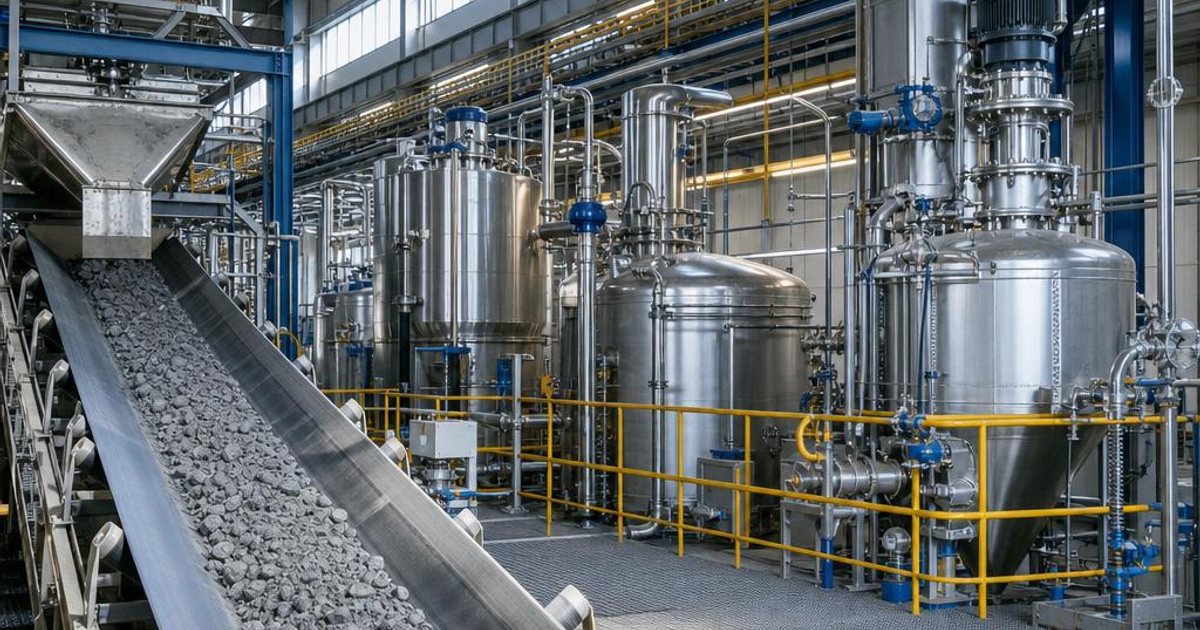
EXIM described the August 7 transactions as strengthening U.S. supply chains and the critical industries that depend on them. Graphite for battery manufacturing, tantalum and niobium for electronics, magnets and steel, boron for permanent magnets, semiconductors and glass — the common thread is materials the U.S. currently imports at scale. Availability of a financing pathway, however, is not eligibility, and eligibility is not approval. Each remains a determination for EXIM and any participating lender.
What a sponsor controls is the quality of the evidence it brings. EXIM's project-finance information requirements call for a summary of the project contained in an independently prepared feasibility study and/or detailed information memorandum prepared by a qualified party, and its published approach expects feasibility work, front-end engineering and design, an approved Environmental and Social Impact Assessment and a preliminary finance plan to be complete before an application arrives. A promotional business plan explains why a project should succeed. A feasibility study tests whether it can.
MMIA makes EXIM's existing medium- and long-term loans, loan guarantees and insurance available to export-oriented domestic manufacturing projects. Two published criteria drive eligibility. The export nexus — the percentage of production or shipments tied to exports — is 15 percent for small businesses, transformational export areas and climate-related transactions, and 25 percent of output exported or expected to be exported for projects in other sectors. Jobs scale the financing available to an individual project, measured across construction and the life of the financing.
Which threshold applies to a given critical-mineral project depends on how EXIM characterizes the applicant and the transaction; that is EXIM's call, not ours, and it is worth confirming with the Bank or your lender early because it changes what the study has to evidence. Either way the study carries the same burden: document the export activity credibly rather than aspirationally, and tie the jobs claim to a staffing plan the operating model can actually pay for.
MMIA also matters further down the chain than the mine. Processing plants, refineries, separation facilities, battery-material and magnet-material production, semiconductor-material production, metal and alloy processing and recycling facilities are all domestic industrial capacity, and all face the same evidentiary test.
Demand and forecast demand, historical and projected pricing, end-use markets, domestic and international consumption, import dependence, competing and planned capacity, customer concentration, substitution risk, export markets, offtake counterparties, pricing mechanisms and logistics. For specialized minerals and advanced materials the analysis has to move past generic commodity forecasts and identify the market actually accessible to the project's specifications, purity, form, geography and customers. A global tonnage forecast is not a market for a plant that produces one grade for four buyers.
Resources and reserves, extraction method, metallurgy, recovery rates, processing methodology, throughput, yields, equipment, utilities, water, waste and tailings, infrastructure, transportation, site development, construction schedule, commissioning and ramp-up. We review that work and reconcile it to the model; we do not produce it. A production target unsupported by equipment capacity, recovery rates, feedstock availability or operating hours does not become a bankable revenue forecast because it appears in a spreadsheet.
Site and mine development, plant construction, production equipment, infrastructure, electrical and water systems, roads and rail, storage, laboratories, environmental controls, engineering and EPC, owner's costs, contingency, interest during construction, startup and working capital — tested against comparable facilities rather than reproduced from the sponsor's budget. Operating analysis covers labor, feedstock, energy, reagents, consumables, maintenance, transportation and environmental compliance.
Critical-mineral projects usually depend on a concentrated group of industrial customers, so the analysis separates contracted revenue from uncontracted or merchant revenue and examines minimum purchase obligations, pricing formulas, counterparty creditworthiness and termination provisions. The same discipline applies upstream: a project dependent on third-party feedstock, concentrates or intermediates has to show inputs will be available in the quantity, quality and price the plan assumes.
Sources and uses, construction draws, sponsor equity, senior and subordinated debt, interest during construction, ramp-up, revenue and cost of goods sold, EBITDA, working capital, maintenance capital expenditure, taxes, cash flow available for debt service, coverage by period, break-even production and break-even price, project and equity IRR and net present value — fully linked, with no hardcoded values.
The base case alone settles nothing. Models are stressed for commodity price declines, lower production and recovery, cost overruns, construction delay, higher energy, labor and feedstock costs, slower ramp, customer loss, offtake delay, rate increases and combined downside scenarios. A project that services its debt only when every assumption performs perfectly has not demonstrated bankability.
Assignments are scoped to the particular project, financing structure and reviewing lender or agency. Recent and current interest concentrates in:
Scope of practice. Wert-Berater does not replace a project's geologist, qualified person, mining engineer, metallurgist, process engineer, environmental consultant or EPC contractor, and does not issue mineral resource or reserve estimates. The firm's role is independent market, economic and financial feasibility analysis that integrates those qualified technical inputs so a lender or agency can judge whether the complete project is commercially and financially supportable.
EXIM publishes no mandatory template, which is precisely why the study is judged on substance: whether it evidences market demand, production economics, the export nexus and a reasonable assurance of repayment in a form EXIM's own consultants can trace and stress.
EXIM then retains its own independent engineers, market consultant, insurance advisers and outside counsel — at the sponsor's cost — to test the package. The sponsor's study is read adversarially by professionals paid to find the hole in it, which is the standard it should be built to survive.
The connective tissue matters as much as the sections: technical assumptions have to reconcile to the financial model, and the revenue forecast has to reconcile to identified customers on stated terms.
Whether a specific project qualifies, which export-nexus threshold applies and how the transaction is structured are determinations for EXIM and participating lenders.
The MMIA-specific work sits on top of ordinary feasibility analysis rather than replacing it; the export nexus and jobs evidence are additional burdens of proof, not substitutes for demand and cost analysis.
Our fee is fixed before work begins and is never contingent on the conclusion. If the numbers do not support the project, the report says so — which is the only reason a lender treats the finding as evidence at all.
The feasibility role integrates geological, mining, metallurgical, process-engineering and environmental work produced by appropriately qualified professionals with independent market and financial analysis. Disciplines requiring separate licensure or certification stay with those professionals.
Sources: EXIM news release, August 7, 2026 — $58M in critical mineral deals, Make More in America Initiative, Guidelines for Submitting a Successful Project Finance Application and Our Approach to Project Finance. EXIM requirements change; confirm current guidance with EXIM or your lender before relying on any summary, including this one. The Westwater Resources, Global Advanced Metals and 5E Advanced Materials transactions are cited solely as publicly announced examples of EXIM's critical-minerals financing activity; Wert-Berater did not participate in them.
Tell us the material, the process route, the offtake position and the financing structure you are contemplating. We will tell you what the study has to prove, what evidence is missing, how long it takes and what it costs — before you commit to anything.
Qualify a critical-minerals project. Scope, timeline and fee confirmed in writing before work begins. Independent findings, never contingent on the outcome.
Schedule a Zoom Call →Legal disclosure. Wert-Berater, Inc. offices are mailing addresses only. Following the COVID-19 pandemic the firm has elected to work remotely; its office locations receive mail and are not staffed for visitors or in-person meetings. Headquarters mailing address: 1968 South Coast Hwy, Ste 2382, Laguna Beach, CA 92651.
Wert-Berater, Inc. is an independent provider of feasibility studies and other related services. The firm does not provide financing or equity investment advice, and does not arrange, broker, or place debt or equity capital of any kind.
All appraisal assignments are performed by Bruce E. Jones, MAI, ASA-GC, BCA, CMEA, a member of the Appraisal Institute since 2006, a staff member of Wert-Berater, Inc. and owner of Special Purpose Realty Valuation.