
Texas is one of the strongest U.S. markets for sports facility development — but the opportunity is not evenly distributed, and not every project pencils. Here is where demand is real, which concepts are financeable, and the discipline lenders require.
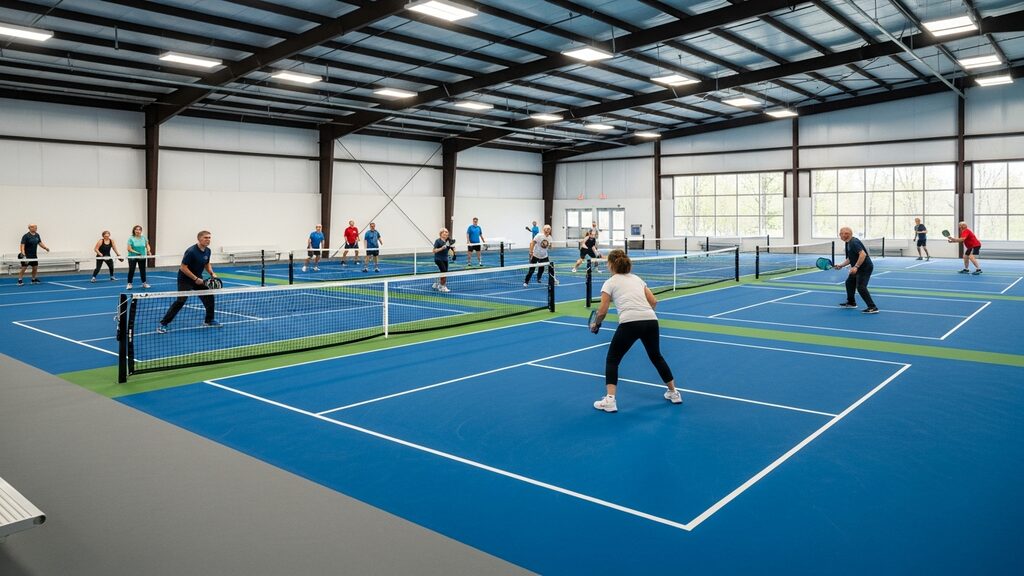
Firm-wide engagement figures are distinct from project-specific findings and their stated source periods.
Texas is one of the strongest U.S. markets for sports facility development, but the opportunity is not evenly distributed and not every project pencils financially. The best opportunities are in youth and amateur sports — especially indoor court facilities for volleyball, basketball, cheer, wrestling, futsal, and pickleball; indoor turf and covered-field concepts that solve Texas heat risk; outdoor tournament complexes only where hotel demand and public funding support the economics; mixed-use sports campuses with hotels, restaurants, retail, performance training, and sponsorship revenue; and affordable community-access facilities in underserved urban and border markets, usually with nonprofit or public funding.
The single biggest warning in this sector is that sports tourism economic impact and facility-level profitability are different things. A city may justify a complex because hotels, restaurants, and sales taxes benefit the community. A private developer, by contrast, must monetize rent, tournaments, camps, leagues, training, concessions, memberships, sponsorships, and real estate. This analysis walks Texas demand and unmet demand, ranks facility types and underserved markets, lays out cost and operating ranges, and ends with a disciplined build strategy for private, public, and public-private sponsors. Keeping those two questions apart is exactly what an independent sports facility feasibility analysis is for, since visitor spending captured by hotels and restaurants never reaches the facility’s own coverage ratio.
Macro demand is strong. Texas reached about 31.7 million residents in July 2025, added roughly 391,000 residents from 2024 to 2025, and remained the top state for numeric population growth. Texas population is also highly concentrated in the Texas Triangle — Dallas–Fort Worth, Austin, San Antonio, and Houston — with counties on and east of I-35 holding about 87.3% of the state’s population.
That matters because sports facilities need dense youth populations, family income, hotels, road access, and repeat local use. North Texas alone is showing extraordinary growth: the North Central Texas Council of Governments estimated the region at 8.72 million residents in 2025, up more than 886,000 since the 2020 Census. Collin County added almost 76,000 residents in one year, while Fort Worth, Celina, McKinney, and Princeton were among the largest city-level growth contributors.
Texas tourism gives sports facilities a demand tailwind. Travel Texas reported 62 million travelers, $97.5 billion in visitor spending, a $199.5 billion total economic impact, 1.3 million supported jobs, and $9.2 billion in state and local taxes in 2024.
Sports ETA’s 2025 State of the Industry work estimated 339 million U.S. sports travelers, including 227.6 million participatory sports travelers and 111.4 million spectator sports travelers. Participatory sports — mostly youth, amateur, and rotating collegiate events — produced $60.1 billion in direct economic impact, while spectator sports produced $51.1 billion. That is the core reason cities keep building tournament complexes: youth sports create hotel nights. Sports ETA also reported that 65% of surveyed destinations said sports events were their largest hotel-room-night generator across travel segments.
| Texas benchmark | Reported economic signal |
|---|---|
| Round Rock Sports Center & program | More than $210 million in economic activity since the facility opened; the expanded indoor facility now hosts over 70,000 players and 120,000 spectators annually. |
| 2025 AAU Junior Olympic Games (Harris County / Houston) | Estimated $90 million economic impact and 30,000+ room nights. |
| 2025 TAAF Games of Texas (Bryan–College Station) | Estimated $6.5 million economic impact and 13,865 room nights. |
Texas has a unique weather-driven facility gap. UIL’s 2025–2026 heat plan recommends using Wet Bulb Globe Temperature (WBGT) to monitor outdoor athletic conditions and to modify practice length, rest, hydration, and equipment use — and even to terminate activity at certain WBGT levels. That creates a real business case for indoor turf, air-conditioned court complexes, shaded or covered outdoor practice fields, evening-lighted fields, heat-safe training centers, and hybrid indoor/outdoor sports campuses.
This is already showing up in project activity. Port Arthur has a planned $4 million, 14,300-square-foot air-conditioned indoor soccer facility; Webster, near Houston, has a planned $9.5 million, 65,639-square-foot indoor sportsplex for basketball, volleyball, pickleball, futsal, and multisport training.
Ranked by overall attractiveness, weighing demand durability, revenue diversity, weather resilience, and how well facility-level economics stand on their own.
| Rank | Facility type | Attractiveness | Why |
|---|---|---|---|
| 1 | Indoor court sports complex | Very high | Volleyball, basketball, cheer, wrestling, camps, local leagues, tournaments, all-weather use. |
| 2 | Indoor turf / futsal / soccer training | Very high | Solves heat and rain; soccer, flag football, lacrosse, baseball/softball training. |
| 3 | Outdoor diamond + rectangle tournament complex | High, but public-finance heavy | Strong hotel impact, but direct facility revenue often does not cover capex alone. |
| 4 | Pickleball / racquet social club | High in select markets | Strong adult demand, but saturation risk is rising in affluent metros. |
| 5 | Sports performance + rehab + training hub | High | Works near schools, clubs, hospitals, colleges, and affluent suburbs. |
| 6 | Affordable community sports center | High social need, moderate financial return | Best with nonprofit, school district, city, hospital, or corporate funding. |
| 7 | Aquatics center | Moderate | Real need, but expensive to build and operate; usually public/school-driven. |
| 8 | Ice facility | Selective | Works in DFW/Houston/Austin/San Antonio niches, but utility cost and utilization risk are high. |
| 9 | Esports venue | Selective | Best as an add-on, not as the primary real estate thesis. |
| 10 | Pro arena / stadium | Politically and financially complex | Works only with an anchor tenant, district financing, public support, and mixed-use economics. |
Priority markets where family growth, drive access, and demand generators outrun the current supply of modern, appropriate facilities.
| Priority | Market / corridor | Why underserved or attractive | Best concept |
|---|---|---|---|
| 1 | Far North DFW: Celina, Prosper, McKinney, Anna, Melissa, Princeton, Aubrey, Denton edge | Explosive family growth; Frisco/Plano are sports-rich, but growth is moving north/east faster than facilities. | 80K–120K sq. ft. indoor court/turf complex + performance training + tournaments. |
| 2 | West / northwest Houston: Katy, Fulshear, Richmond-Rosenberg, Waller, Cypress, Hockley | Huge youth population growth, Grand Parkway access, strong family income, hotel/retail support. | Indoor courts + turf + pickleball + sports medicine; outdoor fields only if land basis works. |
| 3 | Austin–San Antonio I-35 corridor: Buda, Kyle, San Marcos, New Braunfels, Schertz, Cibolo, Seguin | One of the fastest-growth family corridors in the state; fragmented supply; strong drive access. | Indoor tournament facility, covered fields, soccer/volleyball/basketball, sports tourism. |
| 4 | San Antonio north/west: Boerne, Bulverde, Leon Springs, Helotes, far west Bexar | Affluent family growth, limited large-scale youth sports infrastructure, Hill Country event demand. | Youth baseball/softball/soccer + indoor court annex; premium training. |
| 5 | South / southeast Houston: Pearland, League City, Webster, Baytown, Pasadena, Texas City | Large population, industrial workforce, underserved indoor multisport options; weather resilience matters. | Indoor multisport, futsal, basketball, volleyball, pickleball, community-access model. |
| 6 | Rio Grande Valley: McAllen, Edinburg, Mission, Pharr, Brownsville, Harlingen | High youth population, soccer/baseball culture, cross-border demand, but affordability constraints. | Public-private soccer/baseball + indoor court facility with scholarship/community access. |
| 7 | Midland–Odessa / Permian Basin | Wealth, regional isolation, harsh weather, strong civic/corporate sponsorship potential. | Indoor courts/turf, soccer, baseball/softball training, tournament weekends. |
| 8 | Lubbock / Amarillo / Panhandle | Regional catchment is large because communities are far apart; tournament travel is structurally necessary. | Outdoor diamonds + indoor courts; baseball/softball, volleyball, basketball. |
| 9 | El Paso / Las Cruces cross-border region | Large isolated metro, soccer/basketball demand, limited regional alternatives. | Indoor courts + soccer/futsal + event-friendly outdoor fields. |
| 10 | East Texas: Tyler, Longview, Texarkana, Nacogdoches | Less saturated, strong regional youth sports culture, lower land costs. | Mid-size outdoor complex + indoor training; avoid overbuilding. |
| 11 | Waco / Temple / Killeen / Belton | Central location, military, university, healthcare, highway access. | Upper-midscale tournament complex, indoor courts, sports performance. |
| 12 | Corpus Christi / Coastal Bend | Tourism base and soccer/baseball demand, but hurricane/flood/insurance risk must be priced. | Smaller indoor multisport + beach/tournament sports; cautious outdoor capex. |
This is the strongest immediate Texas opportunity. Volleyball is especially attractive because one building can convert between basketball courts and volleyball courts, creating weekday club use and weekend tournament volume. The Round Rock expansion is a good benchmark: a $17.5 million expansion added 25,000 square feet, two full basketball courts or four volleyball courts, championship seating, another entrance, and parking — the expanded venue can host a 16-court volleyball tournament or simultaneous large events.
Best markets: Far North DFW, West Houston, the Austin–San Antonio corridor, San Antonio north/west, Midland–Odessa, the Rio Grande Valley, and Lubbock. Best model: 6–10 basketball courts convertible to 12–20 volleyball courts, with concessions, livestreaming, medical/training, meeting rooms, and club anchor tenants.
Texas heat, soccer participation, flag football growth, and rainout risk make indoor turf compelling — especially in Houston, San Antonio, the RGV, El Paso, and Midland–Odessa. Midland’s Diamondback Energy Athletic Complex is a useful signal: the facility includes over 115,000 square feet of playing surface, six full-size basketball courts convertible to 12 volleyball courts, and two indoor turf soccer fields.
Best markets: Houston suburbs, the RGV, El Paso, San Antonio, Midland–Odessa, and Austin suburbs. Best model: one to two indoor turf fields plus convertible courts — not turf-only unless there is a soccer club anchor.
Outdoor tournament complexes can drive huge economic impact, but the direct facility economics are often weaker than the community economics. They usually need city, county, EDC, hotel-tax, bond, nonprofit, or philanthropic support. New Braunfels’ Zipp Family Sports Park is a strong example: a 150-acre, $35 million complex with 12 fields — four baseball, four softball, and four soccer — designed to attract large tournaments and year-round activity. Lubbock is investing $8 million to expand the Thomas A. Martin Youth Sports Complex to compete for more baseball and softball tournaments; the city estimates the complex brings about $8.3 million in annual economic impact, funded through hotel occupancy tax.
Best markets: New Braunfels/Seguin/San Marcos, Far North DFW if land is affordable, Lubbock, Midland–Odessa, Waco/Temple/Killeen, East Texas, and the RGV. Best model: 8–16 fields, synthetic turf on high-use fields, lights, shade, splash/play zones, concessions, an event lawn, live streaming, parking, and hotel partnerships.
Pickleball demand remains strong nationally. SFIA reported 19.8 million U.S. pickleball participants in 2024, up 45.8% year over year and 311% over three years. Texas has plenty of room for adult recreation concepts, but the easy metros are getting competitive. The better opportunity is in midsize suburbs and second-tier growth markets, not another generic pickleball warehouse in a crowded affluent node.
Best markets: McKinney/Celina/Prosper, Katy/Fulshear, San Marcos/New Braunfels, Boerne, Lubbock, Midland, Tyler, Waco, Corpus, and the RGV. Best model: 8–16 indoor courts, food and beverage, leagues, lessons, tournaments, corporate events, and memberships. Outdoor-only pickleball is weaker in Texas unless it is shaded and programmed heavily.
This is one of the best private-sector add-ons because it monetizes the facility beyond court rentals. Best uses include strength and conditioning, physical therapy, sports medicine, pitching/hitting labs, speed/agility training, recovery rooms, nutrition, recruiting/video analysis, and NIL or college-prep programming.
Best markets: affluent suburbs, college towns, pro-team-adjacent districts, and places with strong club sports.
This is the largest unmet social need. Project Play’s 2025 report found Texas among the lowest states for youth sports participation and among states with low female participation. It also reported that 65% of youth ages 6–17 tried a team sport at least once in 2024, but regular access remains uneven.
Best markets: South Dallas, southern/eastern San Antonio, Houston east/south, the RGV, Beaumont/Port Arthur, El Paso lower-income districts, and rural East Texas. Best model: nonprofit / public-private, low-cost leagues, school district use, after-school programming, sponsorships, grants, health-system partnerships, and scholarship programming.
These are underwriting ranges, not construction bids. Every project still requires its own site-specific budget.
| Facility type | Typical scale | Texas capex range |
|---|---|---|
| Small indoor training facility | 10K–25K sq. ft. | $2M–$8M |
| Indoor soccer / futsal facility | 15K–50K sq. ft. | $4M–$15M |
| Indoor court complex | 50K–100K sq. ft. | $12M–$35M |
| Tournament-grade indoor complex | 90K–130K sq. ft. | $27M–$45M+ |
| Outdoor 4–6 field local complex | 15–40 acres | $8M–$25M |
| Outdoor 8–16 field tournament complex | 50–150 acres | $25M–$80M+ |
| Pickleball / racquet club | 20K–60K sq. ft. | $4M–$20M |
| Aquatics center | 30K–100K sq. ft. | $20M–$100M+ |
| Mixed-use sports campus | 50–300 acres | $100M+ |
| Arena / sports-entertainment district | Tenant-driven | Hundreds of millions to billions |
Sports Facilities Companies estimates that a tourism-level indoor complex with 8 basketball courts / 16 volleyball courts can cost about $27M–$33M, or roughly $275–$336 per square foot. For field surfaces, artificial-turf baseball fields are often estimated at $400K–$1.2M, with full-sized fields commonly around $800K–$1.2M and infield-only installs around $250K–$500K. Turf has a higher upfront cost but can support more usable hours and lower annual maintenance than natural grass.
A feasible sports facility usually needs at least six of these revenue streams working together.
| Revenue stream | Notes |
|---|---|
| Court / field rentals | Local teams, clubs, schools, adult leagues. |
| Tournament fees | Team entry fees, facility rental, gate, parking, concessions. |
| Club anchor leases | Volleyball, basketball, soccer, cheer, gymnastics, baseball/softball academies. |
| Camps and clinics | High-margin if staff and programming are strong. |
| Private training | Hitting, pitching, skills, strength, agility, recruiting prep. |
| Memberships | Strongest for pickleball, fitness, training, and adult rec. |
| Concessions / food & beverage | Often under-monetized; can be meaningful during tournaments. |
| Sponsorship / naming rights | Local banks, hospitals, auto dealers, energy companies, grocery chains. |
| Livestream / media / data | Especially for recruiting-oriented events. |
| Hotel commissions / room blocks | Works best with formal sports-tourism relationships. |
| Retail | Team gear, recovery products, uniforms, equipment. |
| Real estate adjacencies | Hotels, restaurants, medical, apartments, retail, entertainment. |
A 75K–100K sq. ft. indoor court facility with 6–8 basketball courts / 12–16 volleyball courts can be feasible if it has one to three anchor clubs, weekday practice utilization, weekend tournaments, summer camps, concessions, a training / PT partner, sponsorships, and strong parking and hotel access. A healthy stabilized target is usually:
An 8–12 field outdoor complex can generate large visitor spending but may not cover full capital costs through field rentals alone. This is why many successful projects are city-led, bond-funded, hotel-tax-supported, or operated through a nonprofit/private manager. A good public-sector target is:
Texas has strong public-finance tools for sports-related events and facilities, but the legal path matters. The Governor’s Event Trust Funds program includes the Events Trust Fund, the Major Events Reimbursement Program, and the Motor Sports Racing Trust Fund. It helps Texas communities cover qualified event costs by depositing projected state and local tax gains from a selected event into an event-specific fund. Eligible applicants include municipalities, counties, and endorsed nonprofit local organizing committees.
Hotel occupancy tax can also support certain tourism-promoting uses, but Texas law is specific. For example, sports-event spending must directly promote tourism and hotel activity, and existing sports facilities/fields must meet tournament-use criteria in certain cases. San Antonio’s proposed downtown sports and entertainment district shows the large-scale version: the city describes a district with mixed-use development, convention-center expansion, a new Spurs arena, Alamodome upgrades, a live-events venue, and a convention-center hotel, funded primarily by visitor taxes, Spurs/developer contributions, and hotel-related state tax capture.
A feasible Texas sports facility usually has at least eight of these ten traits.
A private facility should not proceed on “youth sports is booming” alone. It needs signed club commitments, weekday utilization, weekend tournament letters of intent, real rental rates, and a staffing plan.
The best first-wave private and public-private opportunities, in order.
Target: the Celina / Prosper / McKinney / Anna / Melissa / Princeton edge. Why: population growth is exceptional, families are moving faster than public infrastructure can keep up, and existing sports hubs like Frisco are strong but increasingly crowded. Best concept: a 90K–120K sq. ft. indoor facility with eight courts, one to two turf fields, sports performance, PT, concessions, and tournament capacity. Avoid: another generic outdoor baseball complex too close to established DFW competitors unless land is cheap and a tournament operator is pre-committed.
Target: Katy, Fulshear, Richmond, Rosenberg, Cypress, and Waller. Why: huge youth growth, affluent families, Grand Parkway access, and strong club-sports culture. Best concept: indoor volleyball/basketball + turf + pickleball + sports medicine, with weekday club use and weekend tournaments. Avoid: flood-prone land, weak ingress/egress, and unshaded outdoor-only projects.
Target: San Marcos, Kyle, Buda, New Braunfels, Seguin, and Schertz/Cibolo. Why: a growth corridor with strong highway access and the ability to pull from both Austin and San Antonio; New Braunfels is adding a major outdoor sports park, which makes complementary indoor supply more attractive. Best concept: an 8–10 court indoor facility with tournament seating, cheer/wrestling capability, and hotel partnerships. Avoid: assuming Austin city proper is the best site — land, traffic, and entitlement friction often make suburbs stronger.
Target: McAllen, Edinburg, Mission, Pharr, Brownsville, and Harlingen. Why: a large youth base, strong soccer culture, border-region tournament potential, and underserved access. Best concept: public-private soccer fields plus indoor courts/futsal, with affordability requirements and sponsorships. Avoid: luxury-price youth sports — the model must be accessible or it will underperform.
Target: Midland, Odessa, Greenwood, and north/west growth areas. Why: regional isolation, sponsorship potential from energy companies, heat/weather challenges, and a high need for year-round indoor use. Best concept: indoor courts, turf, baseball/softball training, and weekend tournaments. Avoid: overbuilding based on one commodity cycle.
Target: Lubbock first, Amarillo second. Why: regional catchment and hotel impact can work because travel distances are long, and Lubbock is already investing to compete for youth baseball and softball tournaments. Best concept: outdoor diamonds plus indoor courts or training, with phased expansion. Avoid: building a mega-campus without secured events.
These markets are attractive on the surface but carry specific risks that can undermine facility-level returns.
| Market | Why attractive | Why risky |
|---|---|---|
| Frisco / Plano / Allen | Massive sports culture, high income. | More mature, expensive, competitive, and harder to differentiate. |
| Round Rock core | Proven sports-tourism brand. | Already strong infrastructure; new entrants must be highly differentiated. |
| Central Austin | Wealth and demand. | Land, traffic, zoning, and cost make projects difficult. |
| Houston inner loop | Dense population. | Land basis, traffic, flood risk, and parking constraints. |
| Coastal Bend | Tourism and sports. | Hurricane, flood, insurance, and seasonality risk. |
| Generic pickleball in affluent suburbs | Demand exists. | Competition rising quickly; food/beverage and community are required. |
| Large standalone outdoor complexes | Big economic-impact claims. | Facility-level revenue may not support capex without public funding. |
| Pro-arena concepts without an anchor tenant | Headline appeal. | Usually not feasible without a tenant, district financing, and political support. |
Sports-facility saturation is reached when the next court, field, or venue does not generate enough incremental utilization, hotel nights, or cash flow to justify capital and maintenance costs.
Expand only when prime-time utilization is 80%+, weekend events are booked 6–12 months out, anchor clubs have waitlists, tournament directors request more courts/fields, hotel room blocks are repeatedly filled, concessions and sponsorships scale with attendance, guest experience and reviews are strong, and maintenance reserves are funded before expansion.
The strongest Texas model is a regional indoor multisport facility with outdoor expansion optionality. The prototype is 80K–120K sq. ft.; 6–8 basketball courts / 12–16 volleyball courts; one to two indoor turf fields or training areas; a sports performance / PT partner; concessions; meeting rooms; livestreaming; a flexible event floor for cheer, wrestling, martial arts, dance, and camps; 500+ parking spaces depending on event load; and adjacent hotel/retail land if possible.
For cities, the best project is usually outdoor tournament fields funded partly through public tools, a privately operated indoor component, hotel partnerships, naming rights, concessions, youth-access requirements, annual event-performance reporting, and a clear maintenance reserve.
Private-only projects should favor indoor courts, pickleball / racquet social, performance training, club anchor leases, camps, memberships, a smaller phased build, affluent or fast-growth suburbs, and low entitlement risk. Private developers should be cautious with large outdoor complexes unless a city, EDC, landowner, school district, or hotel group shares the capital burden.
Next-step decision points. Choose the target model — indoor court, indoor turf, outdoor tournament complex, pickleball, aquatics, or mixed campus. Score Texas markets by youth population growth, club density, hotel supply, drive access, heat exposure, existing facilities, and tournament demand. Secure anchor tenants and tournament LOIs before acquiring land. Underwrite both facility cash flow and community economic impact separately. And do not build at full scale first — phase the project after utilization proves demand.
Wert-Berater prepares independent, lender-grade feasibility studies for sports facilities across every concept — indoor court complexes, indoor turf and futsal, outdoor tournament complexes, pickleball and racquet clubs, sports performance and medical hubs, community-access centers, and mixed-use sports campuses. Our fiduciary duty runs to the lender and agency, never to the borrower, so the demand case is built from evidence — youth population and drive-time analysis, club and league inventory, tournament-operator demand, hotel supply and compression behavior, and competing facility utilization — rather than from a sponsor’s optimism. We separate facility-level cash flow from community economic impact, price the full development budget, and stress the pro forma for utilization, seasonality, and interest-rate risk. For SBA 7(a) or 504, USDA B&I, or conventional financing, the study is written to the standard the specific program requires.
President, Wert-Berater, Inc. — independent feasibility study consultants since 1998. 4,000+ engagements completed across all 50 states and internationally, evaluating $43.8 billion in project value for SBA, USDA, EB-5, conventional, and institutional financing decisions. Fiduciary duty runs to the lender and agency in every engagement.
+1 310-857-2443 ext. 800 · email · 1968 South Coast Hwy, Ste 2382, Laguna Beach, CA 92651 · 111 Town Square Pl Ste 1238 PMB 657834, Jersey City, NJ 07310 · 539 W. Commerce St #8486, Dallas, TX 75208 · 66 W Flagler Street, Suite 900, PMB 12704, Miami, FL 33130
Schedule a ConversationIndependent feasibility studies since 1998 — 4,000+ engagements, $43.8 billion in evaluated project value. Standard delivery in 10 to 15 business days. Fiduciary duty to the lender and agency.
Legal disclosure. Wert-Berater, Inc. offices are mailing addresses only. Following the COVID-19 pandemic the firm has elected to work remotely; its office locations receive mail and are not staffed for visitors or in-person meetings. Headquarters mailing address: 1968 South Coast Hwy, Ste 2382, Laguna Beach, CA 92651.
Wert-Berater, Inc. is an independent provider of feasibility studies and other related services. The firm does not provide financing or equity investment advice, and does not arrange, broker, or place debt or equity capital of any kind.
All appraisal assignments are performed by Bruce E. Jones, MAI, ASA-GC, BCA, CMEA, a member of the Appraisal Institute since 2006, a staff member of Wert-Berater, Inc. and owner of Special Purpose Realty Valuation.
Thousands of real estate, business, and machinery appraisal and litigation assignments.