
No federal guarantee means no federal rulebook — the study answers to the bank’s credit policy, and the coverage bar is typically higher.

Conventional commercial credits carry no SOP and no CFR part; they carry a credit policy, an internal loan committee, and — for projection-based deals — an examiner who will eventually read the file. The feasibility study for a conventional lender is therefore built to the bank’s own underwriting conventions, which in our practice typically means a 1.20x minimum debt service coverage ratio, stressed against the actual rate structure of the proposed facility rather than a program-standard assumption.
The analytical content does not relax because the guarantee is absent — it tightens. A guaranteed loss is shared; a conventional loss is the bank’s alone, and credit committees respond by demanding deeper stress work: rate shock from +0.5 to +3.0 percent on floating structures, revenue sensitivity at ±5, 10, and 15 percent, and break-even analysis identifying precisely where coverage crosses 1.0x.
Conventional lenders most often commission studies for special-purpose collateral, construction-to-permanent structures, and condominium or lot sell-outs — deals where repayment depends on absorption rather than stabilized rents. Sell-out analysis is its own discipline: the pro forma is a unit-by-unit absorption schedule, the debt repays from closings rather than operations, and the sensitivity that matters is pace, not price. Wert-Berater’s conventional practice includes sell-out engagements to $48,456,000 in optimized development cost.
A useful side effect: a project tested to conventional standards typically clears SBA and USDA coverage minimums with room to spare, which preserves the sponsor’s financing optionality if the capital plan changes mid-course.
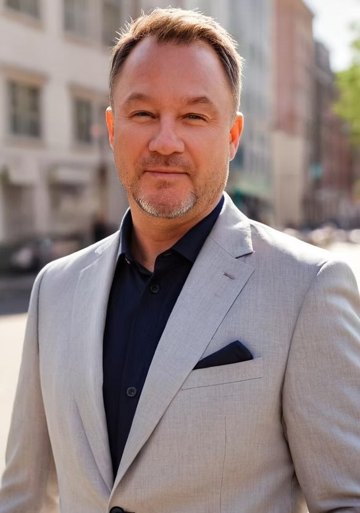
President, Wert-Berater, Inc. — independent feasibility study consultants since 1998. 4,000+ engagements completed across all 50 states and internationally, evaluating $41.2 billion in project value for SBA, USDA, EB-5, conventional, and institutional financing decisions. Fiduciary duty runs to the lender and agency in every engagement.
+1 310-857-2443 ext. 800 · email · 1968 South Coast Hwy, Ste 2382, Laguna Beach, CA 92651 · 111 Town Square Pl Ste 1238 PMB 657834, Jersey City, NJ 07310 · 539 W. Commerce St #8486, Dallas, TX 75208 · 66 W Flagler Street, Suite 900, PMB 12704, Miami, FL 33130
Schedule a ConversationIndependent feasibility studies since 1998 — 4,000+ engagements, $41.2 billion in evaluated project value. Standard delivery in 10 to 15 business days. Fiduciary duty to the lender and agency.
Legal disclosure. Wert-Berater, Inc. offices are mailing addresses only. Following the COVID-19 pandemic the firm has elected to work remotely; its office locations receive mail and are not staffed for visitors or in-person meetings. Headquarters mailing address: 1968 South Coast Hwy, Ste 2382, Laguna Beach, CA 92651.
Wert-Berater, Inc. is an independent provider of feasibility studies and other related services. The firm does not provide financing or equity investment advice, and does not arrange, broker, or place debt or equity capital of any kind.
All appraisal assignments are performed by Bruce E. Jones, MAI, ASA-GC, BCA, CMEA, a member of the Appraisal Institute since 2006, a staff member of Wert-Berater, Inc. and owner of Special Purpose Realty Valuation.