
One document chooses the use; the other tests the project. Confusing them produces analysis that answers a question nobody asked.

A highest and best use study runs the Appraisal Institute’s four-test sequence — legally permissible, physically possible, financially feasible, maximally productive — across candidate uses for a property, concluding which program creates the most value. It is the right instrument when the use itself is the open question: surplus land, a corridor parcel with multiple plausible programs, an underperforming asset whose owner suspects the site outgrew the building. The output is a ranked comparison with land-residual evidence: what each use leaves for the dirt after development cost.
A feasibility study takes the use as given and tests the project: this sponsor, this budget, this financing, this operator, this ramp — against program coverage standards under base and stressed cases. The HBU’s “financially feasible” test asks only whether a use clears a positive-return bar in general; the feasibility study asks whether the actual deal in front of the committee services its actual debt.
Land-rich files often need the sequence: HBU first to settle the program, feasibility second to underwrite it. Recent Wert-Berater practice shows the pattern — a Chino corridor HBU concluding a branded express car wash with ground-lease pad as maximally productive (development cost of $9,300,000 against an indicated stabilized value of approximately $19,375,000), and a Pasadena corridor engagement ranking four scenarios to a $45,018,730 concluded program at a 12.2 percent levered IRR — each producing exactly the use decision a subsequent feasibility study would then test.
The selection rule is one question: is the use decided? If no, HBU. If yes, feasibility. If the appraisal’s HBU section is being asked to carry either job alone, the file is borrowing analysis it never commissioned.
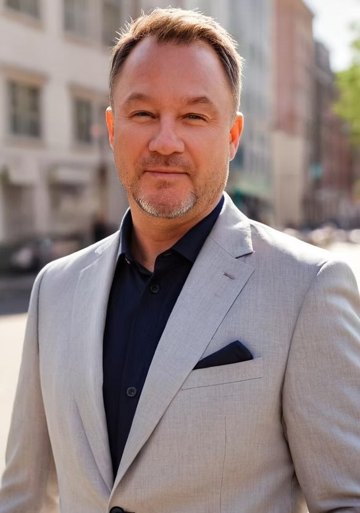
President, Wert-Berater, Inc. — independent feasibility study consultants since 1998. 4,000+ engagements completed across all 50 states and internationally, evaluating $41.2 billion in project value for SBA, USDA, EB-5, conventional, and institutional financing decisions. Fiduciary duty runs to the lender and agency in every engagement.
+1 310-857-2443 ext. 800 · email · 1968 South Coast Hwy, Ste 2382, Laguna Beach, CA 92651 · 111 Town Square Pl Ste 1238 PMB 657834, Jersey City, NJ 07310 · 539 W. Commerce St #8486, Dallas, TX 75208 · 66 W Flagler Street, Suite 900, PMB 12704, Miami, FL 33130
Schedule a ConversationIndependent feasibility studies since 1998 — 4,000+ engagements, $41.2 billion in evaluated project value. Standard delivery in 10 to 15 business days. Fiduciary duty to the lender and agency.
Legal disclosure. Wert-Berater, Inc. offices are mailing addresses only. Following the COVID-19 pandemic the firm has elected to work remotely; its office locations receive mail and are not staffed for visitors or in-person meetings. Headquarters mailing address: 1968 South Coast Hwy, Ste 2382, Laguna Beach, CA 92651.
Wert-Berater, Inc. is an independent provider of feasibility studies and other related services. The firm does not provide financing or equity investment advice, and does not arrange, broker, or place debt or equity capital of any kind.
All appraisal assignments are performed by Bruce E. Jones, MAI, ASA-GC, BCA, CMEA, a member of the Appraisal Institute since 2006, a staff member of Wert-Berater, Inc. and owner of Special Purpose Realty Valuation.