
The simplest operating model in commercial real estate — and one of the easiest markets to oversupply. Square feet per capita decides everything.
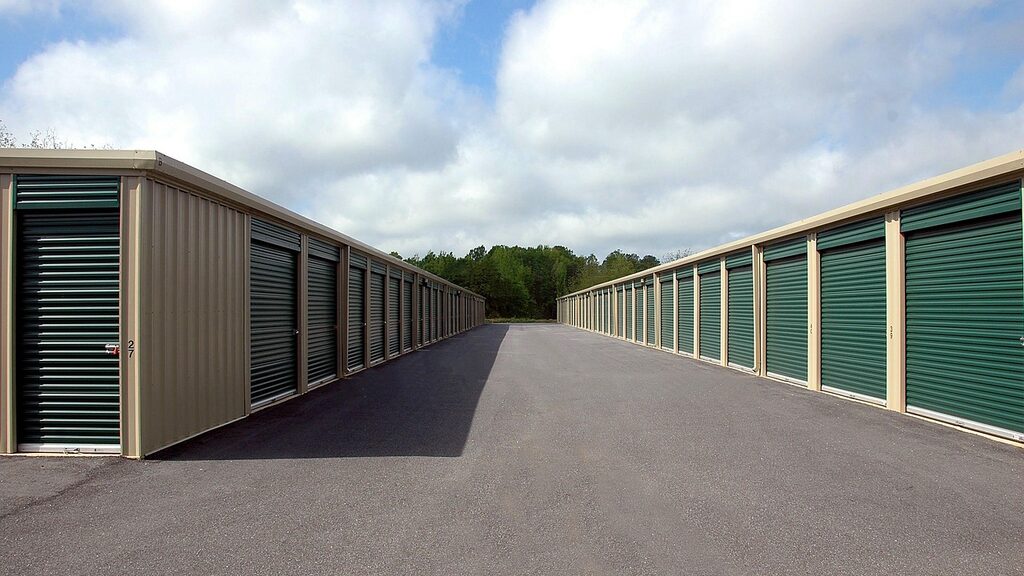
Self-storage underwriting begins and nearly ends with supply: rentable square feet per capita in the trade ring against benchmark and equilibrium levels, with the pipeline counted at full size because the category’s low barriers make announced supply real supply. Demand follows household formation, mobility, and housing density — Census drivetime demographics convert directly — but demand analysis cannot rescue a saturated ring.
The operating model’s simplicity concentrates the remaining risk in lease-up and rate. New facilities open into a price war they must win on location and product: ground-floor drive-up against multi-story climate-controlled, gate hours, security. Our pro formas model lease-up monthly against observed absorption at comparable openings, with street rates — not asking rates — anchoring the revenue line, and the rate-discounting that accompanies lease-up carried explicitly.
Practice includes acquisition underwriting for an existing Hayward, California industrial storage portfolio at $13,951,404 and ground-up engagements where the saturation analysis itself produced the binding conditions. Storage’s coverage profile rewards honest modeling: stabilized facilities cover comfortably, which makes the lease-up trough — not the steady state — the underwriting event.
Storage demand runs on per-capita saturation analysis paired with absorption benchmarking — the two accepted methods that together answer whether room exists and how fast it fills. Saturation is defined as supply per person: saturation = rentable square feet (built + pipeline) ÷ trade-area population, computed in the true drive-time ring and compared against the market’s own demonstrated equilibrium rather than a national average, because equilibrium varies structurally with housing density and mobility.
The demand side is then supportable square footage = population × equilibrium SF per capita, and the room for the subject is residual demand = supportable SF − existing and pipeline SF. A 90,000-square-foot project entering a ring with 41,000 residents, an 8.0 SF-per-capita demonstrated equilibrium, and 248,000 SF of competitive supply faces residual demand of 41,000 × 8.0 − 248,000 = 80,000 SF — the project slightly exceeds the ring’s remaining capacity, and the study must say so. Absorption benchmarking supplies the timeline: months to stabilization = subject SF × stabilized occupancy ÷ observed monthly absorption at comparable openings. The rationale: storage is a local-supply commodity, so demand methodology that begins anywhere other than supply arithmetic is measuring the wrong thing — and committees know it.
Storage flags are supply flags. The study that counts built square footage but not the three projects in permitting; the trade ring drawn at five miles in a market where customers drive two; per-capita saturation compared against national averages instead of the market’s own equilibrium history. Lease-up assumptions provide the second cluster: stabilization claimed in fourteen months where the submarket’s recent openings took thirty, street rates quoted from asking prices while every competitor discounts the first three months, and revenue-management upside claimed by sponsors who have never operated a facility. The quiet flag is product mismatch — multi-story climate product priced into a drive-up market, or the reverse.
Mitigation here is mostly arithmetic honesty applied early. We rebuild the supply census with the pipeline at full size and model lease-up against the submarket’s observed absorption — then work the structure to the honest curve: interest-only sized to the real stabilization window, a smaller first phase, or rate assumptions reset to street reality. Where saturation is the finding, we say so plainly; more than one storage engagement has redirected a sponsor’s capital to a different submarket before the land closed, which is the cheapest mitigation in the business. Where the project survives the honest case, the lender gets a study whose downside has already been priced, which is what makes the favorable determination worth relying on.
Run the saturation math before tying up the site: rentable square feet per capita in the true drive-time ring, pipeline included, against the market’s own stabilized history. Match the product to the ring — climate share, unit mix, and security level are market findings, not preferences. Fund the lease-up trough explicitly; the facility’s eventual coverage is irrelevant if month nineteen breaks the borrower. Use street rates and model the promotion cost of filling against competitors who will defend occupancy. And if third-party management is the plan, name the operator in the file — the platform’s revenue management is an evidence-backed assumption only when the contract exists.
The category’s cycle has turned from build-anything to prove-it: the construction wave of recent years pushed many markets to or past equilibrium, and underwriting now starts from saturation rather than ending there. Revenue-management sophistication has become table stakes — the platforms reprice daily, and independents without that capability compete on price alone, which the pro forma should admit. Demand’s structural drivers — housing transitions, small-business inventory, the long migration of garages into living space — remain intact, which is exactly why supply, not demand, is where storage studies are won or lost.
Engagements are typically initiated by the borrower, with lender or CDC confirmation obtained before work begins — institutions apply differing rules, so sponsors should confirm the required path with their lending contact — and are delivered in 10 to 15 business days from complete project data, and built to the program framework that governs the credit — SBA SOP 50 10 8 coverage minimums of 1.15x operating and 1.00x global, the 37-factor structure of USDA 7 CFR Part 5001, or the 1.20x convention of conventional credit policy — with a ten-year pro forma, sensitivity at ±5/10/15 percent, rate stress to +3.0 percent, and Monte Carlo analysis as standard equipment.

President, Wert-Berater, Inc. — independent feasibility study consultants since 1998. 4,000+ engagements completed across all 50 states and internationally, evaluating $41.2 billion in project value for SBA, USDA, EB-5, conventional, and institutional financing decisions. Fiduciary duty runs to the lender and agency in every engagement.
+1 310-857-2443 ext. 800 · email · 1968 South Coast Hwy, Ste 2382, Laguna Beach, CA 92651 · 111 Town Square Pl Ste 1238 PMB 657834, Jersey City, NJ 07310 · 539 W. Commerce St #8486, Dallas, TX 75208 · 66 W Flagler Street, Suite 900, PMB 12704, Miami, FL 33130
Schedule a ConversationIndependent feasibility studies since 1998 — 4,000+ engagements, $41.2 billion in evaluated project value. Standard delivery in 10 to 15 business days. Fiduciary duty to the lender and agency.
Legal disclosure. Wert-Berater, Inc. offices are mailing addresses only. Following the COVID-19 pandemic the firm has elected to work remotely; its office locations receive mail and are not staffed for visitors or in-person meetings. Headquarters mailing address: 1968 South Coast Hwy, Ste 2382, Laguna Beach, CA 92651.
Wert-Berater, Inc. is an independent provider of feasibility studies and other related services. The firm does not provide financing or equity investment advice, and does not arrange, broker, or place debt or equity capital of any kind.
All appraisal assignments are performed by Bruce E. Jones, MAI, ASA-GC, BCA, CMEA, a member of the Appraisal Institute since 2006, a staff member of Wert-Berater, Inc. and owner of Special Purpose Realty Valuation.