
Most projects look fine at year three. The question lenders are actually asking lives in years five through ten.

A five-year pro forma ends precisely where the interesting risks begin. The replacement-capital cycle on equipment-heavy assets — car wash tunnels, RV park infrastructure, hotel FF&E — arrives in years six through nine. Rate resets and balloon maturities on conventional structures land in the same window. Lease rollover on anchored projects, the second competitor’s opening in a saturating category, the depreciation shield’s decay against rising taxable income: all of it is invisible in a projection that stops at sixty months.
This is why Wert-Berater builds every study on a ten-year pro forma, with the early ramp modeled at monthly or quarterly resolution where the asset class demands it and the out-years carrying explicit reserve funding, escalation differentials between revenue and expense lines, and the debt schedule’s actual amortization rather than a level-payment approximation.
Extending the horizon forces assumptions a short pro forma lets you dodge. What is the mature growth rate after stabilization — and is it above or below the expense inflation you assumed? When does the market reach saturation, and does your capture rate hold once it does? What does the facility look like at year ten without the reserve spending you modeled — and would a buyer or refinancing lender accept it? Each question has a defensible answer; the ten-year frame simply refuses to let the analyst skip them.
For sell-out projects the same logic applies to absorption: the conventional condominium engagement is not a ten-year operation but a multi-year closing schedule, and the honest version models the slow case — because the carry cost of eighteen extra months of absorption is the difference between a feasible deal and a capital call.
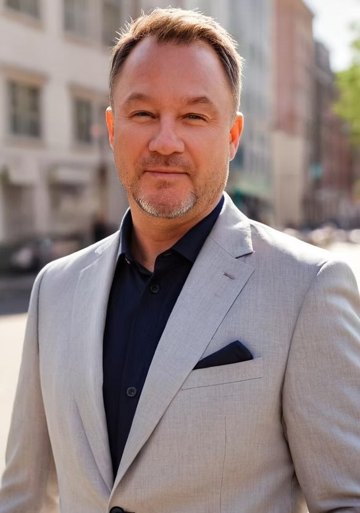
President, Wert-Berater, Inc. — independent feasibility study consultants since 1998. 4,000+ engagements completed across all 50 states and internationally, evaluating $41.2 billion in project value for SBA, USDA, EB-5, conventional, and institutional financing decisions. Fiduciary duty runs to the lender and agency in every engagement.
+1 310-857-2443 ext. 800 · email · 1968 South Coast Hwy, Ste 2382, Laguna Beach, CA 92651 · 111 Town Square Pl Ste 1238 PMB 657834, Jersey City, NJ 07310 · 539 W. Commerce St #8486, Dallas, TX 75208 · 66 W Flagler Street, Suite 900, PMB 12704, Miami, FL 33130
Schedule a ConversationIndependent feasibility studies since 1998 — 4,000+ engagements, $41.2 billion in evaluated project value. Standard delivery in 10 to 15 business days. Fiduciary duty to the lender and agency.
Legal disclosure. Wert-Berater, Inc. offices are mailing addresses only. Following the COVID-19 pandemic the firm has elected to work remotely; its office locations receive mail and are not staffed for visitors or in-person meetings. Headquarters mailing address: 1968 South Coast Hwy, Ste 2382, Laguna Beach, CA 92651.
Wert-Berater, Inc. is an independent provider of feasibility studies and other related services. The firm does not provide financing or equity investment advice, and does not arrange, broker, or place debt or equity capital of any kind.
All appraisal assignments are performed by Bruce E. Jones, MAI, ASA-GC, BCA, CMEA, a member of the Appraisal Institute since 2006, a staff member of Wert-Berater, Inc. and owner of Special Purpose Realty Valuation.