
The borrower usually pays for it; the lender relies on it. Engagements that blur that line produce documents nobody can use.

Federal lending’s reliance structure is explicit: the independent study exists so the lender and the agency can trust projections the borrower could not neutrally produce. That makes the lender the analytical client regardless of who funds the invoice — In practice the borrower most often engages Wert-Berater directly — though banks, lenders, and CDCs apply differing rules on who must initiate, and lender confirmation is obtained before work begins in every case — while the firm’s fiduciary duty runs to the lender and agency in writing. The borrower funds and frequently initiates the engagement; the borrower does not direct its conclusions.
What the borrower should expect: a fair, rigorous test of the actual project, early visibility into every gap while it is still curable, and — frequently — the restructuring insight a neutral analyst produces, like the condominium engagement whose infeasible 170-unit base case became a feasible 184-unit program under the same roofline. What the borrower should not expect is a negotiable determination; a study that bends is worthless to the only audience whose acceptance matters.
Three contractual facts: that the engagement names the lender as a reliance party, that the fee is fixed and outcome-independent, and that the consultant’s communication channel runs through or with the lender — so the analysis cannot be quietly relitigated borrower-side before the lender sees it. Program guidance presumes exactly this posture; the paperwork should match it.
The arrangement serves everyone, including the sponsor whose project is genuinely strong: a determination from an analyst the lender knows cannot be bought is the cheapest credibility a borrower will ever acquire.
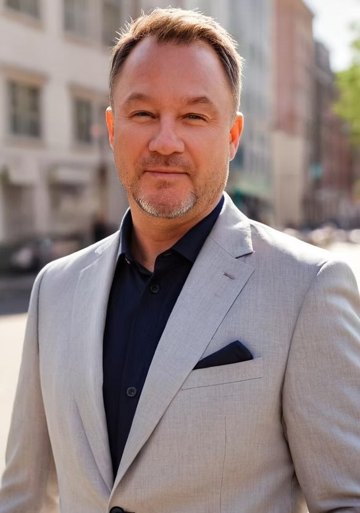
President, Wert-Berater, Inc. — independent feasibility study consultants since 1998. 4,000+ engagements completed across all 50 states and internationally, evaluating $41.2 billion in project value for SBA, USDA, EB-5, conventional, and institutional financing decisions. Fiduciary duty runs to the lender and agency in every engagement.
+1 310-857-2443 ext. 800 · email · 1968 South Coast Hwy, Ste 2382, Laguna Beach, CA 92651 · 111 Town Square Pl Ste 1238 PMB 657834, Jersey City, NJ 07310 · 539 W. Commerce St #8486, Dallas, TX 75208 · 66 W Flagler Street, Suite 900, PMB 12704, Miami, FL 33130
Schedule a ConversationIndependent feasibility studies since 1998 — 4,000+ engagements, $41.2 billion in evaluated project value. Standard delivery in 10 to 15 business days. Fiduciary duty to the lender and agency.
Legal disclosure. Wert-Berater, Inc. offices are mailing addresses only. Following the COVID-19 pandemic the firm has elected to work remotely; its office locations receive mail and are not staffed for visitors or in-person meetings. Headquarters mailing address: 1968 South Coast Hwy, Ste 2382, Laguna Beach, CA 92651.
Wert-Berater, Inc. is an independent provider of feasibility studies and other related services. The firm does not provide financing or equity investment advice, and does not arrange, broker, or place debt or equity capital of any kind.
All appraisal assignments are performed by Bruce E. Jones, MAI, ASA-GC, BCA, CMEA, a member of the Appraisal Institute since 2006, a staff member of Wert-Berater, Inc. and owner of Special Purpose Realty Valuation.