
Every market number in a study inherits its credibility from one early decision — how the trade area was drawn.

Market feasibility fails at the boundary more often than at the arithmetic. Draw the trade area too wide and demand inflates effortlessly; too narrow and a viable project looks starved. The defensible method derives the boundary from the asset’s economics — drive times for convenience-driven uses, destination radii for experience-driven ones, shipping economics for industrial — and then evidences it: customer-origin data from comparables, gravity-model logic, the competitive map itself. Only after the boundary is honest do the Census Bureau demographics and BLS employment data mean anything.
Demand quantification then proceeds from population and spending to the category: households times participation rate times frequency times spend, with every coefficient sourced. The step most studies skip is leakage and inflow — demand currently leaving the trade area for lack of supply, and demand entering from outside it — which is frequently where the project’s actual opportunity lives. Wert-Berater models leakage explicitly; a recent Texas RV engagement turned on exactly that tab.
The competitive analysis that matters counts what will exist at the project’s stabilization, not what exists today: permitted projects, announced pipelines, and the categories where supply responds fast to visible success. For local-supply businesses — storage, car washes, fuel — a saturation analysis comparing supply per capita against benchmark markets answers the question committees actually ask: is there room for this one?
The market section’s conclusion is a capture rate — the share of quantified demand the project must win to hit its pro forma — and the entire section exists to make that single number look conservative.
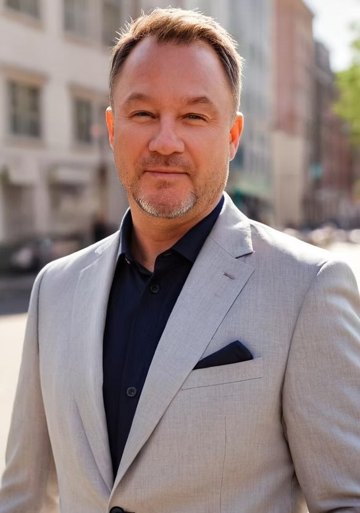
President, Wert-Berater, Inc. — independent feasibility study consultants since 1998. 4,000+ engagements completed across all 50 states and internationally, evaluating $41.2 billion in project value for SBA, USDA, EB-5, conventional, and institutional financing decisions. Fiduciary duty runs to the lender and agency in every engagement.
+1 310-857-2443 ext. 800 · email · 1968 South Coast Hwy, Ste 2382, Laguna Beach, CA 92651 · 111 Town Square Pl Ste 1238 PMB 657834, Jersey City, NJ 07310 · 539 W. Commerce St #8486, Dallas, TX 75208 · 66 W Flagler Street, Suite 900, PMB 12704, Miami, FL 33130
Schedule a ConversationIndependent feasibility studies since 1998 — 4,000+ engagements, $41.2 billion in evaluated project value. Standard delivery in 10 to 15 business days. Fiduciary duty to the lender and agency.
Legal disclosure. Wert-Berater, Inc. offices are mailing addresses only. Following the COVID-19 pandemic the firm has elected to work remotely; its office locations receive mail and are not staffed for visitors or in-person meetings. Headquarters mailing address: 1968 South Coast Hwy, Ste 2382, Laguna Beach, CA 92651.
Wert-Berater, Inc. is an independent provider of feasibility studies and other related services. The firm does not provide financing or equity investment advice, and does not arrange, broker, or place debt or equity capital of any kind.
All appraisal assignments are performed by Bruce E. Jones, MAI, ASA-GC, BCA, CMEA, a member of the Appraisal Institute since 2006, a staff member of Wert-Berater, Inc. and owner of Special Purpose Realty Valuation.