
Throughput, yield, and the customer concentration question: food plants are underwritten on the production floor, not the brand deck.

Food manufacturing credits start with mass balance: raw input in, finished product out, with the yield and throughput assumptions evidenced against the equipment specification and comparable plants rather than the sponsor’s deck. Capacity utilization is the capture-rate analogue — the pro forma’s revenue is the plant’s realistic utilization curve times contracted and pipeline volume — and customer concentration is the standing risk: a plant built around one co-pack agreement or one retail program carries that counterparty’s credit inside its own.
Regulatory readiness is technical-dimension content with binary consequences: facility design to the applicable food-safety standards, certifications the target channels require, and the commissioning-to-qualification timeline customers impose before volume ships. Labor availability for production shifts — checked against BLS local wage and employment data — belongs in the operating build, not the assumptions footnote.
The firm’s processing record runs from VAPG-scale producer ventures to a $38,110,000 USDA B&I sugar refinery restoration — 359,000 square feet, 2.05 million tons of annual cane capacity, dual-state market access analyzed as the demand case — with Reg 5001’s technical factors driving the diligence depth heavy processing demands.
Engagements are typically initiated by the borrower, with lender or CDC confirmation obtained before work begins — institutions apply differing rules, so sponsors should confirm the required path with their lending contact — and are delivered in 10 to 15 business days from complete project data, and built to the program framework that governs the credit — SBA SOP 50 10 8 coverage minimums of 1.15x operating and 1.00x global, the 37-factor structure of USDA 7 CFR Part 5001, or the 1.20x convention of conventional credit policy — with a ten-year pro forma, sensitivity at ±5/10/15 percent, rate stress to +3.0 percent, and Monte Carlo analysis as standard equipment.
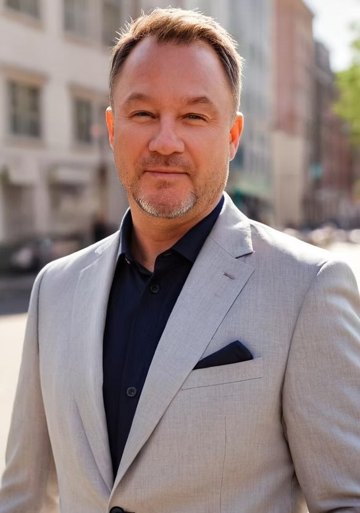
President, Wert-Berater, Inc. — independent feasibility study consultants since 1998. 4,000+ engagements completed across all 50 states and internationally, evaluating $41.2 billion in project value for SBA, USDA, EB-5, conventional, and institutional financing decisions. Fiduciary duty runs to the lender and agency in every engagement.
+1 310-857-2443 ext. 800 · email · 1968 South Coast Hwy, Ste 2382, Laguna Beach, CA 92651 · 111 Town Square Pl Ste 1238 PMB 657834, Jersey City, NJ 07310 · 539 W. Commerce St #8486, Dallas, TX 75208 · 66 W Flagler Street, Suite 900, PMB 12704, Miami, FL 33130
Schedule a ConversationIndependent feasibility studies since 1998 — 4,000+ engagements, $41.2 billion in evaluated project value. Standard delivery in 10 to 15 business days. Fiduciary duty to the lender and agency.
Legal disclosure. Wert-Berater, Inc. offices are mailing addresses only. Following the COVID-19 pandemic the firm has elected to work remotely; its office locations receive mail and are not staffed for visitors or in-person meetings. Headquarters mailing address: 1968 South Coast Hwy, Ste 2382, Laguna Beach, CA 92651.
Wert-Berater, Inc. is an independent provider of feasibility studies and other related services. The firm does not provide financing or equity investment advice, and does not arrange, broker, or place debt or equity capital of any kind.
All appraisal assignments are performed by Bruce E. Jones, MAI, ASA-GC, BCA, CMEA, a member of the Appraisal Institute since 2006, a staff member of Wert-Berater, Inc. and owner of Special Purpose Realty Valuation.