
When the building has no second-best use, the collateral is the business — and the program’s equity and analysis requirements respond accordingly.
Working on an SBA-backed project? See our SBA feasibility study consultants service — SOP 50 10 compliant, fixed-fee, delivered in 10–15 business days.

A special-purpose or limited-market property is one whose improvements suit a narrow use: the fuel canopy, the car wash tunnel, the dry-stack marina building, the cold-storage envelope, the hotel tower. If the operating business fails, the building cannot simply re-lease to the next tenant — it sells at a discount to a buyer in the same business, or it sells as land less demolition. SOP 50 10 responds with higher borrower equity requirements and a reliance on independent feasibility analysis, because the loan is, in economic substance, a cash-flow credit wearing a real estate structure.
This is why the appraisal-only file fails on these assets. The appraisal’s value conclusion for a special-purpose property is itself derived from the income the business produces — so an appraisal supporting the loan amount is circular comfort if the income assumptions were never independently tested. The feasibility study supplies the missing test.
Special-purpose underwriting concentrates on three things. Liquidation reality: what the asset is worth when the thesis fails, analyzed as orderly and forced recovery rather than going-concern value. Operator dependence: management feasibility carries real weight, because the building cannot save a bad operator. And saturation: most special-purpose categories — car washes, self-storage, gas stations — are local-supply businesses where a competitor inside the drive-time ring rewrites the pro forma, so the competitive mapping must include the pipeline, not just the built inventory.
Wert-Berater’s practice is concentrated in exactly these categories — from a $1,450,000 rural gas station expansion to a $23,750,000 dry-stack marina storage facility — with the liquidation and saturation analysis the asset class demands.
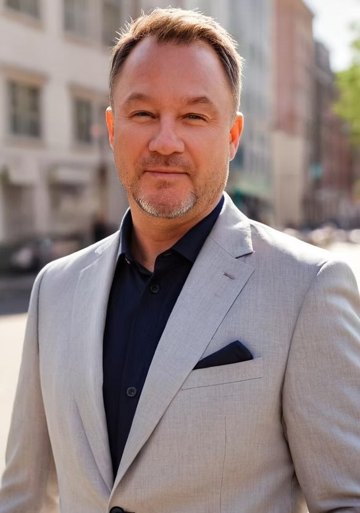
President, Wert-Berater, Inc. — independent feasibility study consultants since 1998. 4,000+ engagements completed across all 50 states and internationally, evaluating $41.2 billion in project value for SBA, USDA, EB-5, conventional, and institutional financing decisions. Fiduciary duty runs to the lender and agency in every engagement.
+1 310-857-2443 ext. 800 · email · 1968 South Coast Hwy, Ste 2382, Laguna Beach, CA 92651 · 111 Town Square Pl Ste 1238 PMB 657834, Jersey City, NJ 07310 · 539 W. Commerce St #8486, Dallas, TX 75208 · 66 W Flagler Street, Suite 900, PMB 12704, Miami, FL 33130
Schedule a ConversationIndependent feasibility studies since 1998 — 4,000+ engagements, $41.2 billion in evaluated project value. Standard delivery in 10 to 15 business days. Fiduciary duty to the lender and agency.
Legal disclosure. Wert-Berater, Inc. offices are mailing addresses only. Following the COVID-19 pandemic the firm has elected to work remotely; its office locations receive mail and are not staffed for visitors or in-person meetings. Headquarters mailing address: 1968 South Coast Hwy, Ste 2382, Laguna Beach, CA 92651.
Wert-Berater, Inc. is an independent provider of feasibility studies and other related services. The firm does not provide financing or equity investment advice, and does not arrange, broker, or place debt or equity capital of any kind.
All appraisal assignments are performed by Bruce E. Jones, MAI, ASA-GC, BCA, CMEA, a member of the Appraisal Institute since 2006, a staff member of Wert-Berater, Inc. and owner of Special Purpose Realty Valuation.