
Wert-Berater, Inc. prepared an independent feasibility study for a proposed low-carbon anhydrous ammonia production facility in Kern County, California, in support of a USDA Fertilizer Investment and Expansion for Long-term Domestic Supply (FIELDS) program application and for prospective lender review. The facility is designed to produce approximately 196,000 metric tonnes of anhydrous ammonia per year using a patented partial-oxidation process with carbon capture and geologic sequestration, qualifying for federal clean-hydrogen production credits. The overall determination rendered is Conditionally Feasible, with each of five analytical sections returning Favorable With Conditions against the FIELDS Feasibility Study Guide's prescribed elements.
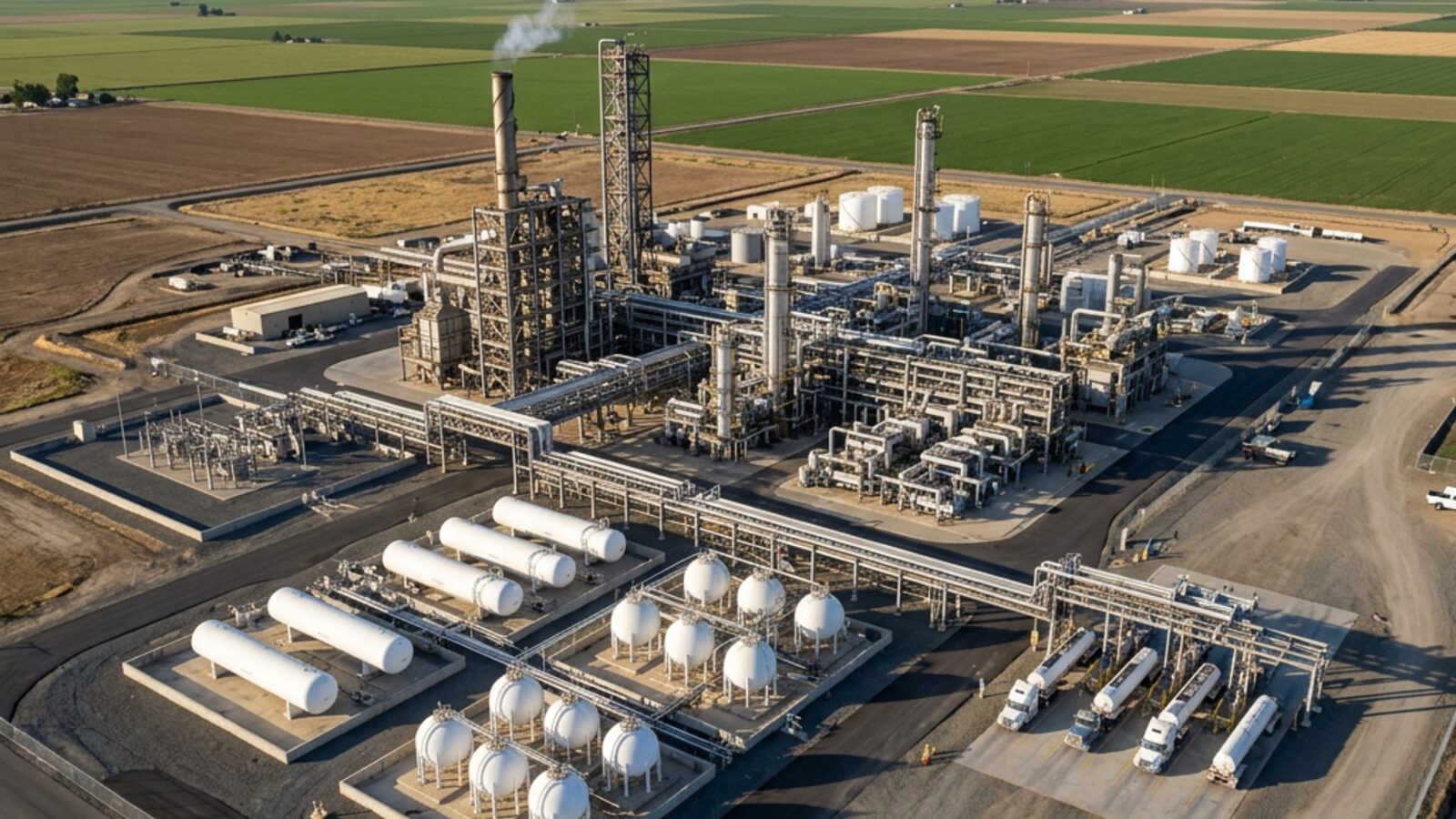
Wert-Berater, Inc. was retained under a fixed, non-contingent professional fee to prepare an independent feasibility study of a proposed clean ammonia manufacturing plant in a heavy-industrial specific-plan district in Kern County, California. The engagement was structured so that the firm's fiduciary duty runs to the lender and the USDA agency, not to the project sponsor. No element of compensation depends on the study's conclusions, on program award, or on the closing of any financing. Three legacy sponsor claims that the evidentiary record could not support were deleted from the study rather than softened, and every adverse finding is stated plainly and carried in a fifty-six-item risk and evidence register.
The study was prepared in response to the FY2026 Notice of Funding Opportunity for the USDA FIELDS Program, which funds independent domestic fertilizer production capacity through grants of $15 million to $150 million with a required fifty-percent applicant match. Both executed investor instruments condition their principal commitments on a FIELDS award of at least $15 million, placing the feasibility study directly on the project's financing critical path and imposing a duty of rigor beyond the ordinary.
The proposed facility is a low-carbon-intensity anhydrous ammonia plant designed to produce approximately 565 tonnes per day of anhydrous ammonia — roughly 196,000 metric tonnes per year at a 95% production factor — using a patented oxygen-blown partial-oxidation process with carbon capture and geologic sequestration of approximately 318,000 tonnes of carbon dioxide annually. The facility is designed to qualify for federal Section 45V clean-hydrogen production credits at the top credit tier, based on an emissions value issued by the U.S. Department of Energy. Peak project funding is approximately $485.9 million, comprising roughly $178 million of modeled equity and a $369 million construction-to-term senior facility at 65% leverage. Commercial operation is modeled for early 2030, with debt fully retired by 2036.
The site is located within a heavy-industrial specific-plan district approximately fifteen road miles from one of the most fertilizer-intensive agricultural counties in the western United States, adjacent to an interstate natural-gas pipeline system via an entitled corridor. The demand thesis requires no growth in California fertilizer consumption: the plant's entire output is sized within an anchor cooperative's existing distribution throughput, displacing imported and rail-delivered tonnes. California consumes substantially more nitrogen than this facility would produce and manufactures almost none of it in-state, so every competing tonne arrives by ocean, rail, or long-haul truck — a structural logistics disadvantage the project's location eliminates for its anchor buyer.
Economic feasibility was evaluated from a twenty-two-year ammonia price series (over 1,150 weekly observations), traded natural-gas indices benchmarked against the model's feedstock deck, and the federal and state credit architecture that supplies approximately 44% of modeled steady-state revenue. Market feasibility rests on a three-year government fertilizer tonnage census, a competitive survey of western-states supply, executed and letter-of-intent commercial instruments, and a substitution-based demand thesis requiring no consumption growth. Technical feasibility was documented from primary instruments: an amended specific plan, recorded parcel map, stamped 30% corridor engineering, county environmental determinations, geotechnical and Phase I environmental reports, and an executed engineering contractor memorandum of understanding. A full-EPCM budget from an independent fabricator corroborated the model's construction cost basis within the same accuracy class once scope is normalized.
The controlling financial model was verified at cell level for this engagement. The senior debt facility is sculpted at exactly 2.00x debt-service coverage — a design property rather than a forecast — meaning revenue stress expresses itself as amortization tenor before payment default. The loan-life coverage ratio prints at 2.25x. Unlevered project IRR is 23.97% and levered equity IRR is 36.10% on the model's pre-member-tax convention. A fifty-six-item risk and evidence register — seventeen gate items, twenty-five high, thirteen medium, one resolved — disciplines every claim, with gate families organized around the applicant and entity package, the Section 45V credit stack, the commercial offtake book, utility and environmental completions, and the financing match-certification sequence.
The overall determination is Conditionally Feasible. Each of the five analytical sections — economic, market, technical, financial, and management — independently renders Favorable With Conditions. The affirmative case rests on an executed, floor-protected thirty-year anchor offtake framework; a federal emissions value issued at the top clean-hydrogen credit tier; two independent cost estimates agreeing within the same accuracy class; entitled land with a recorded map and stamped corridor engineering; and a debt schedule that reconciles arithmetically to the dollar. Conditions precedent include: execution of a binding sub-agreement converting the anchor framework to a bankable offtake book; completion of the applicant-entity formation package and technology license; binding water supply and utility service commitments; a current air-district determination for the resized plant configuration; completion of federal environmental review under NEPA; placement of Section 45V credits with a tax-equity transferee; and the match-certification sequence required by the NOFO. Each condition carries an identified owner and a sequence against the program's award window. The credit-stack-impaired scenario — Section 45V revenue lost or tiered down — is identified as the project's most consequential risk exposure, and the study treats the five Section 45V conditions as the true underwriting priority ahead of commodity price scenarios.
The USDA Fertilizer Investment and Expansion for Long-term Domestic Supply (FIELDS) Program, administered by the Rural Business-Cooperative Service, provides competitive grants of $15 million to $150 million to fund independent domestic fertilizer production capacity. Applicants must provide a fifty-percent match and meet eligibility requirements including independence, domestic ownership, and a market-share ceiling relative to the largest nitrogen process manufacturers.
The USDA FIELDS Feasibility Study Guide prescribes analysis across five elements: economic, market, technical, financial, and management feasibility. Each element must be addressed by a qualified independent consultant, with an opinion on project viability. The study must be prepared for lender and agency review, with the consultant's fiduciary duty running to those parties rather than to the project sponsor.
Section 45V provides inflation-indexed production credits for clean hydrogen based on lifecycle emissions intensity, with the highest credit tier available to projects achieving the lowest emissions per kilogram of hydrogen produced. For ammonia plants using hydrogen as an intermediate, the credit can represent a substantial share of total revenue — making credit qualification conditions (emissions verification, carbon sequestration, nitrogen co-product placement, prevailing-wage compliance, and transferee placement) among the most consequential underwriting factors in the feasibility analysis.
A sculpted debt-service coverage structure sets annual debt service as a fixed fraction of cash flow available for debt service, so that the coverage ratio is a design property rather than a variable. This means revenue shortfalls produce slower amortization rather than payment defaults, converting cash-flow risk into tenor risk. The tradeoff is that lenders rely more heavily on loan-life coverage ratios, sweep-and-reserve covenants, and distribution lockup triggers than on a fixed amortization schedule.
President, Wert-Berater, Inc. — independent feasibility study consultants since 1998. 4,000+ engagements completed across all 50 states and internationally, evaluating $41.2 billion in project value for SBA, USDA, EB-5, conventional, and institutional financing decisions. Fiduciary duty runs to the lender and agency in every engagement.
+1 310-857-2443 ext. 800 · email · 1968 South Coast Hwy, Ste 2382, Laguna Beach, CA 92651 · 111 Town Square Pl Ste 1238 PMB 657834, Jersey City, NJ 07310 · 539 W. Commerce St #8486, Dallas, TX 75208 · 66 W Flagler Street, Suite 900, PMB 12704, Miami, FL 33130
Schedule a ConversationIndependent feasibility studies since 1998 — 4,000+ engagements, $41.2 billion in evaluated project value. Standard delivery in 10 to 15 business days. Fiduciary duty to the lender and agency.
Legal disclosure. Wert-Berater, Inc. offices are mailing addresses only. Following the COVID-19 pandemic the firm has elected to work remotely; its office locations receive mail and are not staffed for visitors or in-person meetings. Headquarters mailing address: 1968 South Coast Hwy, Ste 2382, Laguna Beach, CA 92651.
Wert-Berater, Inc. is an independent provider of feasibility studies and other related services. The firm does not provide financing or equity investment advice, and does not arrange, broker, or place debt or equity capital of any kind.
All appraisal assignments are performed by Bruce E. Jones, MAI, ASA-GC, BCA, CMEA, a member of the Appraisal Institute since 2006, a staff member of Wert-Berater, Inc. and owner of Special Purpose Realty Valuation.