
Wert-Berater, Inc. prepared an independent feasibility study for a $32.2 million pyrolysis and biochar enhanced-efficiency fertilizer manufacturing expansion at an operating plant in Jacksonville, Duval County, Florida, supporting a USDA FIELDS cost-share grant application and a USDA Business & Industry guaranteed term loan. The study evaluated economic, market, technical, financial, and management feasibility against federal program standards, rendering a weighted score of 3.72 of 5.00 and a determination of Conditionally Favorable, restating to Favorable upon satisfaction of three conditions precedent. Steady-state projections reflect $56.3 million in operating revenue, a 65.1% EBITDA margin, and first-production-year global debt-service coverage of 2.66x under a deliberately harsh full-payment convention against a 1.25x covenant.

Wert-Berater, Inc. was engaged to prepare an independent feasibility study for a $32,240,000 expansion of an operating fertilizer manufacturing facility in Jacksonville, Duval County, Florida. The project involves the installation of three commercial pyrolysis units converting approximately 95,040 dry tons per year of clean waste wood into 27,720 tons of biochar, which is subsequently granulated with added nitrogen and potassium into a registered enhanced-efficiency biochar fertilizer marketed in two analyses and two granule sizes compatible with commercial blender equipment. The expansion is new construction within an existing, operating plant that has manufactured registered organic fertilizers on the same 24 fee-owned acres for more than two decades, converting municipal biosolids into granulated products distributed through established Florida agricultural channels.
The capital plan is equally divided: a USDA FIELDS cost-share grant of $16,120,000 (50% of total project cost) and a USDA Business & Industry guaranteed term loan of $16,120,000 (50%), for which a lender of record issued a term sheet during the engagement. The loan carries a 30-month interest-only period followed by a 150-month amortizing schedule. The study was prepared for the exclusive use of the lender of record and the USDA Rural Business-Cooperative Service, and its determination runs to those parties, not to the borrower.
The study employs a ground-up analytical construction rather than a top-down extrapolation. The supply side was built from a 15-facility feedstock inventory within 50 road-miles, each source named, classified by feedstock cleanliness, and sized in dry tons per year, screened to a qualified planning base of 38,912 dry tons per year after excluding sources whose streams could not be certified clean. The demand side was constructed segment by segment from the sponsor's wholesale distribution history, routing 60 to 70 percent of the projected book through regional blenders and distributors, 20 to 25 percent to direct large growers, and the remainder through municipal and specialty channels. Revenue was projected across four streams: product sales at a wholesale price lattice set below imported specialty comparables, verified carbon-removal credits repriced from the sponsor's $200 per tonne to a third-party-verified $177 per tonne, tipping fees on inbound wood, and the incumbent operation held flat throughout the projection with no growth credited.
The governing standards tested were the FY26 FIELDS Notice of Funding Opportunity, RD Instruction 4280-B Appendix D feasibility factors, 2 CFR Part 200 cost and procurement rules including Build America Buy America domestic-content requirements, and the lender's B&I term sheet covenant set. The study's financial stress battery comprised sensitivity analysis at plus and minus 15 percent applied at the gross-margin level, rate stress to plus 300 basis points, a Monte Carlo simulation of 20,000 seed-fixed and 2,000 live trials across five material variables simultaneously, correlated downturn tiers including a severe tier eliminating carbon revenue entirely, break-even analysis, discounted cash flow at a 12 percent equity-grade hurdle, and Altman Z-prime scoring. Coverage was computed and quoted under two conventions throughout: the loan as contractually written, and a deliberately harsh study convention charging the full post-interest-only amortizing payment from the first production month.
The companion financial model underlying the study comprises 39 tabs and 20,521 linked formulas with zero hardcoded results, passing a 22-point internal audit in full. Every figure in the report traces to a specific cell in that model, which governs on any difference between artifacts of the engagement. All conservatisms are explicit: grant draws are excluded from every operating revenue line, the carbon price is reduced from the sponsor's assumption to the independently verified benchmark, no revenue growth is credited after the modeled steady state, the 10 percent production capacity cushion is never monetized, and the incumbent revenue floor is held flat for the full 10-year projection period.
At steady state, the combined enterprise generates $56,258,519 of operating revenue (excluding grant draws) and $36,602,452 of EBITDA at a 65.1% margin. The elevated margin is structural rather than forecast: half the capital stack carries no debt-service requirement, the primary physical input arrives at negative cost through tipping fees, and the carbon credit stream carries near-zero marginal cost. First-production-year global debt-service coverage is 3.73x on the contractual interest-only schedule and 2.66x under the study's full-payment convention, against a 1.25x lender covenant first tested at month 24. The sensitivity floor at 15 percent adverse gross-margin shock is 2.06x; the rate-stress floor at plus 300 basis points is 2.35x; the Monte Carlo fifth percentile is 2.11x with a simulated covenant-breach probability that rounds to zero. The severe correlated downturn tier — imposing a 15 percent price cut, 30 percent volume reduction, complete elimination of carbon revenue, and 50 percent reduction in tipping fees simultaneously — produces a breach only in the first production year and only against the study's harsh convention; against the loan as actually written, the identical scenario covers 1.09x. Break-even analysis locates the 1.25x covenant floor at a 35.4 percent revenue decline and payment parity at a 41.7 percent decline from the first-year plan.
The total-cost discounted cash flow, treating the full $32.24 million as invested at time zero at a 12 percent hurdle with a 2 percent terminal rate and a notional 25 percent tax burden, produces a net present value of $172,395,338 and an internal rate of return of approximately 52 percent. Cumulative EBITDA repays the entire project cost during the third production year on retention alone. The opening members' equity position is negative, reflecting the sponsor's prior investment cycle rather than distress, and the Altman Z-prime score opens in the grey zone, crossing the safe threshold by the third production year as retention, amortization, and rising operating income rebuild all five component ratios simultaneously.
The study renders a determination of Conditionally Favorable, with a weighted feasibility score of 3.72 of 5.00. The weights applied are 25 percent each to financial and market feasibility, 20 percent to technical feasibility, and 15 percent each to economic and management feasibility. All five sections pass their quantitative tests under both coverage conventions. The conditions precedent are documentary rather than analytical: LC-1, execution of a firm loan commitment including resolution of a first-lien conflict with existing secured facilities, a funded contingency policy, and key-person insurance; LC-2, feedstock supply instruments aggregating not less than 47,520 dry tons per year on three-to-five-year terms; LC-3, executed blender-led off-take of not less than 5,000 tons; and LC-4, a post-award carbon-registry workplan. The determination restates to Favorable upon satisfaction of LC-1 through LC-3. The study also evaluated the sponsor's application against the FIELDS scoring rubric, scoring the file 66 of 100 as filed and approximately 79 as achievable with the documentary improvements identified, primarily through execution of the financing commitment, feedstock supply instruments, and off-take agreements.
The USDA Fertilizer Production Expansion Program (FIELDS) provides cost-share grants to domestic facilities that expand fertilizer production through process manufacturing — physical, mechanical, or chemical operations that alter a fertilizer's chemistry or physical characteristics. Eligible applicants must secure matching funds equal to the federal share, demonstrate that the project constitutes process manufacturing rather than blending only, and satisfy documentary eligibility gates including current financial statements, key-personnel documentation, and a narrative estimating acres and farmers served.
The USDA B&I program provides a federal guarantee on loans made by approved commercial lenders to businesses in eligible rural areas, reducing lender risk and enabling credit access for projects that may not qualify on conventional terms alone. Guaranteed loans carry program-specific covenants — typically including minimum debt-service coverage ratios and current-ratio requirements — and require the lender to obtain the guarantee before closing. The guarantee does not eliminate underwriting requirements; the lender must independently assess credit quality, collateral, and feasibility.
FIELDS funds registered fertilizers produced through process manufacturing. Biochar-based enhanced-efficiency fertilizers qualify when the manufacturing process involves a documented chemistry change — such as thermal pyrolysis converting raw biomass to a structurally different carbon-stable matrix — followed by nutrient addition and physical-characteristic engineering into a registered, analysis-labeled product. The key eligibility distinction is that the product is a manufactured nitrogen fertilizer whose biochar carrier improves nutrient-use efficiency, not an alternative to fertilizer or a blending-only operation.
Wert-Berater quotes coverage under both the contractual loan schedule and a deliberately harsh study convention that charges the full post-interest-only amortizing payment from the first production month, even when the contract does not require it. A coverage finding that depends on a grace period is not yet a coverage finding — it merely reflects that the loan is structured to defer principal. The study convention removes that dependence so the reader can evaluate the project's repayment capacity independent of loan structure. Both figures are reported together without exception throughout the engagement.
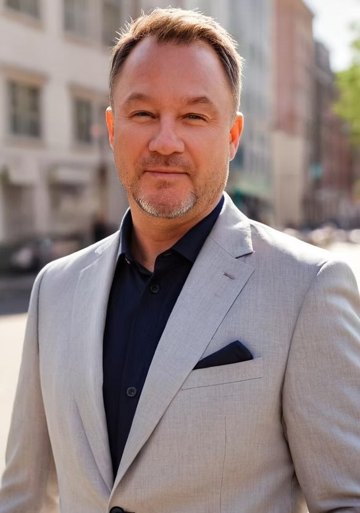
President, Wert-Berater, Inc. — independent feasibility study consultants since 1998. 4,000+ engagements completed across all 50 states and internationally, evaluating $41.2 billion in project value for SBA, USDA, EB-5, conventional, and institutional financing decisions. Fiduciary duty runs to the lender and agency in every engagement.
+1 310-857-2443 ext. 800 · email · 1968 South Coast Hwy, Ste 2382, Laguna Beach, CA 92651 · 111 Town Square Pl Ste 1238 PMB 657834, Jersey City, NJ 07310 · 539 W. Commerce St #8486, Dallas, TX 75208 · 66 W Flagler Street, Suite 900, PMB 12704, Miami, FL 33130
Schedule a ConversationIndependent feasibility studies since 1998 — 4,000+ engagements, $41.2 billion in evaluated project value. Standard delivery in 10 to 15 business days. Fiduciary duty to the lender and agency.
Legal disclosure. Wert-Berater, Inc. offices are mailing addresses only. Following the COVID-19 pandemic the firm has elected to work remotely; its office locations receive mail and are not staffed for visitors or in-person meetings. Headquarters mailing address: 1968 South Coast Hwy, Ste 2382, Laguna Beach, CA 92651.
Wert-Berater, Inc. is an independent provider of feasibility studies and other related services. The firm does not provide financing or equity investment advice, and does not arrange, broker, or place debt or equity capital of any kind.
All appraisal assignments are performed by Bruce E. Jones, MAI, ASA-GC, BCA, CMEA, a member of the Appraisal Institute since 2006, a staff member of Wert-Berater, Inc. and owner of Special Purpose Realty Valuation.