
USDA Rural Development’s Fertilizer Investment & Expansion for Long-term Domestic Supply (FIELDS) program offers at least $500 million in grants of $15 million to $150 million for new and expanded domestic fertilizer production. Applications are due August 17, 2026 — and every application must include a project-specific feasibility study signed by a qualified independent consultant. This guide covers the program, the application package, and exactly what USDA requires the feasibility study to contain.
Financing a rural project? See our USDA feasibility study consultants service — built on the 7 CFR Part 5001 five-factor framework.
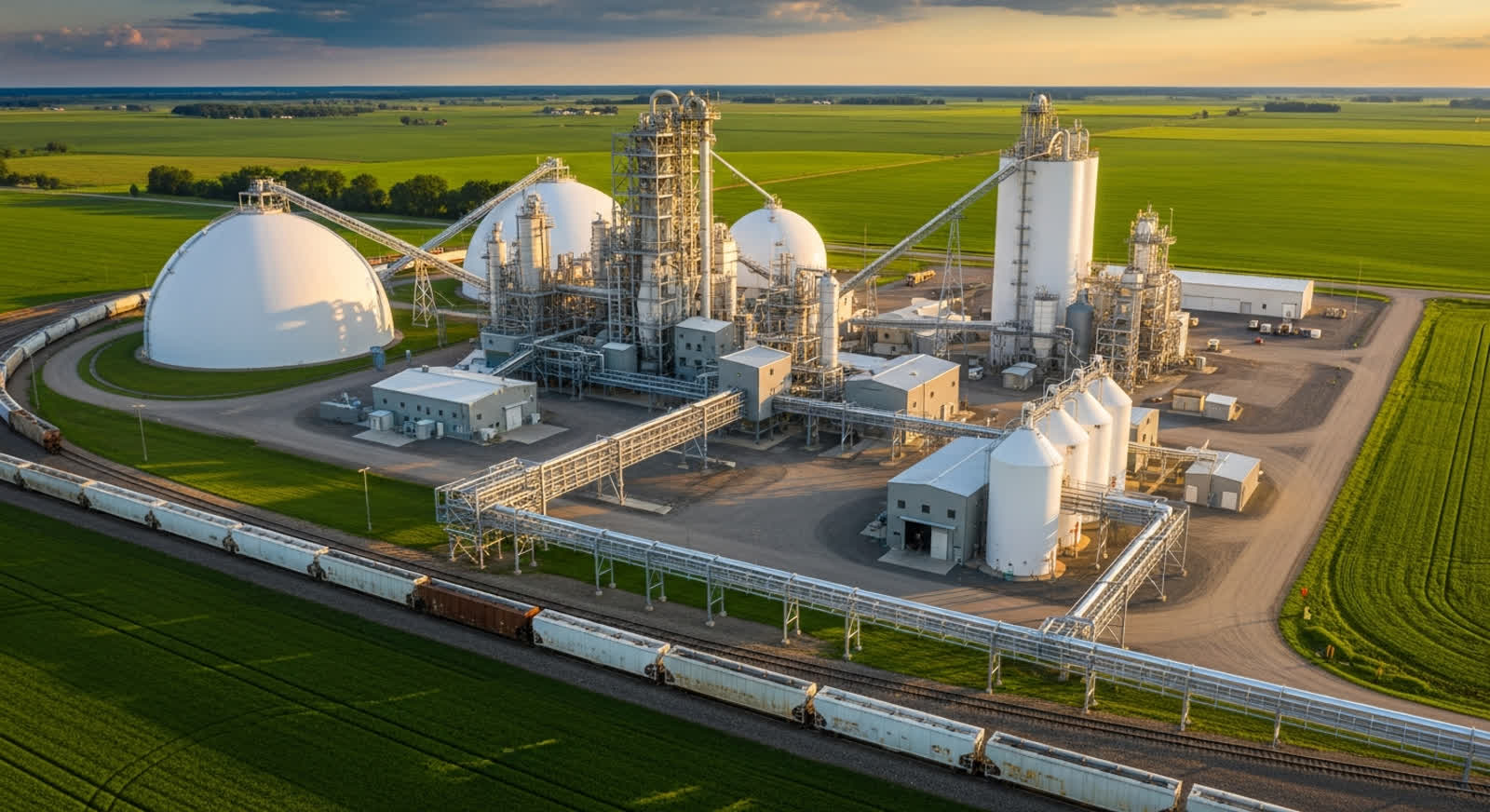
Send the project type, location, approximate total project cost and financing program. You get back a written scope, a delivery date and a fixed fee — by email, normally within one business day, with no call required. Independent since 1998: 4,000+ engagements and $43.8 billion in evaluated project value.
Firm-wide engagement figures are distinct from project-specific findings and their stated source periods.
The Fertilizer Investment & Expansion for Long-term Domestic Supply Program (FIELDS) is a USDA Rural Development grant program intended to expand or bring into operation new, independent domestic fertilizer production capacity, so U.S. agricultural producers have more domestic fertilizer options and a stronger supply chain. Eligible projects can include expansions or upgrades of existing facilities and new domestic production facilities.
The FY 2026 Notice of Funding Opportunity (funding opportunity number RD-RBS-26-01-FIELDS) was published July 1, 2026 and makes at least $500 million available, in roughly 10 awards of $15 million to $150 million each, with a 50% match requirement. Applications are due August 17, 2026, 11:59 p.m. ET through Grants.gov — late or incomplete applications will not be accepted.
For applicants, one document deserves special attention: USDA requires a project-specific feasibility study, dated within three years of submission, prepared by and signed by a qualified independent consultant, and acceptable to USDA. The strongest applications treat the feasibility study as the backbone of the application — it must reconcile with the business plan, budget, pro formas, match commitments, and off-take commitments, and it should map directly to USDA’s scoring criteria.
| Category | Requirement / detail |
|---|---|
| Announcement date | July 1, 2026 (NOFO publication date) |
| Application due date | August 17, 2026, 11:59 p.m. ET through Grants.gov. Late or incomplete applications will not be accepted. |
| Funding opportunity number | RD-RBS-26-01-FIELDS |
| Assistance listing number | 10.383 |
| Total available funding | At least $500 million |
| Award type | Grant / Financial Assistance Agreement |
| Minimum award | $15 million |
| Maximum award | $150 million |
| Approximate number of awards | 10 |
| Anticipated award date | December 2026 – January 2027 |
| Period of performance | 1 to 5 years (max 60 months), with up to 24 months of no-cost extensions considered case-by-case |
| Match requirement | 50% of total eligible project costs. Example: a $50 million eligible project can request up to $25 million and must provide at least $25 million in match. |
Eligible entities may include Tribes, Tribal entities, Alaska Native Corporations, for-profit entities, corporations, nonprofits, producer-owned cooperatives and corporations, certified benefit corporations, and state or local government entities. Private entities must be independently owned and operated.
Applicants must operate within the U.S. or its territories, propose a project physically located in the U.S. or its territories, be domestically owned, process manufacture (or plan to process manufacture) fertilizer in compliance with applicable laws, and maintain active SAM registration.
A key eligibility restriction: applicants and their affiliates must not hold market share in production greater than or equal to the entity holding the fourth-largest share for nitrogen, sulfur, phosphate, potash, or any combination of those components. Multiple applications from affiliated applicant entities are not permitted; multiple projects owned by the same applicant should be combined into one application.
| Eligible use | Notes |
|---|---|
| New facility construction or purchase of an existing facility | Must expand capacity or increase output; land purchase may be included |
| Pre-development costs | Includes engineering and other professional fees |
| Working capital | Eligible, but cannot be the primary use of funds |
| Modernizing or expanding an existing facility | Includes modifications to existing buildings and construction of new buildings at existing facilities |
| New or modernized process manufacturing equipment | Equipment tied to fertilizer process manufacturing |
| Equipment / technology installation | Must improve processing functions, worker conditions, or safety |
| Packaging, labeling, safety compliance | Sealing, packaging, boxing, labeling, conveying, product-moving equipment, and occupational safety compliance |
| Fertilizer logistics | Distribution, transportation, and storage to benefit producers; logistics cannot be the primary use of funds |
The NOFO checklist requires the following core application materials. USDA cautions that missing required documents can make an application ineligible.
| Required item | Notes |
|---|---|
| SF-424 | Maximum period of performance is 60 months |
| Project Narrative | Limited to 20 pages, not including the application template and supporting documents |
| SF-424A | Required for non-construction projects only |
| SF-424C | Budget information for construction programs |
| SF-424D | Assurances for construction projects |
| SF-LLL | Disclosure of lobbying activities, if applicable |
| Environmental information | Environmental checklist or equivalent required information |
| Supporting documents | See NOFO Section 4.2 |
The project narrative must include an executive summary, applicant information, project information with workplan and budget, land ownership/access, estimated volume increase and units of measure, acreage covered, number of farmers served, and responses to all evaluation criteria. It must also summarize the feasibility study, business plan, and marketing plan — which is why those documents need to exist, and agree with each other, before the narrative is written.
| Requirement | Details |
|---|---|
| Business plan | Must support project viability |
| Historical financials | Three years of balance sheets and income statements; newer applicants submit what is available |
| Current financials | Balance sheet and income statement dated within 90 days |
| Projections | Two years of pro forma and projected financial analysis, including balance sheet, income statement, cash flow analysis, and assumptions |
| Feasibility study | Must be project-specific, recent, signed by a qualified consultant, and acceptable to USDA |
| Personnel / workforce documentation | Source documentation, including resumes for key personnel, construction labor, and operational workforce |
The feasibility study must be dated no more than three years before submission, prepared for the specific project, and signed by a qualified consultant. USDA must concur that it is acceptable and adequate.
USDA defines a feasibility study as a comprehensive study, including an opinion or finding, prepared by qualified consultants, evaluating the economic, market, technical, financial, and management feasibility of the proposed project or operation — to determine whether it is practical, viable, and likely to succeed. USDA’s FIELDS Feasibility Study Guide identifies seven essential components.
The nature and scope of the project: purpose, location, design features, capacity, estimated capital costs, and a summary of the feasibility determinations for each applicable component.
A cost-benefit analysis and detailed information on likely project impacts and expectation for success. USDA wants required inputs addressed — labor, infrastructure, utilities, renewable resources, feedstock, contracts in place or to be negotiated — along with environmental risks, capacity expansion, economic impact, new markets, supply-chain bottlenecks, shock resistance, and impacts on suppliers, customers, and agricultural producers.
Analysis of current and future market potential, competition, sales or service estimates, and current and prospective buyers or users. USDA suggests addressing competition, target market, end-user analysis, by-product revenue streams, industry risk, pricing, distribution channels, and market share.
The reliability of the technology and the delivery of goods or services: transportation, business location, technology, materials, labor, commercial availability, process success record, duplication of results, roads/rail/airport infrastructure, utilities, waste disposal, water quality management, local transportation, material availability, technology age and reliability, and construction risk.
Whether the operation will produce sufficient income and cash flow to sustain the project long-term. USDA’s suggested factors include commercial or project underwriting, management assumptions, accounting policies, dependencies on other entities, market-demand forecast, peer industry comparisons, cost-accounting systems, short-term credit availability, adequacy of raw materials and supplies, sensitivity analysis, use of FIELDS grant funds, and other secured funding sources.
The legal structure, ownership, board, and management capacity — including the organization’s history, the professional and educational background of leadership, and the experience, skills, and qualifications needed to implement the project.
The study must conclude with the consultant’s explicit opinion and recommendation on whether the project is practical, viable, and likely to succeed — and must include the author’s resume or statement of qualifications, including prior experience.
A strong FIELDS application does not treat the feasibility study as an attachment. It maps the study directly to the scoring rubric, so every point USDA can award is supported by independent analysis.
| Scoring area | Points | What USDA is looking for |
|---|---|---|
| Financial viability and technical merit | 25 | Strong projections, supportable assumptions, demonstrated technology/system track record, project performance evidence, and secured or identified financing |
| Work plan and budget | 25 | Realistic milestones, detailed budget, qualified personnel and service providers, and project risk mitigation |
| Market demand & opportunities | 18 | Validated demand, production capacity, market drivers, commercial linkages, end-user/buyer commitments, applicant market capability, and long-term sustainability |
| Market impact | 12 | Domestic fertilizer manufacturing expansion, producer access, competition, input procurement plan, farmers/acres served, market barriers addressed, and local/regional support |
| Nitrogen or sulfur products/projects | Up to 5 | Extra points for process manufacturing of nitrogen- or sulfur-related fertilizer products |
| Executed off-take agreements | Up to 5 | Extra points for market readiness through executed off-take agreements |
| Administrator points | Up to 10 | Rural economic recovery, improved access to domestically produced fertilizer, applicants without prior FPEP awards, and geographic diversity |
Before submission, make sure the feasibility study:
Wert-Berater is accepting FIELDS feasibility study orders now. Our standard turnaround is two weeks from receipt of a complete project file — and RUSH orders with delivery in 7 business days are accepted at additional cost. Every study is prepared to USDA’s FIELDS Feasibility Study Guide: all seven required components, an explicit opinion and recommendation, consultant qualifications included, and analysis that reconciles with your business plan, pro formas, and match commitments.
Given the August 17, 2026 deadline, the working calendar is short. The narrative must summarize the feasibility study, so the study needs to be complete before the application is finalized — ordering the study is one of the first moves, not the last.
FIELDS is one of the largest USDA grant opportunities of FY 2026: at least $500 million, roughly ten awards of $15 million to $150 million, and a program purpose — independent domestic fertilizer capacity — that Washington has prioritized. But it is also a compressed, document-heavy competition where an inadequate feasibility study can sink an otherwise fundable project. Treat the study as the backbone of the application: it should directly support the narrative, the scoring criteria, the financial viability section, the market-demand claims, and the risk-mitigation plan.
President, Wert-Berater, Inc. — independent feasibility study consultants since 1998. 4,000+ engagements completed across all 50 states and internationally, evaluating $43.8 billion in project value for SBA, USDA, EB-5, conventional, and institutional financing decisions. Fiduciary duty runs to the lender and agency in every engagement.
+1 310-857-2443 ext. 800 · email · 1968 South Coast Hwy, Ste 2382, Laguna Beach, CA 92651 · 111 Town Square Pl Ste 1238 PMB 657834, Jersey City, NJ 07310 · 539 W. Commerce St #8486, Dallas, TX 75208 · 66 W Flagler Street, Suite 900, PMB 12704, Miami, FL 33130
Schedule a ConversationIndependent feasibility studies since 1998 — 4,000+ engagements, $43.8 billion in evaluated project value. FIELDS studies: standard turnaround two weeks; RUSH delivery in 7 business days at additional cost. Fiduciary duty to the lender and agency.
Legal disclosure. Wert-Berater, Inc. offices are mailing addresses only. Following the COVID-19 pandemic the firm has elected to work remotely; its office locations receive mail and are not staffed for visitors or in-person meetings. Headquarters mailing address: 1968 South Coast Hwy, Ste 2382, Laguna Beach, CA 92651.
Wert-Berater, Inc. is an independent provider of feasibility studies and other related services. The firm does not provide financing or equity investment advice, and does not arrange, broker, or place debt or equity capital of any kind.
All appraisal assignments are performed by Bruce E. Jones, MAI, ASA-GC, BCA, CMEA, a member of the Appraisal Institute since 2006, a staff member of Wert-Berater, Inc. and owner of Special Purpose Realty Valuation.
Thousands of real estate, business, and machinery appraisal and litigation assignments.