
USDA just removed ten lenders from the OneRD Guaranteed Lending Program — a group USDA tied to nearly half of Rural Development’s delinquent loans. Whatever the causes in any one case, it is a reminder of how much rides on the projections a loan is approved against — and on the feasibility study that tests them.

Send the program, the loan size and where the file stands. You get back a written scope, a delivery date and a fixed fee — by email, normally within one business day. We work for the lender: independent since 1998, 4,000+ engagements, 600+ lender relationships.
To a borrower racing toward closing, the feasibility study can feel like one more item on a checklist. To the agency standing behind the guarantee, it is the opposite. Under the U.S. Small Business Administration’s SOP 50 10 and USDA Rural Development’s 7 CFR Part 5001, the feasibility study is a primary underwriting document — the independent test of whether the revenue, the ramp, and the debt-service coverage that justify the loan will hold up after the ribbon is cut. A study that fully satisfies the program’s requirements is what makes the credit defensible years later, when an examiner reopens the file. A study that cuts the corner is a defect baked into the loan from day one.
Program compliance is not an abstraction, and its consequences are now being enforced in public. USDA listed ten lenders as removed from participation in the USDA Rural Development OneRD Guaranteed Lending Program:
Removal from participation is a portfolio-management action by the agency, not a verdict on any single deal, borrower, or feasibility study. But the headline figure is the part every sponsor and lender should sit with: a small group of participants accounted for nearly half of a national program’s delinquency. Whatever drove it in any given case, a number that large is a reminder of how concentrated program risk can become — and of why agencies lean so heavily on the document that tests a loan’s projections before it closes.
A guaranteed loan goes delinquent when the borrower cannot service it — when revenue arrives slower, thinner, or later than the projections promised. Those projections come from the feasibility study. When a study is built to the program — demand anchored to a defined trade area, expense ratios benchmarked to RMA and industry data, a modeled ramp instead of day-one stabilization, and debt-service coverage tested against the real loan structure — the approved loan is sized to a future the borrower can actually reach. When a study is an advocacy document dressed as analysis, it launders an optimistic pro forma through a consultant’s letterhead, and the gap between the projection and the market becomes the lender’s delinquency and the agency’s loss.
That is why agencies treat the study as underwriting, not paperwork. The compliance requirements exist precisely to keep the projection honest — and a loan approved on a study that falls short of them carries the risk that the file will not hold up once the market, rather than the narrative, sets the revenue.
Full compliance is specific, and it differs by program. For USDA Business & Industry and Community Facilities work, it means addressing the enumerated factors of 7 CFR Part 5001 — economic feasibility, market and technical feasibility, management capacity, and the rest — rather than a generic narrative that gestures at them. For SBA 7(a) and 504, it means the projection-based and special-purpose analysis SOP 50 10 calls for, including global debt-service coverage on the borrower and affiliates. Across both, it means three things a reviewer can verify on sight:
Independence — the determination is not for sale to the party who benefits from a “feasible” finding. Benchmarked assumptions — every material number is derived and sourced, not asserted. Honest risk disclosure — the study names what could go wrong and stress-tests it with sensitivity analysis, instead of presenting a single confident line. A study missing any one of these is not merely thinner; it is non-compliant — and compliance is exactly what gives a lender and an agency confidence that the loan was sized to reality.
The economics are lopsided. A study that skips compliance saves a sponsor a few days and a few thousand dollars. The loan it helps approve can cost a lender and the agency far more when it underperforms. Program standing is not permanent either — the OneRD removals are a reminder that agencies actively manage which lenders participate. Viewed against that downside, a fully compliant feasibility study is not the expensive option; it is cheap insurance.
Wert-Berater prepares feasibility studies to the specific program’s requirements: factor-compliance matrices on USDA work, benchmark-annotated ratio tables, ramp-resolved pro formas, global debt-service coverage and sensitivity testing on SBA and conventional credits, and a plain statement of every material risk. The firm’s fiduciary duty runs to the lender and the agency, never the borrower — because the study’s job is to be right, not to be flattering. That is the discipline that keeps a loan out of the column USDA just published.
A compliance framework is only as credible as the people who apply it. When an underwriter, a CDC, or an agency reviewer weighs a feasibility determination, the first question after “does it address the regulation?” is “who stands behind it?” Wert-Berater’s answer is a senior-led bench whose experience predates the programs it now serves — 4,000+ engagements completed since 1998, across all 50 states and internationally, evaluating $41.2 billion in project value — directed and reviewed by the two senior leaders below.
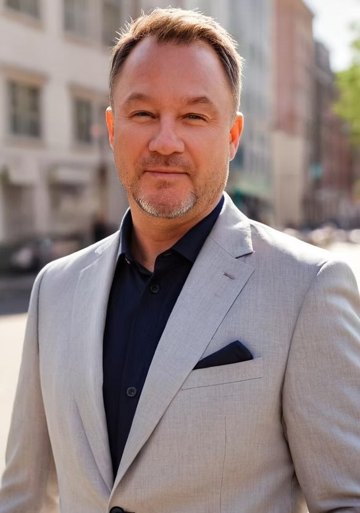
Mr. Safranek earned graduate qualifications in economics from the London School of Economics and in law from the University of London, following undergraduate studies in English Literature and Economics at Rollins College.
He began his professional career at Lehman Brothers in 1982 as a college intern and has subsequently worked in real estate investment, underwriting, financial analysis, feasibility analysis, and advisory services.
Credentials: Graduate qualifications in economics, London School of Economics, and law, University of London · undergraduate studies in English Literature and Economics, Rollins College · career began as a college intern at Lehman Brothers in 1982.
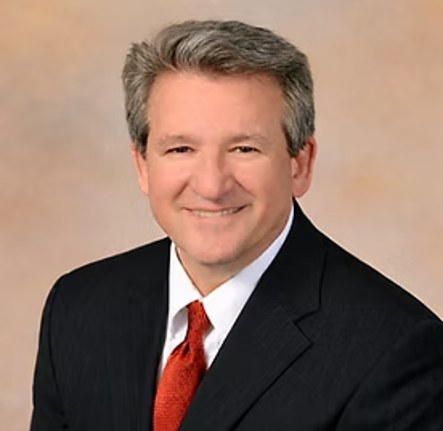
MAI, Appraisal Institute. In real estate since 1987. Mr. Jones brings that experience to complex, income-producing, and going-concern assets — exactly the special-purpose properties where SBA SOP 50 10 and USDA reviewers demand the most scrutiny. He is an Accredited Senior Appraiser with the American Society of Appraisers, including the ASA Going Concern specialty, and a Certified General Real Estate Appraiser licensed in multiple states. He has been a member of the Appraisal Institute since 2006 and, alongside his staff role at Wert-Berater, Inc., is the owner of Special Purpose Realty Valuation.
Beyond real estate, Mr. Jones holds the BCA and CMEA credentials and brings more than 12 years of experience as a business and machinery & equipment appraiser — so when a project’s value rests on the integrated performance of real estate, an operating business, and tangible assets, each layer is valued by a credentialed specialist rather than assumed. His valuation work has withstood adversarial and highly scrutinized contexts, including litigation support and expert testimony.
Credentials: MAI, Appraisal Institute · ASA, Going Concern specialty · BCA · CMEA · Certified General Real Estate Appraiser (multi-state) · business and machinery & equipment appraisal expertise.
That combination — institutional credit discipline on one side, designation-backed valuation depth on the other — is what full compliance looks like in practice: every material number derived by someone qualified to defend it in front of the reviewer who will test it.
President, Wert-Berater, Inc. — independent feasibility study consultants since 1998. 4,000+ engagements completed across all 50 states and internationally, evaluating $41.2 billion in project value for SBA, USDA, EB-5, conventional, and institutional financing decisions. Fiduciary duty runs to the lender and agency in every engagement.
+1 310-857-2443 ext. 800 · email · 1968 South Coast Hwy, Ste 2382, Laguna Beach, CA 92651 · 111 Town Square Pl Ste 1238 PMB 657834, Jersey City, NJ 07310 · 539 W. Commerce St #8486, Dallas, TX 75208 · 66 W Flagler Street, Suite 900, PMB 12704, Miami, FL 33130
Schedule a ConversationIndependent, fully program-compliant feasibility studies since 1998 — 4,000+ engagements, $41.2 billion in evaluated project value. Standard delivery in 10 to 15 business days. Fiduciary duty to the lender and agency.
Legal disclosure. Wert-Berater, Inc. offices are mailing addresses only. Following the COVID-19 pandemic the firm has elected to work remotely; its office locations receive mail and are not staffed for visitors or in-person meetings. Headquarters mailing address: 1968 South Coast Hwy, Ste 2382, Laguna Beach, CA 92651.
Wert-Berater, Inc. is an independent provider of feasibility studies and other related services. The firm does not provide financing or equity investment advice, and does not arrange, broker, or place debt or equity capital of any kind.
All appraisal assignments are performed by Bruce E. Jones, MAI, ASA-GC, BCA, CMEA, a member of the Appraisal Institute since 2006, a staff member of Wert-Berater, Inc. and owner of Special Purpose Realty Valuation.