
We give lenders credit-department capacity without shifting credit authority.
Independent underwriting capacity for lenders under the USDA OneRD Guarantee Loan Initiative. Wert-Berater completes the credit analysis, drafts the credit memorandum in your own template, and documents concerns, weaknesses, and exception items — working from your data room and third-party reports — so your credit officer and loan committee receive a decision-ready file. Fiduciary duty runs to the lender and the agency, never the borrower.
Send the program, the loan size and where the file stands. You get back a written scope, a delivery date and a fixed fee — by email, normally within one business day. We work for the lender: independent since 1998, 4,000+ engagements, 600+ lender relationships.
USDA's OneRD Guarantee Loan Initiative places the underwriting decision with the approved lender: the lender completes its own credit analysis and credit memorandum, and USDA Rural Development reviews the file before issuing the loan-note guarantee. That is a real workload — particularly for complex, higher-dollar, or new-enterprise credits — and it does not scale evenly with deal flow.
Wert-Berater provides that underwriting capacity on an independent, outsourced basis. We complete the credit analysis, draft the credit memorandum in the lender's format, and document the concerns, weaknesses, and exception items a credit committee needs to see, together with recommended conditions and mitigants. The lender retains full credit authority and the loan relationship; we supply the analytical work product behind the decision.
The OneRD Guarantee Loan Initiative harmonizes four USDA Rural Development guaranteed programs under a single regulation, 7 CFR Part 5001: Business & Industry (B&I), Community Facilities (CF), the Rural Energy for America Program (REAP), and Water & Waste Disposal (WWD). Our underwriting work product addresses the credit factors, tangible-balance-sheet-equity tests, debt-service-coverage and collateral standards, and the feasibility, appraisal, and environmental requirements the program applies, including the NEPA-based environmental review under 7 CFR Part 1970. New businesses and projects that require an independent feasibility study are supported by the firm's own feasibility practice, so the analysis and the memorandum align to a single standard.
Wert-Berater is an independent, fee-for-service firm. We do not originate, broker, service, or hold any interest in the loans we support, and our fiduciary duty runs to the lender and the applicable agency. The engagement augments a lender's underwriting capacity for volume, complexity, or turnaround — it does not lower a standard or substitute for the lender's judgment. Every conclusion rests on independent research and documented sources, benchmarked against recognized references, so the memorandum survives USDA review and third-party scrutiny.
The same outsourced-underwriting support is available for SBA 504 and 7(a) credits under the applicable SBA SOP and for conventional commercial transactions, prepared to each lender's stated credit policy and coverage standard. Whether the need is overflow capacity during peak volume or a full-file underwrite on a complex credit, the work is scoped, timelined, and fee-quoted before it begins.
Outsourced underwriting is only as strong as the people behind the memorandum. Wert-Berater’s work is directed and reviewed by a senior-led bench whose experience predates the programs it now serves — 4,000+ engagements completed since 1998, across all 50 states and internationally, evaluating $41.2 billion in project value, with institutional underwriting experience reaching back to 1982.

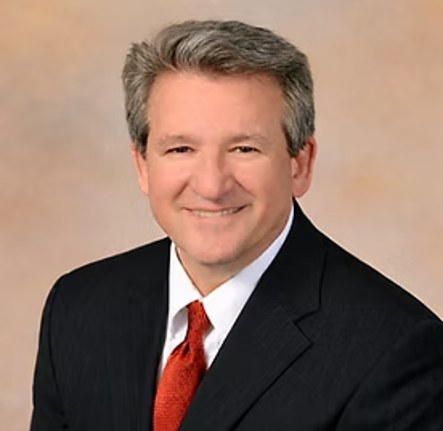
Mr. Safranek earned graduate qualifications in economics from the London School of Economics and in law from the University of London, following undergraduate studies in English Literature and Economics at Rollins College.
He began his professional career at Lehman Brothers in 1982 as a college intern and has subsequently worked in real estate investment, underwriting, financial analysis, feasibility analysis, and advisory services.
Graduate qualifications: Economics, London School of Economics · Law, University of London · Undergraduate studies: English Literature and Economics, Rollins College · Career began as a college intern at Lehman Brothers in 1982
MAI, Appraisal Institute. In real estate since 1987. Mr. Jones brings that experience to the collateral and third-party-report analysis inside every underwrite. His credentials span the full range a credit file draws on: the MAI designation from the Appraisal Institute (member since 2006), the ASA Going Concern specialty from the American Society of Appraisers, and the BCA and CMEA designations covering more than twelve years of business valuation and machinery & equipment appraisal. A staff member of Wert-Berater, Inc., he is also the owner of Special Purpose Realty Valuation.
A Certified General Real Estate Appraiser in multiple states with litigation-support and expert-testimony experience, he reconciles the appraisal, going-concern, and equipment values a OneRD file relies on — so the collateral analysis in the memorandum rests on credentialed, defensible judgment rather than a pass-through of third-party numbers.
MAI · ASA-GC · BCA · CMEA · Certified General Appraiser (multi-state) · Expert testimony
A OneRD credit memorandum is not a summary of the borrower's pitch deck. It is a documented credit argument that must survive USDA Rural Development review, internal loan-committee scrutiny, and, on any troubled credit, subsequent audit. The scope of work is calibrated to that standard, not to a minimum-effort threshold.
For each engagement, the work product addresses the specific program under 7 CFR Part 5001 — Business & Industry, Community Facilities, REAP, or Water & Waste Disposal — because eligibility criteria, collateral requirements, and feasibility documentation differ materially across those four programs. The credit memorandum is drafted in the lender's own template and follows the lender's stated credit policy, so it enters the file as a finished document rather than a draft requiring translation.
OneRD programs serve a wide range of project types — rural manufacturers, agricultural processors, healthcare facilities, renewable-energy installations, rural water systems, and community infrastructure — and the demand analysis must be built to the specific market the project serves, not to a generic template. The method follows the project type.
For Business & Industry credits, primary demand sources include U.S. Census Bureau county-level economic and demographic data, Bureau of Labor Statistics employment series, state labor-market information, and trade-association production and consumption data for the relevant industry. Competitive-supply work draws on state business registries, occupational licensing databases where the industry is licensed, and field verification of operating competitors within the defined trade area.
For Community Facilities credits, population projections from state demographers and USDA Rural Development service-area data anchor the needs analysis. For REAP renewable-energy credits, USDA Rural Development energy-audit documentation, utility interconnection-queue filings, and state public-utility commission rate schedules are the primary regulatory and revenue inputs. For Water & Waste Disposal projects, state primacy-agency permit records, EPA Safe Drinking Water Information System data, and engineering reports establish both the regulatory compliance driver and the service-area capacity basis.
In each case, the demand conclusion is stated with its source cited, so the credit committee can evaluate the evidence rather than accept an assertion. No demand figure enters the memorandum without a documented origin.
Debt-service coverage is the arithmetic result of a handful of inputs. On most OneRD credits, a small number of assumptions account for most of the movement in that ratio, and those are the inputs a credit memorandum must test explicitly rather than accept from the borrower's projection.
Identifying which assumptions are load-bearing is project-type specific. A rural hospital credit turns on patient-volume and payer-mix assumptions in a way a grain-handling facility does not. A REAP solar credit turns on production estimates and power-purchase-agreement rates in a way a rural hotel does not. The engagement begins by identifying the two or three revenue-side and cost-side variables that, if wrong, break coverage — and then stress-testing each.
Every model is a fully linked Excel workbook with no hardcoded values, so the lender's credit officer can move any input and observe the coverage response directly.
USDA Rural Development does not make the credit decision on a OneRD guaranteed loan — the approved lender does — but Rural Development reviews the file before issuing the loan-note guarantee, and that review has specific expectations. A memorandum that satisfies a lender's internal committee but fails Rural Development's documentation standards creates delay and, in some cases, requires the lender to reopen the credit analysis.
The program requires the lender to demonstrate, in writing, that the credit meets the tangible-balance-sheet-equity minimums, the debt-service-coverage standards, and the collateral-adequacy requirements set out in 7 CFR Part 5001. For new businesses and projects, an independent feasibility study is a program requirement, not optional, and the credit memorandum must reconcile the feasibility conclusion with the financial projections in the file. Discrepancies between the feasibility study and the borrower's pro forma are a common Rural Development comment item.
Our underwriting memorandum organizes repayment analysis, supporting evidence and documented exceptions for lender review, while keeping OneRD requirements separate from SBA program criteria. The difference is that OneRD spans four subprograms with distinct eligibility and documentation requirements, and the environmental review under 7 CFR Part 1970 adds a compliance dimension that SBA files do not carry in the same form.
The concerns-and-exceptions schedule is not a liability for the lender — it is evidence that the lender exercised independent credit judgment, which is precisely what the guarantee program requires.
Every engagement is scoped, timelined, and fee-quoted before work begins. A lender submits the program, the loan size, and the current state of the file; a written scope, delivery date, and fixed fee come back by email, normally within one business day. The fee does not change unless the scope changes, and it is not contingent on any finding or outcome.
Work begins when the lender provides a complete data room: the credit memorandum template, borrower financial statements, the proposed loan structure, and the third-party reports the program requires. Standard delivery is ten to fifteen business days from a complete data room. Rush delivery is available and is addressed in the scope letter. Incomplete data rooms are the most common source of delay; the scope letter identifies the specific documents required for the engagement to proceed.
The financial model is published to a secure client portal as a fully linked Excel workbook. It recalculates when any input changes, so the lender's credit officer can run additional stress scenarios after delivery without requesting a revision. The model carries no hardcoded values.
The finished memorandum is delivered in the lender's own template and credit-policy format. The concerns-and-exceptions schedule, the program-eligibility review, and the third-party-report reconciliation are included as standard components, not add-on items. The lender's credit officer reviews and finalizes the memorandum before it goes to loan committee; the credit decision and the file remain the lender's throughout.
The fee is fixed and quoted in writing before work begins, normally within one business day of receiving the program, loan size, and file status. It does not change unless the scope changes and is never contingent on the credit finding or loan approval. Contact Wert-Berater with your file details to receive a written scope and fee.
Standard delivery is ten to fifteen business days from the date a complete data room is received — meaning the lender's template, borrower financials, proposed loan structure, and all required third-party reports. Rush delivery is available and is addressed in the scope letter. An incomplete data room is the most common source of delay.
OneRD credits frequently involve new enterprises, rural markets with limited comparable data, and multiple third-party reports — feasibility study, appraisal, environmental review, and business valuation — that must be reconciled into a single credit narrative. Program eligibility, tangible-balance-sheet-equity tests, and the NEPA-based environmental review under 7 CFR Part 1970 add compliance dimensions absent from most conventional files.
No. The lender retains full credit authority, the loan relationship, and the credit decision throughout. Wert-Berater provides the analytical work product — the completed credit memorandum, the financial model, and the concerns-and-exceptions schedule — which the lender's credit officer reviews and finalizes before presenting to loan committee.
Yes. For new businesses and projects where USDA Rural Development requires an independent feasibility study, Wert-Berater's feasibility practice can complete that study, and the underwriting engagement then reconciles the feasibility conclusion directly into the credit memorandum. Working from a single analytical standard eliminates the discrepancies between the feasibility report and the borrower's pro forma that are a common Rural Development comment item.
The service covers all four subprograms harmonized under 7 CFR Part 5001: Business & Industry, Community Facilities, the Rural Energy for America Program, and Water & Waste Disposal. Eligibility criteria, collateral requirements, and feasibility documentation differ across the four programs; the scope letter and the credit memorandum are calibrated to the specific subprogram governing the file.
Underwriting support and feasibility analysis are separate engagements with separate independence requirements. Institutions that need the latter should start with our bank feasibility study consultants page.
For projects governed by the OneRD feasibility provisions, see the 7 CFR Part 5001 feasibility study service framework.
Add underwriting capacity without adding headcount. Tell us about your pipeline and your credit policy. We will confirm scope, turnaround, and a fixed fee before any work begins.
Schedule a Zoom Call →Legal disclosure. Wert-Berater, Inc. offices are mailing addresses only. Following the COVID-19 pandemic the firm has elected to work remotely; its office locations receive mail and are not staffed for visitors or in-person meetings. Headquarters mailing address: 1968 South Coast Hwy, Ste 2382, Laguna Beach, CA 92651.
Wert-Berater, Inc. is an independent provider of feasibility studies and other related services. The firm does not provide financing or equity investment advice, and does not arrange, broker, or place debt or equity capital of any kind.
All appraisal assignments are performed by Bruce E. Jones, MAI, ASA-GC, BCA, CMEA, a member of the Appraisal Institute since 2006, a staff member of Wert-Berater, Inc. and owner of Special Purpose Realty Valuation.