
Raising capital is only the beginning. Once a project is funded, developers still have to keep lenders, investors, and equity partners informed through entitlement, construction, lease-up, stabilization, refinance, or disposition. Wert-Berater’s quarterly monitoring turns scattered updates into a disciplined, investor-ready reporting system.
Firm-wide engagement figures are distinct from project-specific findings and their stated source periods.
Raising capital is only the beginning. Once a project is funded, developers still have to keep lenders, investors, equity partners, and internal stakeholders informed as the project moves through entitlement, construction, lease-up, stabilization, refinance, or disposition. That is why Wert-Berater’s platform also includes quarterly project monitoring.
This service is designed for developers who need professional, consistent, investor-ready progress reporting after the feasibility study is completed and capital has been raised. Instead of leaving investors to interpret scattered updates, construction emails, draw requests, spreadsheets, and revised assumptions, Wert-Berater organizes the project into a quarterly monitoring report that tracks what changed, what remains on plan, and where risk is emerging. The demo platform shows the service as a quarterly asset, market, and performance monitoring program — including reporting period, report date, project phase, hold horizon, next report date, assigned monitoring team, export/print capability, and downloadable deliverables.
Developers often need to answer the same investor questions every quarter:
Wert-Berater’s quarterly monitoring service gives developers a structured way to answer those questions. Each monitoring report can track project risk, timeline, stage of development, construction progress, market conditions, financial performance, investor returns, valuation movement, budget variance, operating assumptions, recommendations, source documentation, and deliverables. The demo report includes sections for executive summary, risk assessment, development timeline, stage returns, IRR, XIRR/MIRR, variance, financials, appraisal, economy, market, threats, developments, recommendations, disclosures, assumptions, sources, and deliverables.
Many developers send investors informal updates. Those updates may be useful, but they are often inconsistent from quarter to quarter. One update may focus on construction, another on leasing, another on market conditions. Over time, it becomes difficult for investors to see how the project is actually performing against the original plan.
Wert-Berater solves that by making monitoring repeatable. Each quarter, the project can be reviewed against the original feasibility study and current project data. The report can show what changed since underwriting, whether the original feasibility conclusions still hold, and whether risk has improved, worsened, or remained stable. The sample monitoring report uses an overall risk rating and quarter-over-quarter risk trend, with categories such as construction, budget, market, revenue, expense, financing, valuation, operational, and regulatory risk.
The quarterly monitoring service works especially well with Wert-Berater’s dynamic project platform. As the developer uploads updated models, budget revisions, lease-up data, sales activity, operating results, or market assumptions, the project package can be refreshed. That means investor-facing HTML reports, dashboards, PDFs, PowerPoint summaries, and financial tables can remain synchronized with the latest project information.
This is a major advantage because development projects rarely perform exactly as originally underwritten. Costs move. Timelines shift. Lease-up changes. Interest rates move. Insurance costs increase. New supply enters the market. Permits get delayed. Investor questions evolve. With the Wert-Berater platform, developers can keep the reporting package current without rebuilding everything from scratch each quarter.
A quarterly monitoring report can include:
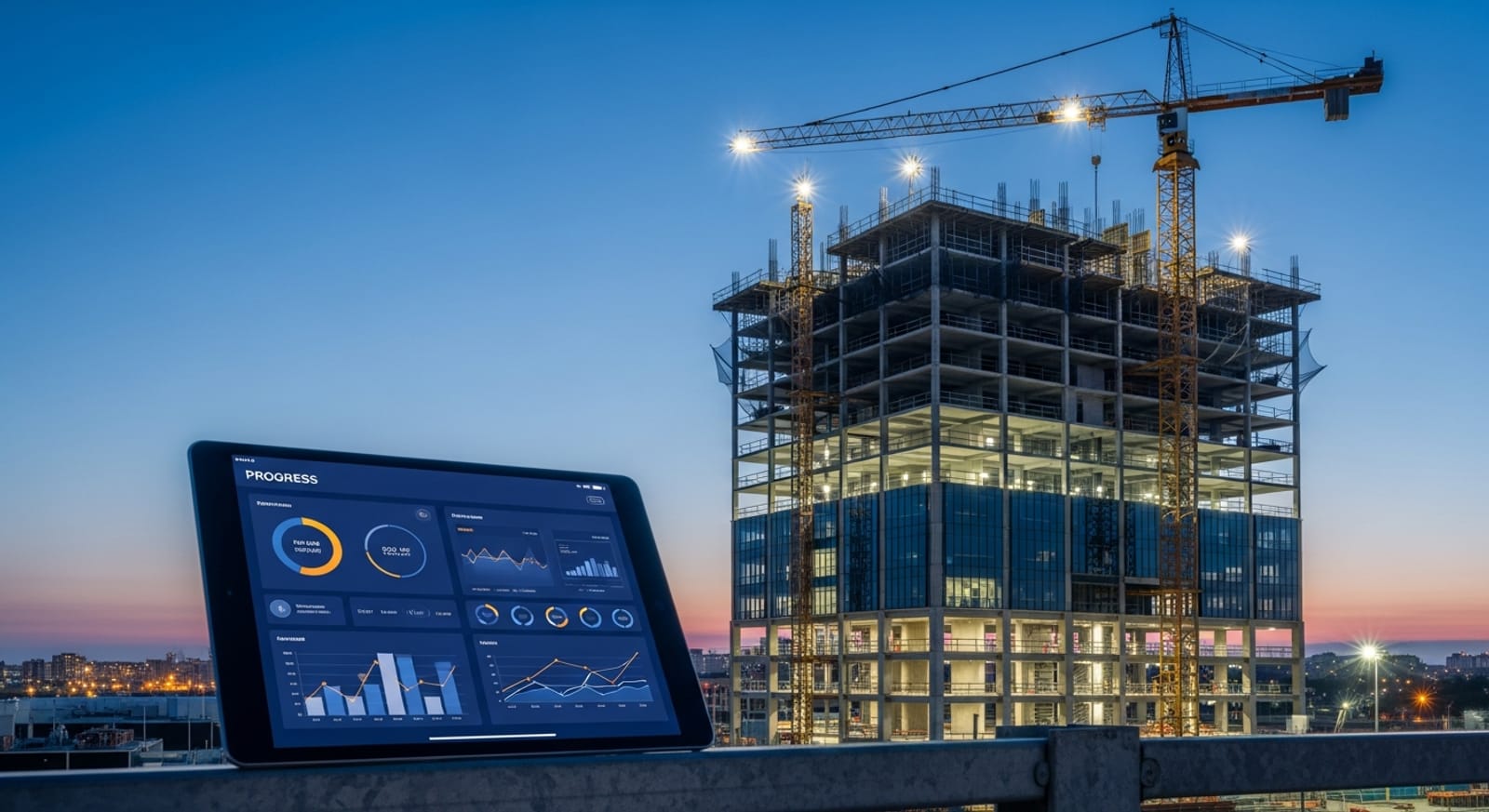
The demo report illustrates how a quarterly dashboard can summarize key metrics such as project IRR, equity IRR, stabilized NOI, DSCR, stabilized value, and lease-up progress compared with underwriting.
Equity investors do not only care about whether the project is moving forward. They care about whether the project is still moving forward in a way that protects their return. Quarterly monitoring helps translate project activity into investor language. A construction delay is not just a schedule issue — it may affect carry costs, lease-up timing, IRR, capital calls, refinance timing, or exit value. A rise in insurance expense is not just an operating issue — it may affect stabilized NOI, valuation, DSCR, and distributions.
Wert-Berater’s monitoring service connects those dots. The monitoring platform can show whether the project remains feasible as underwritten, whether returns are compressed, whether value is affected by cap-rate movement, and whether delays are timing issues or true viability issues. The demo report specifically distinguishes between pressure on timing/value and pressure on overall viability.
For projects where valuation is central to lender or investor reporting, monitoring can also incorporate appraisal or valuation support when separately engaged. The demo page notes that a live engagement can add a signed MAI appraisal, site inspection, and source documents; the sample itself is clearly labeled hypothetical and not an appraisal. That distinction matters. Developers can use quarterly monitoring as a management and investor-reporting system, while also adding formal valuation support when the project or capital providers require it.
Wert-Berater’s work does not have to stop when the feasibility study is delivered or the financing closes. For developers raising debt or equity, ongoing reporting is often critical to maintaining investor confidence. Wert-Berater’s quarterly project monitoring service helps developers track project progress, budget variance, construction status, lease-up, market changes, financial performance, investor returns, valuation movement, and emerging risk.
Each quarter, the project can be refreshed through the online platform, producing updated HTML reports, PDF exports, PowerPoint summaries, dashboards, recommendations, source documentation, and investor-ready deliverables. This gives developers a professional way to communicate with lenders, equity partners, family offices, and stakeholders throughout construction, lease-up, stabilization, and exit planning. The result is a disciplined post-closing reporting system that helps investors understand not only what changed, but what those changes mean for timing, risk, DSCR, value, and returns.
Quarterly project monitoring is a post-closing reporting service for developers who need professional, consistent, investor-ready progress reporting after the feasibility study is completed and capital has been raised. Instead of leaving investors to interpret scattered updates, construction emails, draw requests, and revised assumptions, Wert-Berater organizes the project into a quarterly monitoring report that tracks what changed, what remains on plan, and where risk is emerging.
A quarterly report can include project status and milestone tracking, construction progress and percent complete, budget-to-actual variance, change orders and contingency usage, draw status and capital needs, schedule slippage or recovered float, market and competitive conditions, lease-up or absorption progress, revenue versus underwriting, operating expense variance, NOI/EBITDA/DSCR/cash-flow movement, updated investor return metrics, updated value or refinance outlook, a risk rating with quarter-over-quarter trend, management recommendations, updated source documentation, and PDF, PowerPoint, and HTML deliverables.
Each quarter, the project is reviewed against the original feasibility study and current project data. The report can show what changed since underwriting, whether the original feasibility conclusions still hold, and whether risk has improved, worsened, or remained stable — making investor reporting repeatable and comparable quarter to quarter.
The reporting uses an overall risk rating and a quarter-over-quarter risk trend, with categories such as construction, budget, market, revenue, expense, financing, valuation, operational, and regulatory risk. It can distinguish whether pressure is on timing and value or on overall viability, and whether returns are compressed or value is affected by cap-rate movement.
For projects where valuation is central to lender or investor reporting, monitoring can incorporate appraisal or valuation support when separately engaged. A live engagement can add a signed MAI appraisal, site inspection, and source documents. The public sample report is clearly labeled hypothetical and is not an appraisal.
Quarterly monitoring works with Wert-Berater’s dynamic online project platform. As the developer uploads updated models, budget revisions, lease-up data, sales activity, operating results, or market assumptions, the project package can be refreshed so investor-facing HTML reports, dashboards, PDFs, PowerPoint summaries, and financial tables stay synchronized with the latest information — without rebuilding everything each quarter.

President, Wert-Berater, Inc. — independent feasibility study consultants since 1998. 4,000+ engagements completed across all 50 states and internationally, evaluating $43.8 billion in project value for SBA, USDA, EB-5, conventional, and institutional financing decisions. Fiduciary duty runs to the lender and agency in every engagement.
+1 310-857-2443 ext. 800 · email · 1968 South Coast Hwy, Ste 2382, Laguna Beach, CA 92651 · 111 Town Square Pl Ste 1238 PMB 657834, Jersey City, NJ 07310 · 539 W. Commerce St #8486, Dallas, TX 75208 · 66 W Flagler Street, Suite 900, PMB 12704, Miami, FL 33130
Schedule a ConversationIndependent feasibility studies since 1998 — 4,000+ engagements, $43.8 billion in evaluated project value. Standard turnaround two weeks; RUSH delivery in 7 business days at additional cost. Fiduciary duty to the lender and agency.
Legal disclosure. Wert-Berater, Inc. offices are mailing addresses only. Following the COVID-19 pandemic the firm has elected to work remotely; its office locations receive mail and are not staffed for visitors or in-person meetings. Headquarters mailing address: 1968 South Coast Hwy, Ste 2382, Laguna Beach, CA 92651.
Wert-Berater, Inc. is an independent provider of feasibility studies and other related services. The firm does not provide financing or equity investment advice, and does not arrange, broker, or place debt or equity capital of any kind.
All appraisal assignments are performed by Bruce E. Jones, MAI, ASA-GC, BCA, CMEA, a member of the Appraisal Institute since 2006, a staff member of Wert-Berater, Inc. and owner of Special Purpose Realty Valuation.
Thousands of real estate, business, and machinery appraisal and litigation assignments.