
The USDA B&I Guaranteed Loan Program can finance rural manufacturing plants, processing facilities, warehouses, hotels, healthcare facilities and other commercial construction. This guide explains eligible project costs, loan terms, equity and collateral requirements, SBA loan combinations and how to prepare a feasibility study that supports both programs.
Planning a B&I application? Start with our USDA B&I Feasibility Study Guide — the program, the lender process, and the study USDA expects.
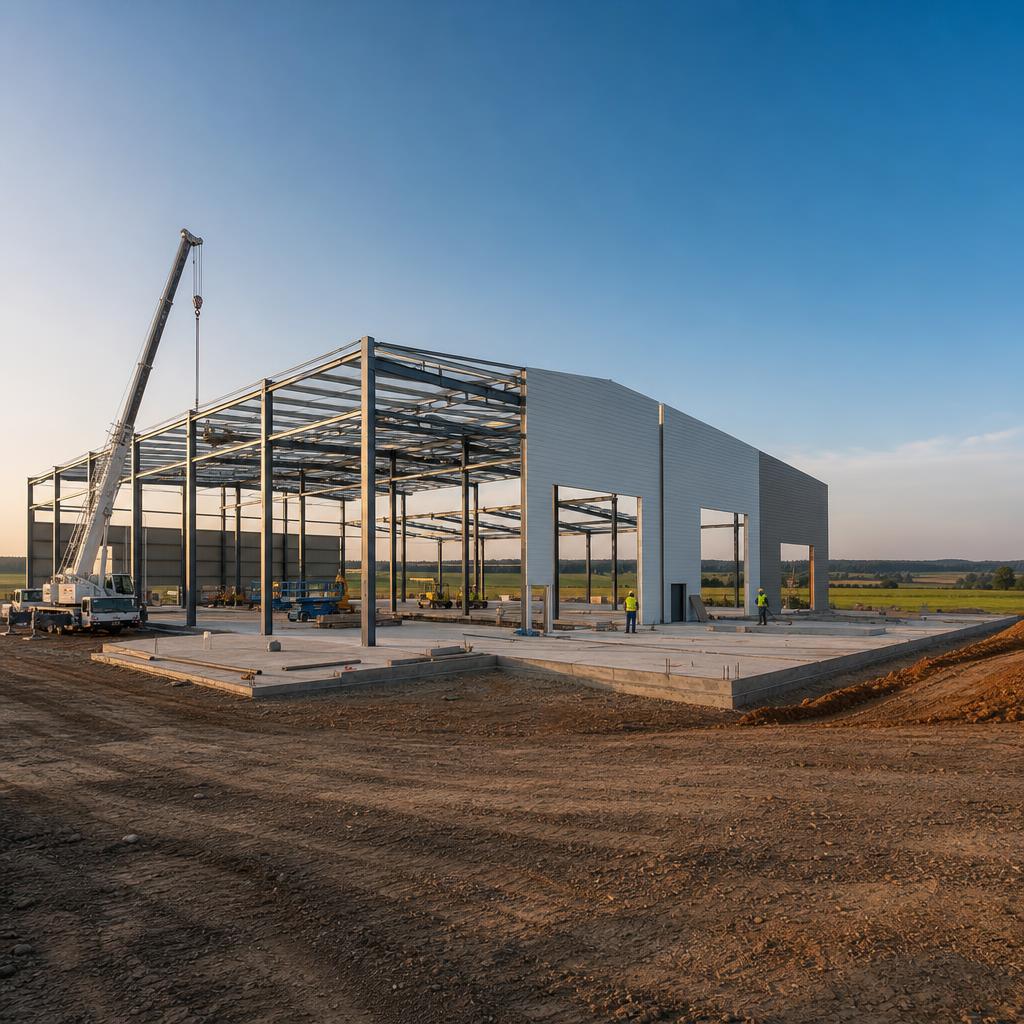
Businesses planning a manufacturing plant, processing facility, hotel, warehouse, healthcare facility or other rural construction project often struggle to find financing with a sufficiently long repayment period. Construction risk, startup losses, specialized equipment and limited collateral value can make conventional financing difficult.
The USDA Business and Industry Guaranteed Loan Program, commonly called the USDA B&I Program, can help eligible rural businesses obtain financing through an approved commercial lender. USDA does not normally make the loan directly. Instead, a participating lender originates and services the loan, while USDA guarantees a portion of the lender’s potential loss.
The program can finance land, construction, equipment, permanent working capital and certain professional costs. It may also be possible to use a separate SBA-guaranteed loan for equipment, working capital or another clearly defined project component. However, combining USDA and SBA financing requires careful coordination of eligible costs, collateral, lien positions, equity and feasibility-study requirements.
This article explains what can—and cannot—be financed, how much equity may be required, and how USDA B&I and SBA loans may work together.
The USDA B&I Program is designed to improve the economic health of rural communities by helping creditworthy businesses obtain commercial financing. Eligible projects should support employment or improve the economic or environmental conditions of a rural community.
The project generally must be located outside a city or town with more than 50,000 inhabitants and outside an urbanized area contiguous and adjacent to such a city or town. USDA makes the final location determination using its rural eligibility rules and property-eligibility mapping system. Certain cooperative and local-food projects can qualify for exceptions.
Eligible borrowers may include:
The borrower must demonstrate that the funds will remain in the United States and that the project will primarily create or preserve employment for rural U.S. residents.
USDA B&I is broader than many borrowers initially assume. The program is not limited to agricultural facilities.
It can support the purchase and development of land, buildings and associated infrastructure for commercial or industrial properties, including new construction, expansion and modernization.
Potential projects include:
Integrated processing projects, including chemical manufacturing and biorefineries, must use commercially available technology and demonstrate technical merit. USDA may examine the project team, design, engineering, permits, equipment procurement, operating history and maintenance plan.
USDA B&I can finance facilities that add value after agricultural products leave the farm, including:
Standalone agricultural production is generally restricted. Agricultural production may qualify when it is not eligible for Farm Service Agency assistance and is part of an integrated operation that also processes agricultural products. The production portion is generally limited to the lesser of 50% of the loan or $5 million, subject to listed exceptions.
Eligible construction may include:
The business must demonstrate sufficient demand and repayment capacity. A speculative building without identified tenants, customers or operating demand may have difficulty qualifying.
Tourism projects can include:
Golf courses, racetracks, gambling facilities and certain amusement facilities are expressly ineligible. Owner living quarters in hotels, motels or bed-and-breakfast properties must be excluded from eligible proceeds on a proportionate basis.
Potentially eligible projects include:
Independent-living facilities are generally considered residential and are not eligible under the B&I rules unless the overall project meets USDA’s requirements for an assisted-care facility.
The program can finance construction or equipping of facilities that will be leased to private commercial or industrial businesses. The ownership and lease structure must preserve the borrower’s control and provide adequate collateral and repayment security.
USDA is generally not intended for speculative commercial rental real estate in which the borrower has little control over tenants or services. Industrial-site infrastructure is a stated exception.
Mixed-use properties containing commercial and residential space may qualify when at least 50% of projected revenue will come from the business use of the property. The residential component and its treatment should be discussed with USDA before costs are incurred.
B&I may support certain broadband, telecommunications and renewable-energy systems when the project is not eligible under another applicable USDA program or funding is unavailable through that program.
A B&I financing package can include more than the building itself.
| Project cost | Potential USDA B&I eligibility |
|---|---|
| Land acquisition | Eligible |
| Site development | Eligible |
| Building construction | Eligible |
| Utility connections and infrastructure | Eligible |
| Building expansion or modernization | Eligible |
| Leasehold improvements | Eligible if lease requirements are met |
| Machinery and production equipment | Eligible |
| Equipment installation | Eligible |
| Furniture, fixtures and supplies | Potentially eligible |
| Permanent working capital | Eligible as a term loan |
| Startup expenses | Eligible |
| Initial inventory | Eligible |
| Pollution-control systems | Eligible |
| Architectural and engineering fees | Eligible when reasonable |
| Construction permits and licenses | Eligible |
| Feasibility study and business plan | Eligible |
| Interest during construction or startup | Eligible within applicable limits |
| USDA guarantee and approved lender fees | Eligible |
| Takeout of properly structured interim financing | Eligible |
| Certain debt refinancing | Eligible when regulatory conditions are met |
USDA specifically permits land and building development, machinery and equipment, permanent working capital, inventory, professional fees, feasibility studies, business plans, interest before principal payments begin or the facility becomes income-producing, and qualified interim-financing takeout.
A borrower should not begin construction, order equipment, clear the site or take another action that could affect the environment before USDA completes its environmental review.
Interim construction financing can be taken out by the permanent USDA-guaranteed loan, but the proposed interim financing should be disclosed to USDA through a preliminary eligibility review or complete application before the interim loan closes. USDA will not guarantee an interim structure that prevents a meaningful environmental review.
Important ineligible projects or costs include:
When a contractor or installer is related to the borrower, USDA-guaranteed proceeds can generally pay documented project costs but not related-party profit or owner wages embedded in the contract.
USDA also cannot simply place a B&I guarantee over a loan made by another federal agency. The USDA-guaranteed loan must be a separate commercial loan originated by an eligible lender.
The maximum total B&I guaranteed-loan exposure to one borrower is generally $25 million, including existing B&I loan balances and the new request. Certain rural cooperatives that process value-added agricultural commodities may be approved for up to $40 million.
For B&I loans obligated during fiscal year 2026:
These percentages apply to the lender’s loan; they do not mean USDA finances 80% or 85% of the project cost. The borrower remains liable for the entire loan.
The lender establishes the term with USDA concurrence based on:
The final term cannot exceed 40 years.
A practical structure might use a longer amortization for real estate and a shorter blended term when a significant share of the loan finances equipment or working capital.
Interest rates are negotiated between the borrower and lender. They may be fixed or variable, although variable rates cannot normally be adjusted more frequently than quarterly.
As of July 2026, USDA lists:
Annual rates and fees can change, so they should be confirmed for the fiscal year in which the loan will be obligated.
USDA’s equity rules are based on whether the borrower is an existing business, a new business or a new construction business requesting the loan guarantee before construction is complete.
| Borrower or project category | Minimum requirement |
|---|---|
| Existing business | Generally 10% balance-sheet equity, 10% project investment, or an alternative owner-capital test |
| New business with qualifying long-term sales contracts | Generally 10% balance-sheet equity or 10% project investment |
| New business with construction and guarantee issued before completion | Generally 25% balance-sheet equity or 25% project investment |
| Other new business | Generally 20% balance-sheet equity or 25% project investment |
USDA can require more equity when a project carries greater risk, including weak collateral, volatile industry conditions, unproven management, new markets, integrated processing systems or chemical-manufacturing technology.
Depending on the selected test and USDA’s approval, qualifying capital can potentially include:
Subordinated debt must generally be subject to a standstill agreement for the life of the USDA-guaranteed loan to be counted toward the applicable balance-sheet equity or project-investment requirement. Appraisal surplus and bargain-purchase gains cannot be counted as equity.
For construction projects receiving the USDA loan guarantee before completion, borrower equity must be injected before USDA-guaranteed loan funds. The lender must also establish a construction budget, timetable, monitoring plan and sufficient contingency funding.
Three concepts are often confused in a USDA B&I transaction:
This is the borrower’s assets minus its liabilities, subject to USDA adjustments. It is used to test whether the business is adequately capitalized.
This measures the amount of owner funds, approved grants or qualifying subordinated funds invested in the project compared with total eligible project cost.
Collateral is the property securing the lender’s loan.
USDA requires documented collateral value sufficient to protect the lender and the agency. The lender must apply prudent discounts to collateral values, and the discounted collateral value should generally be at least equal to the loan amount.
Real estate, equipment and other fixed assets can lose considerable value under a liquidation analysis. Consequently, a project can satisfy the equity requirement but still have a collateral shortfall.
USDA may consider a parity or junior lien on a case-by-case basis during loan approval. Any later subordination of the lender’s lien generally requires USDA’s written approval and sufficient remaining collateral.
Potentially, yes—but it is not automatic.
The USDA B&I and SBA programs operate independently. Each loan must satisfy its own eligibility, underwriting, use-of-proceeds, equity, collateral and documentation rules.
A combined structure is most workable when:
A rural manufacturer might propose:
SBA 7(a) proceeds may be used for acquiring or improving real estate, working capital, machinery, equipment, furniture, fixtures, supplies and other approved business purposes. The maximum 7(a) loan is generally $5 million.
This structure may work when the equipment is not also included in the USDA budget and the lenders agree on liens against the building, equipment and other business assets.
USDA B&I can finance permanent working capital, but a borrower may prefer to allocate USDA proceeds to long-lived real estate and use SBA financing for:
The underwriting model must include both loan payments and demonstrate adequate cash flow through construction, startup and stabilized operations.
SBA 504 financing can be used for:
It cannot normally finance working capital or inventory.
A 504 project traditionally includes a first mortgage from a third-party lender, an SBA-backed debenture through a Certified Development Company and a borrower contribution. Combining 504 financing with USDA B&I would be a specialized structure because both programs may require security interests in project assets.
A borrower should not assume that a USDA-guaranteed B&I loan can automatically serve as the SBA 504 third-party loan. The first lender, Certified Development Company, SBA and USDA would need to approve the structure, loan terms, collateral and intercreditor documents before closing. SBA’s 504 rules generally place the third-party lender in a senior position and the 504 loan in a second lien on project property.
Generally, borrowers should not build the financing plan on that assumption.
USDA can count qualifying subordinated debt toward certain equity tests when cash is injected and the debt is subject to an acceptable standstill agreement for the life of the USDA-guaranteed loan.
However:
The safer approach is to provide genuine borrower equity separately and use the USDA and SBA loans for distinct eligible costs.
SBA’s public 7(a) guidance does not establish one universal down-payment percentage for every loan purpose. The required injection depends on the transaction, borrower, lender underwriting and current SBA procedures.
A lender may require more equity for:
The borrower should obtain the required injection directly from the proposed SBA lender rather than assuming a standard 10% contribution.
A typical 504 structure includes a borrower contribution of at least 10%. Additional contribution is generally required when the project involves a new business or limited- or special-purpose property. If both conditions apply, the contribution can increase further. Official SBA submission forms identify additional 5% contributions for these risk factors.
For SBA 504 eligibility, the operating company must generally have:
The business must also have qualified management, a feasible business plan, good character and the ability to repay.
These are eligibility-size tests. They should not be confused with the borrower contribution or the collateral requirement.
For a Standard 7(a) loan, SBA considers the loan fully secured when the lender takes security interests in assets being acquired, refinanced or improved and available fixed assets with adjusted net book value up to the loan amount. Smaller 7(a) loans have different collateral standards.
In many cases, one well-designed master feasibility study can support both financing requests, but the study must be scoped correctly before work begins.
USDA defines a feasibility study as an independent consultant’s evaluation of the project’s:
The report must provide an overall finding regarding the project’s expected success.
For B&I loans exceeding $1 million to a new business, an independent feasibility study by a qualified consultant acceptable to USDA is required. USDA may also require a study for smaller loans or existing businesses when the project materially changes operations or the lender’s information is insufficient.
SBA’s publicly available guidance requires a feasible business plan, repayment ability and lender-determined application documentation, but it does not list a separate independent feasibility study as a universal requirement for every 7(a) or 504 loan. This means the USDA study will often be the more comprehensive independent report, while the SBA lender or CDC may require additional schedules, projections, appraisals or credit documentation.
The master feasibility study should analyze the entire project—not just the USDA-financed portion—including total project cost, USDA loan proceeds, SBA loan proceeds, conventional debt, grants and tax credits, owner equity, construction timing, equipment installation, working-capital requirements, debt-service obligations, and collateral and lien positions.
A USDA compliance appendix should cross-reference the five required feasibility components. An SBA or lender appendix can include the lender’s preferred debt-service calculations, sources and uses, ownership information, size eligibility and collateral schedules.
Two completely separate studies may be required when:
The best practice is to obtain written scope approval from the USDA lender, the USDA Rural Development state office, the SBA lender and the CDC—when applicable—before commissioning the report.
The executive summary should describe the borrower and ownership, project location, rural eligibility, construction scope, facility capacity, employment created or retained, total project cost, financing structure, proposed USDA and SBA uses, and the overall feasibility conclusion.
This section should evaluate rural economic impact, employment and payroll, supplier and customer benefits, construction and operating impacts, tax revenues, industry risks, and sensitivity to inflation, interest rates and delays.
The market analysis should address industry size and trends, target customers, service area, competition, pricing, customer commitments, market penetration, sales ramp-up, demand risks and alternative uses for the facility.
For a construction project, the technical section should include site control, zoning and permits, environmental status, utility capacity, architectural and engineering plans, the construction budget, contractor qualifications, fixed-price or guaranteed-maximum-price contracts, the construction schedule, contingency, equipment specifications, installation and commissioning, technology history, and maintenance and replacement requirements.
The financial model should reconcile every source of capital, every project use, equity injection timing, construction draws, interest during construction, working capital, startup losses, USDA debt service, SBA debt service, conventional debt service, taxes and insurance, maintenance capital expenditures, required reserves, and base, downside and severe-downside scenarios.
USDA applications generally require historical financial statements and projections extending through at least two years of full-capacity or stabilized operations. USDA may request projections through the full loan term depending on the project.
The report should assess whether management has experience in construction oversight, the relevant industry, facility commissioning, labor recruitment, sales and marketing, financial control, regulatory compliance, equipment operation and managing multiple lenders.
For a combined USDA–SBA structure, include real-estate appraisal assumptions, equipment values, discounted collateral values, a lien schedule, proposed intercreditor arrangements, personal and corporate guarantees, subordinated debt terms, standstill provisions, equity evidence, draw sequencing and construction-monitoring responsibility.
The USDA B&I Program can finance a broad range of rural construction projects, including manufacturing plants, food-processing facilities, warehouses, hotels, assisted-living facilities, industrial buildings and certain renewable-energy or telecommunications projects.
Eligible proceeds can cover land, construction, infrastructure, equipment, professional fees, permanent working capital and properly structured interim-financing takeout. The maximum B&I exposure is generally $25 million, terms can extend up to 40 years, and equity requirements commonly range from 10% for an existing business to 25% for certain new construction projects.
A separate SBA 7(a) or 504 loan may be used alongside USDA financing, but the project must avoid overlapping costs, conflicting liens and borrowed-equity problems. The strongest approach is to develop one integrated sources-and-uses schedule and one USDA-compliant master feasibility study, supplemented by lender- or SBA-specific exhibits.
Before construction begins, the borrower should secure preliminary agreement on rural eligibility, environmental review, equity, collateral, lien priority, report scope and the exact costs assigned to each loan.
Eligible projects may include rural manufacturing plants, processing facilities, warehouses, hotels, assisted-living facilities, commercial buildings, industrial infrastructure and certain renewable-energy or telecommunications projects.
Yes. The program can finance land development, building construction, infrastructure, expansion, modernization, machinery and related eligible project expenses.
The maximum total B&I guaranteed-loan exposure is generally $25 million per borrower. Certain eligible rural cooperatives processing value-added agricultural commodities may qualify for up to $40 million.
Existing businesses generally need at least 10% qualifying equity or project investment. Certain new construction businesses may need 25%, while other new businesses may need 20% balance-sheet equity or 25% project investment.
Potentially. The loans must finance properly identified costs, avoid duplicate financing and satisfy both programs’ collateral, equity, lien and repayment requirements.
Potentially. An SBA 7(a) or 504 loan may finance qualifying equipment while a USDA B&I loan finances land or construction, provided both lenders and agencies approve the complete structure.
It should not be assumed. USDA may recognize certain subordinated debt, but the required standstill and lien terms may conflict with SBA requirements. Genuine owner equity is usually the safer structure.
An independent feasibility study is generally required for a B&I loan exceeding $1 million to a new business. USDA may also require one for smaller loans, expansions or projects that significantly change an existing business.
Not necessarily. A comprehensive USDA-compliant master feasibility study may support both applications, but the SBA lender or CDC may require additional schedules, projections or an agency-specific addendum.

President, Wert-Berater, Inc. — independent feasibility study consultants since 1998. 4,000+ engagements completed across all 50 states and internationally, evaluating $41.2 billion in project value for SBA, USDA, EB-5, conventional, and institutional financing decisions. Fiduciary duty runs to the lender and agency in every engagement.
+1 310-857-2443 ext. 800 · email · 1968 South Coast Hwy, Ste 2382, Laguna Beach, CA 92651 · 111 Town Square Pl Ste 1238 PMB 657834, Jersey City, NJ 07310 · 539 W. Commerce St #8486, Dallas, TX 75208 · 66 W Flagler Street, Suite 900, PMB 12704, Miami, FL 33130
Schedule a ConversationIndependent feasibility studies since 1998 — 4,000+ engagements, $41.2 billion in evaluated project value. One USDA-compliant master study can support both your USDA B&I and SBA financing requests. Fiduciary duty to the lender and agency.
Legal disclosure. Wert-Berater, Inc. offices are mailing addresses only. Following the COVID-19 pandemic the firm has elected to work remotely; its office locations receive mail and are not staffed for visitors or in-person meetings. Headquarters mailing address: 1968 South Coast Hwy, Ste 2382, Laguna Beach, CA 92651.
Wert-Berater, Inc. is an independent provider of feasibility studies and other related services. The firm does not provide financing or equity investment advice, and does not arrange, broker, or place debt or equity capital of any kind.
All appraisal assignments are performed by Bruce E. Jones, MAI, ASA-GC, BCA, CMEA, a member of the Appraisal Institute since 2006, a staff member of Wert-Berater, Inc. and owner of Special Purpose Realty Valuation.