
Not fringe assets — a practical response to Florida’s growth. County listing statistics, the most active categories, and what lenders scrutinize before they finance a single-use building.

Special-purpose real estate is becoming one of Florida’s most interesting commercial property categories in 2026. These assets do not always fit neatly into office, retail, industrial, or multifamily underwriting, and an operating asset may require a going concern valuation rather than a conventional real-estate-only analysis. They are increasingly relevant because Florida’s population growth, tourism economy, healthcare demand, education demand, and lifestyle-oriented development all support specialized uses.
Special-purpose properties include schools, religious facilities, childcare centers, car washes, marinas, sports and entertainment venues, golf courses, parking, airports, telecom/data-center properties, and other use-specific assets.
Public listing data shows the highest concentration of Florida special-purpose properties for sale in the following counties:
| County | Public special-purpose listings |
|---|---|
| Miami-Dade | 84 |
| Broward | 79 |
| Palm Beach | 45 |
| Lee | 41 |
| Brevard | 28 |
| Duval | 27 |
| Hillsborough | 23 |
| Volusia | 22 |
| Orange | 21 |
| Monroe | 19 |
| Okeechobee | 19 |
| Indian River | 18 |
| Pinellas | 17 |
| Escambia | 16 |
| Manatee | 14 |
| Charlotte | 12 |
| Sarasota | 12 |
| Pasco | 11 |
| Bay | 11 |
| Highlands | 11 |
| Marion | 10 |
| Martin | 10 |
| Lake | 10 |
| Seminole | 10 |
Public listing data also shows several active special-purpose subcategories across Florida, including schools, religious/church properties, car washes, marinas, sports/entertainment properties, garage/parking, airports, golf courses, and telecom/data-center properties. The same source listed 117 school properties, 69 religious/church properties, 40 car wash properties, 39 marina properties, and 35 sports/entertainment properties.
Florida’s population and business base create demand for specialized commercial assets. Childcare and school properties follow residential growth. Marinas and waterfront hospitality follow tourism and wealth migration. Car washes follow high-traffic suburban growth corridors. Sports, entertainment, and recreation assets benefit from lifestyle spending. Medical and senior-living-adjacent properties benefit from Florida’s demographic profile.
The lending environment is supportive but selective. Conventional lenders can finance special-purpose properties, but underwriting is often more conservative because collateral reuse may be limited. A vacant office building can often be re-tenanted. A vacant church, marina, golf course, or car wash may require a narrower buyer pool, a specialized operator, or a major conversion plan.
For special-purpose assets, lenders usually focus on four questions:
1. Is the operator experienced? A special-purpose asset is often only as strong as the business operating inside it. Lenders will look closely at operating history, management depth, licensing, and tenant quality.
2. Can the property be reused? Properties with flexible zoning, strong frontage, good parking, and conversion potential will generally finance better than single-use assets with limited alternative demand.
3. Is cash flow durable? Long-term leases, NNN structures, strong tenant credit, recurring revenue, and resilient customer demand all improve the loan story.
4. Is the county growing? Special-purpose demand is strongest where population, income, tourism, logistics, or healthcare demand is expanding. That is why Miami-Dade, Broward, Palm Beach, Lee, Brevard, Duval, Hillsborough, Orange, and Pinellas deserve close attention.
Miami-Dade, Broward, and Palm Beach offer the deepest special-purpose market activity, especially for schools, medical-adjacent properties, hospitality, marinas, and entertainment assets.
Lee, Sarasota, Charlotte, and the Collier area are attractive for lifestyle, marina, senior living, medical, and service-based special-purpose uses, although open listing data varies by county.
Duval and Brevard are compelling for industrial-adjacent, aerospace, port-related, marine, education, and owner-user special-purpose assets.
Hillsborough, Pinellas, Pasco, Orange, and Seminole are strong for childcare, car wash, worship, private school, medical, and adaptive-reuse assets because of suburban growth and high daily-traffic corridors.
Special-purpose properties in Florida are not fringe assets in 2026. They are a practical response to the state’s growth: more residents, more visitors, more healthcare demand, more private education demand, more logistics, and more lifestyle spending. The opportunity is real, but so is the underwriting discipline. The best special-purpose deals will combine strong location, experienced operation, flexible real estate, durable cash flow, and conservative leverage.
Because these assets carry limited collateral reuse, lenders lean hard on the feasibility study. See how we approach marinas, car washes, private schools, and special-purpose properties under SOP 50 10 8.
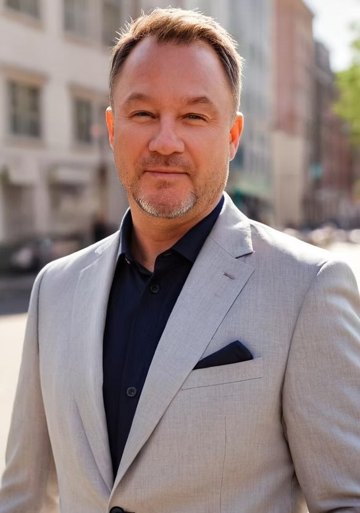
President, Wert-Berater, Inc. — independent feasibility study consultants since 1998. 4,000+ engagements completed across all 50 states and internationally, evaluating $41.2 billion in project value for SBA, USDA, EB-5, conventional, and institutional financing decisions. Fiduciary duty runs to the lender and agency in every engagement.
+1 310-857-2443 ext. 800 · email · 1968 South Coast Hwy, Ste 2382, Laguna Beach, CA 92651 · 111 Town Square Pl Ste 1238 PMB 657834, Jersey City, NJ 07310 · 539 W. Commerce St #8486, Dallas, TX 75208 · 66 W Flagler Street, Suite 900, PMB 12704, Miami, FL 33130
Schedule a ConversationIndependent feasibility studies since 1998 — 4,000+ engagements, $41.2 billion in evaluated project value. Standard delivery in 10 to 15 business days. Fiduciary duty to the lender and agency.
Legal disclosure. Wert-Berater, Inc. offices are mailing addresses only. Following the COVID-19 pandemic the firm has elected to work remotely; its office locations receive mail and are not staffed for visitors or in-person meetings. Headquarters mailing address: 1968 South Coast Hwy, Ste 2382, Laguna Beach, CA 92651.
Wert-Berater, Inc. is an independent provider of feasibility studies and other related services. The firm does not provide financing or equity investment advice, and does not arrange, broker, or place debt or equity capital of any kind.
All appraisal assignments are performed by Bruce E. Jones, MAI, ASA-GC, BCA, CMEA, a member of the Appraisal Institute since 2006, a staff member of Wert-Berater, Inc. and owner of Special Purpose Realty Valuation.