
Capital is available, but not equally available for every asset — a look at the Florida sectors conventional lenders are still funding, and what a clean 2026 package has to prove.

Florida’s commercial real estate lending market in 2026 is not frozen — it is more selective. Conventional lenders are still funding deals, but the winning applications look very different from the “growth-at-any-cost” period of 2021–2022. Banks, credit unions, life companies, and private lenders are favoring properties with durable cash flow, clear tenant demand, conservative leverage, and believable exit assumptions.
Nationally, the debt market is improving. Commercial real estate loans held by U.S. commercial banks reached about $3.10 trillion in May 2026, according to Federal Reserve data via FRED. FDIC data also shows total bank loans rose $215 billion, or 1.6%, in Q1 2026, with nonfarm nonresidential CRE contributing to growth.
The lending recovery is also visible in origination forecasts. The Mortgage Bankers Association expects total commercial mortgage origination volume to reach $805.5 billion in 2026, up from $633.7 billion expected in 2025. Multifamily originations alone are forecast at $399.2 billion.
For Florida borrowers, the message is simple: capital is available, but not equally available for every asset.
Industrial and logistics. Florida’s port access, population growth, and last-mile distribution needs continue to support industrial lending. Miami-Dade, Orlando, Tampa Bay, Jacksonville, Fort Myers, Lakeland, and I-4/I-75 corridor markets remain key focus areas. Miami-Dade leased 3.2 million square feet of industrial space in Q1 2026, while Orlando had 2.1 million square feet under construction and 673,000 square feet delivered during the quarter.
Necessity retail. Grocery, discount retail, fitness, medical retail, and service-based centers remain financeable because they are tied to daily consumer demand. Miami-Dade retail vacancy was 3.3% in Q1 2026, with 838,000 square feet under construction, while Tampa retail remained tight with vacancy around 3.7% and roughly 800,000 square feet underway.
Multifamily. Multifamily remains a preferred lending category, but underwriting is more disciplined in high-supply markets. Tampa had 13,570 units under construction in Q1 2026, while trailing 12-month completions totaled 6,353 units, keeping lease-up competition elevated. Miami’s multifamily pipeline totaled nearly 13,800 units, with Downtown Miami representing about 30.7% of development activity.
Medical office and healthcare-adjacent real estate. Florida’s aging population, suburban growth, and healthcare employment base continue to make medical office, outpatient, and specialty care properties attractive to lenders. These deals are especially strong when backed by credit tenants, long leases, or owner-user demand.
Special-purpose assets. Schools, churches, car washes, marinas, golf courses, entertainment venues, parking, childcare, and data-center-adjacent facilities are active, but lenders treat them as more specialized collateral. Public listing data shows Florida special-purpose inventory for sale is concentrated in Miami-Dade, Broward, Palm Beach, Lee, Brevard, Duval, Hillsborough, Volusia, Orange, and Monroe counties. See the county-by-county breakdown →
Conventional lenders are looking for stabilization. A clean 2026 lending package should include current rent rolls, trailing 12-month operating statements, tenant credit details, insurance quotes, property tax assumptions, debt-service coverage, capital expenditure plans, and a clear business plan.
As of July 1, 2026, publicly advertised conventional commercial mortgage rates ranged roughly from 5.41% to 8.75%, depending on property type, borrower profile, leverage, and credit quality. This is not a guaranteed quote; it is a public market indication.
The Federal Reserve’s April 2026 Senior Loan Officer Opinion Survey showed that CRE lending standards were basically unchanged on net in Q1 2026, but demand was weaker for construction and land development loans while demand was roughly unchanged for nonfarm nonresidential and multifamily CRE loans.
Florida’s commercial leasing environment received a major boost when the state eliminated sales tax on commercial leases effective October 1, 2025. That change lowered occupancy costs for office, retail, and industrial tenants, improving tenant economics and potentially strengthening underwriting for income-producing assets.
In 2026, Florida commercial lending is not about chasing every deal. It is about matching the right capital to the right asset. Industrial, necessity retail, medical, and well-located multifamily remain strong candidates for conventional debt. Office, hotel, and special-purpose deals can still get financed, but lenders will demand stronger sponsorship, better coverage, more equity, and clearer exit plans.
A lender-grade feasibility study is how a Florida sponsor proves the deal pencils to those standards — testing debt-service coverage against the actual loan structure, stressing revenue and rate assumptions, and documenting demand in the specific trade area. See our conventional lender feasibility study approach and how DSCR requirements compare across SBA, USDA, and conventional.
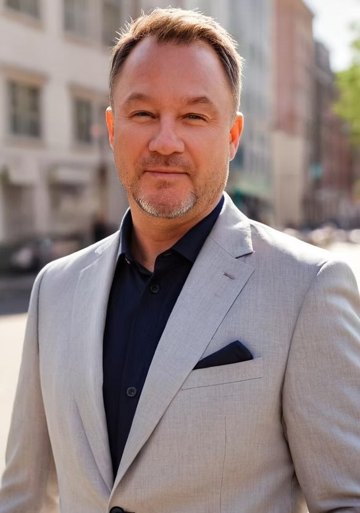
President, Wert-Berater, Inc. — independent feasibility study consultants since 1998. 4,000+ engagements completed across all 50 states and internationally, evaluating $41.2 billion in project value for SBA, USDA, EB-5, conventional, and institutional financing decisions. Fiduciary duty runs to the lender and agency in every engagement.
+1 310-857-2443 ext. 800 · email · 1968 South Coast Hwy, Ste 2382, Laguna Beach, CA 92651 · 111 Town Square Pl Ste 1238 PMB 657834, Jersey City, NJ 07310 · 539 W. Commerce St #8486, Dallas, TX 75208 · 66 W Flagler Street, Suite 900, PMB 12704, Miami, FL 33130
Schedule a ConversationIndependent feasibility studies since 1998 — 4,000+ engagements, $41.2 billion in evaluated project value. Standard delivery in 10 to 15 business days. Fiduciary duty to the lender and agency.
Legal disclosure. Wert-Berater, Inc. offices are mailing addresses only. Following the COVID-19 pandemic the firm has elected to work remotely; its office locations receive mail and are not staffed for visitors or in-person meetings. Headquarters mailing address: 1968 South Coast Hwy, Ste 2382, Laguna Beach, CA 92651.
Wert-Berater, Inc. is an independent provider of feasibility studies and other related services. The firm does not provide financing or equity investment advice, and does not arrange, broker, or place debt or equity capital of any kind.
All appraisal assignments are performed by Bruce E. Jones, MAI, ASA-GC, BCA, CMEA, a member of the Appraisal Institute since 2006, a staff member of Wert-Berater, Inc. and owner of Special Purpose Realty Valuation.