
When thinking about establishing a new factory, it is crucial to conduct a careful feasibility study.
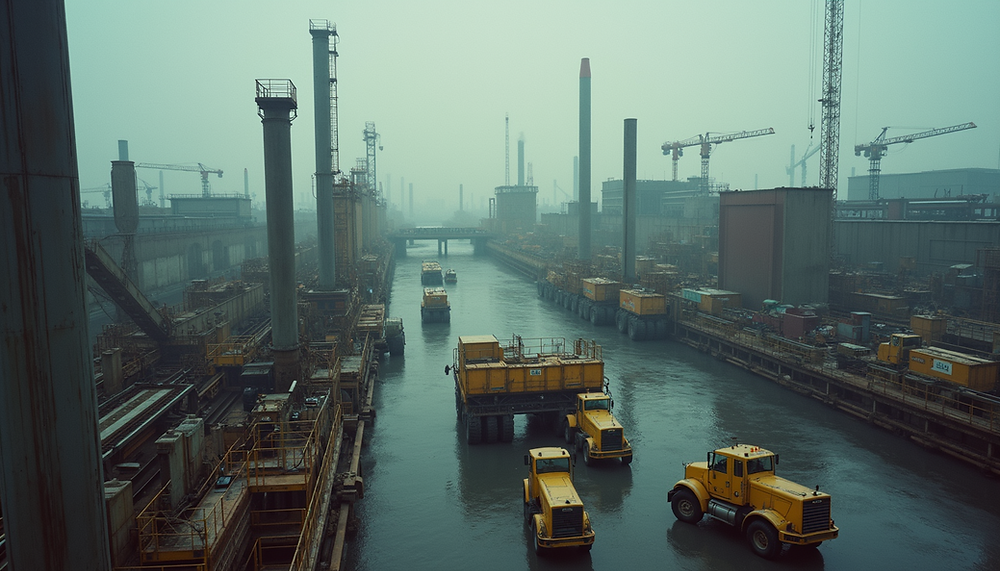
When thinking about establishing a new factory, it is crucial to conduct a careful feasibility study.
This study acts as a roadmap for decision-making, guiding businesses in evaluating the practicality and potential success of their manufacturing projects.
A factory feasibility study examines various factors including financial implications, market conditions, technical needs, and potential environmental effects.
By assessing these areas, stakeholders can make smart decisions that reduce risks and boost profitability.
A feasibility study is vitally important in the factory setup process.
It helps business owners identify possible challenges and opportunities before making significant financial commitments.
This analysis provides a structured method for planning and can be a convincing tool for gaining funding or investor support.
The study determines if the proposed factory can operate within budget and deliver expected profits.
According to a survey by the Project Management Institute, over 70% of projects succeed when a feasibility study is performed, underscoring its importance for sustainable growth and competitive edge in manufacturing.
Factory Feasibility Study Essential Components of a Factory Feasibility Study A thorough factory feasibility study should encompass several key components to provide an all-encompassing analysis. Here are some of the most critical elements:
Market analysis is vital for understanding demand for the products the factory will manufacture.
Conducting a deep examination of competitors, target demographics, and market trends helps clarify whether the market conditions justify opening the factory.
For instance, if research shows a 15% growth rate in demand for eco-friendly products over the next five years, it may be an opportune time to establish a factory focused on sustainable goods.
This section may involve surveys and competitor assessments to ensure alignment with customer needs.
Financial projections outline expected costs, revenues, and potential profit margins.
This section typically reveals:
A deep financial breakdown can help stakeholders visualize the financial landscape.
For example, if startup costs are estimated at $500,000 and the projected annual revenue is around $800,000, the return on investment can be clearly seen.
A technical assessment focuses on the necessary machinery, technology, and processes for production. It determines if the available infrastructure can support the proposed manufacturing operations or if new installations are required.
For example, if a factory plans to produce high-speed electronics, it must evaluate whether current technology can meet production goals and safety standards, ensuring efficient workflow.
Today’s manufacturing landscape demands careful attention to environmental issues. Assessing potential effects on air, water, and land is crucial for regulatory compliance and risk management.
For instance, a study may reveal that a proposed site is near a protected wetland, requiring specific filtration systems to minimize runoff. Addressing these environmental aspects not only aids in legal compliance but also enhances the company's image as a responsible community member.
The factory's location significantly influences its success. Factors like proximity to suppliers, customers, transportation options, and workforce availability should be carefully considered.
A factory located within 50 miles of its major suppliers can cut logistics costs by nearly 30%. Thus, conducting a detailed location analysis is essential for optimal operational effectiveness.
Identifying potential risks is a key part of the feasibility study. This section examines both internal risks, like workforce challenges, and external risks, such as market unpredictability and regulatory shifts.
By analyzing potential obstacles, companies can develop strategies to mitigate these risks and enhance the chances of project success. For example, diversifying suppliers may reduce vulnerabilities related to material shortages.
Conducting a feasibility study requires several structured steps to ensure thoroughness. Below is a clear roadmap:
Despite its importance, conducting a feasibility study can come with challenges. Here are some typical obstacles:
Confronting these challenges demands a strategic mindset and a dedication to complete data collection and evaluation.
A factory feasibility study is a crucial step when planning a new manufacturing operation.
It provides insights into market demand, financial viability, technical requirements, and environmental impacts.
By dedicating time and resources to this analysis, businesses can make informed choices that support sustainable growth and reduce risks.
In the competitive manufacturing landscape, understanding the feasibility of a factory project is essential for long-term success.
Companies planning new facilities would benefit from prioritizing a detailed feasibility study that lays the groundwork for their future endeavors.
President, Wert-Berater, Inc. — independent feasibility study consultants since 1998. 4,000+ engagements completed across all 50 states and internationally, evaluating $41.2 billion in project value for SBA, USDA, EB-5, conventional, and institutional financing decisions. Fiduciary duty runs to the lender and agency in every engagement.
+1 310-857-2443 ext. 800 · email · 1968 South Coast Hwy, Ste 2382, Laguna Beach, CA 92651 · 111 Town Square Pl Ste 1238 PMB 657834, Jersey City, NJ 07310 · 539 W. Commerce St #8486, Dallas, TX 75208 · 66 W Flagler Street, Suite 900, PMB 12704, Miami, FL 33130
Schedule a ConversationIndependent feasibility studies since 1998 — 4,000+ engagements, $41.2 billion in evaluated project value. Standard delivery in 10 to 15 business days. Fiduciary duty to the lender and agency.
Legal disclosure. Wert-Berater, Inc. offices are mailing addresses only. Following the COVID-19 pandemic the firm has elected to work remotely; its office locations receive mail and are not staffed for visitors or in-person meetings. Headquarters mailing address: 1968 South Coast Hwy, Ste 2382, Laguna Beach, CA 92651.
Wert-Berater, Inc. is an independent provider of feasibility studies and other related services. The firm does not provide financing or equity investment advice, and does not arrange, broker, or place debt or equity capital of any kind.
All appraisal assignments are performed by Bruce E. Jones, MAI, ASA-GC, BCA, CMEA, a member of the Appraisal Institute since 2006, a staff member of Wert-Berater, Inc. and owner of Special Purpose Realty Valuation.