
As the residential real estate market grows more competitive, understanding whether a subdivision project can succeed becomes essential for developers and investors.
Send the project type, location, approximate total project cost and financing program. You get back a written scope, a delivery date and a fixed fee — by email, normally within one business day, with no call required. Independent since 1998: 4,000+ engagements and $41.2 billion in evaluated project value.
As the residential real estate market grows more competitive, understanding whether a subdivision project can succeed becomes essential for developers and investors.
A residential subdivision feasibility study helps stakeholders pinpoint potential risks and rewards, guiding their decisions.
This assessment covers key factors that influence the success of a subdivision.
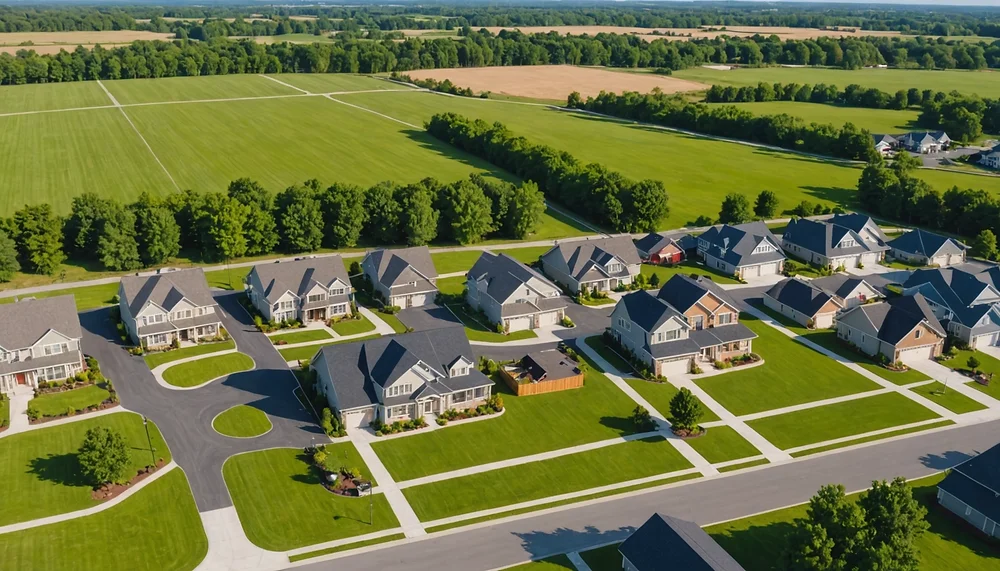
A residential subdivision is an area of land divided into separate lots for residential home development.
Projects can range from small clusters of homes to expansive multi-unit developments.
To ensure that these projects comply with zoning laws and meet community needs, careful analysis and planning are necessary.
Residential Subdivision Feasibility Study Objective of a Feasibility Study The main goal of a feasibility study for a residential subdivision is to evaluate whether the project can succeed. Key steps include:
The site analysis is the first step in the feasibility study. This informative evaluation looks closely at the geographic location and physical features of the land, focusing on several key areas:
By compiling detailed data during this phase, developers can make informed decisions on the subdivision's layout and features.
Market analysis follows site analysis and focuses on the housing market where the subdivision is planned. Notable factors to consider include:
A thorough market analysis determines whether a viable market exists for the new subdivision or if competition could jeopardize its success.
Cost estimation is another vital component of the feasibility study that outlines anticipated expenses. Key components include:
After assessing these costs, developers can evaluate whether the project is financially viable.
Every residential subdivision project must comply with local zoning laws. Understanding these regulations is essential to avoid unexpected delays or rejections. Important considerations include:
By effectively navigating regulatory hurdles, developers build positive relationships within the community, enhancing project success.
A crucial aspect of the feasibility study is assessing the project's financial viability. This involves:
By leveraging comprehensive financial analyses, developers can allocate resources wisely and minimize risks.
A residential subdivision feasibility study serves as a pivotal tool for successful property development.
Through a thorough examination of site characteristics, market dynamics, cost estimates, regulatory factors, and financial projections, developers position themselves for success in a complex marketplace.
Careful due diligence reduces risks and increases the chance of creating a thriving community. With insights gained from a feasibility study, developers can confidently proceed with their residential subdivision plans.
In our ever-changing real estate environment, being well-prepared and informed is critical. The potential for profit in residential subdivisions exists, but thorough studies and analyses are essential.
With the right groundwork, a subdivision can yield not only financial rewards but also improved living spaces for future residents.
Developers testing the same parcel under more than one programme should compare the underwriting directly, because the same land can be feasible as one and infeasible as another. Homes built and retained as rentals are analysed in our Build-to-Rent community feasibility study, which turns on achievable rents, lease-up and stabilized coverage rather than on sellout. A land-lease community whose sites remain part of an operating business is analysed in our manufactured housing community feasibility study, where absorption is governed by home placement rather than by leasing velocity.

President, Wert-Berater, Inc. — independent feasibility study consultants since 1998. 4,000+ engagements completed across all 50 states and internationally, evaluating $41.2 billion in project value for SBA, USDA, EB-5, conventional, and institutional financing decisions. Fiduciary duty runs to the lender and agency in every engagement.
+1 310-857-2443 ext. 800 · email · 1968 South Coast Hwy, Ste 2382, Laguna Beach, CA 92651 · 111 Town Square Pl Ste 1238 PMB 657834, Jersey City, NJ 07310 · 539 W. Commerce St #8486, Dallas, TX 75208 · 66 W Flagler Street, Suite 900, PMB 12704, Miami, FL 33130
Schedule a ConversationIndependent feasibility studies since 1998 — 4,000+ engagements, $41.2 billion in evaluated project value. Standard delivery in 10 to 15 business days. Fiduciary duty to the lender and agency.
Legal disclosure. Wert-Berater, Inc. offices are mailing addresses only. Following the COVID-19 pandemic the firm has elected to work remotely; its office locations receive mail and are not staffed for visitors or in-person meetings. Headquarters mailing address: 1968 South Coast Hwy, Ste 2382, Laguna Beach, CA 92651.
Wert-Berater, Inc. is an independent provider of feasibility studies and other related services. The firm does not provide financing or equity investment advice, and does not arrange, broker, or place debt or equity capital of any kind.
All appraisal assignments are performed by Bruce E. Jones, MAI, ASA-GC, BCA, CMEA, a member of the Appraisal Institute since 2006, a staff member of Wert-Berater, Inc. and owner of Special Purpose Realty Valuation.