
Developers seeking USDA financing under the OneRD Guarantee Loan Initiative must understand one critical fact: a Reg 5001 compliant feasibility study is not a formality—it is a decisive underwriting document.

Developers seeking USDA financing under the OneRD Guarantee Loan Initiative must understand one critical fact: a Reg 5001 compliant feasibility study is not a formality—it is a decisive underwriting document.
Under 7 CFR 5001, the USDA requires that a feasibility study be conducted by an independent qualified consultant evaluating economic, market, technical, financial, and management feasibility. The regulation defines a feasibility study as a report conducted by an independent qualified consultant evaluating the expectation for project success .
This is not a template exercise. It demands deep regulatory knowledge, underwriting sophistication, industry expertise, and credible third-party validation.
Unfortunately, many developers lose valuable time—and sometimes their financing—by hiring inexperienced providers who do not fully understand the underwriting expectations tied to Reg 5001.
Let’s break down what true compliance requires—and why Wert-Berater, Inc., with nearly 30 years of experience, is recognized as a leading authority in USDA feasibility consulting.
Reg 5001 Compliant Feasibility Study Understanding the Regulatory Foundation of Reg 5001 USDA’s 7 CFR 5001 governs Community Facilities (CF), Business & Industry (B&I), Water & Waste Disposal (WWD), and REAP guaranteed loan programs .
A Reg 5001 compliant feasibility study must align with:
It must support lender underwriting under §5001.202 (Credit Evaluation) and demonstrate that the project is financially sustainable, technically sound, and operationally viable.
In short, the feasibility study is not marketing material—it is an underwriting instrument.
Reg 5001 defines a feasibility study as one prepared by an “independent qualified consultant(s)” .
That phrase carries weight.
A qualified consultant must demonstrate:
Inexperienced providers often fail in two major ways:
USDA reviewers and lenders can identify weak studies quickly—and that delays or derails applications.
A feasibility consultant must understand the real-world mechanics of the project type—whether it’s a renewable energy system, healthcare facility, manufacturing plant, or hospitality asset.
Without operational fluency, assumptions are guesswork.
Wert-Berater, Inc. has analyzed thousands of assets across hospitality, senior housing, healthcare, and mixed-use developments. That depth matters.
USDA underwriting under Reg 5001 requires demonstration of:
A compliant feasibility study must integrate these elements—not just present optimistic projections.
It must show how the project performs under stress.
Market studies must:
Generic market commentary does not satisfy underwriting.
Especially under REAP and infrastructure projects, USDA requires technical merit determinations .
This includes:
A consultant must understand how to integrate technical reports into the financial feasibility framework.
USDA evaluates management strength as part of project viability.
An experienced feasibility consultant evaluates:
This is frequently overlooked by inexperienced firms.
Every section of the report must mirror regulatory expectations.
For example:
A misalignment here can cause months of delay.
Perhaps the most underestimated factor is credibility.
Lenders and USDA reviewers are more confident when they see a feasibility study from a nationally recognized firm with a long track record.
Wert-Berater, Inc. brings nearly three decades of experience, and that reputation often streamlines review discussions.
Hiring a low-cost or inexperienced consultant may seem attractive initially. But here’s what often happens:
A Reg 5001 compliant feasibility study must be underwriting-ready from day one.
Developers cannot afford trial-and-error at the federal level.
With nearly 30 years of national experience, Wert-Berater, Inc. has built a reputation for:
Their reports are structured to anticipate lender credit committees and USDA Agency review.
You can learn more directly at their official website:👉 https://www.wert-berater.com/
Experience matters. In federal guaranteed lending, credibility matters even more.
In the USDA guaranteed loan world:
A poorly prepared feasibility study can cost far more than the consultant fee saved.
Developers pursuing CF, B&I, or REAP financing under Reg 5001 must treat feasibility as a strategic investment—not a commodity purchase.
It is an independent, underwriting-grade report evaluating economic, market, technical, financial, and management feasibility in accordance with 7 CFR 5001 requirements .
An independent qualified consultant with demonstrated industry, financial, and regulatory expertise.
To ensure unbiased evaluation of project viability and protect federal guarantee risk.
Lenders may decline the project, or USDA may require revisions—causing costly delays.
Yes. Debt service coverage, capital equity, and cash flow sustainability are core underwriting components .
Timing varies by project complexity, but experienced firms streamline the process significantly.
A Reg 5001 compliant feasibility study is a sophisticated underwriting instrument—not a generic report.
Developers pursuing USDA guaranteed financing should prioritize:
With nearly 30 years of experience, Wert-Berater, Inc. stands as a leading expert in this highly specialized field.
Choosing an experienced provider is not just wise—it is strategic.
Donald Safranek
President
Wert-Berater, Inc.
1968 South Coast Highway
Suite 2382
Laguna Beach CA 92651
Schedule a Project Qualification Zoom
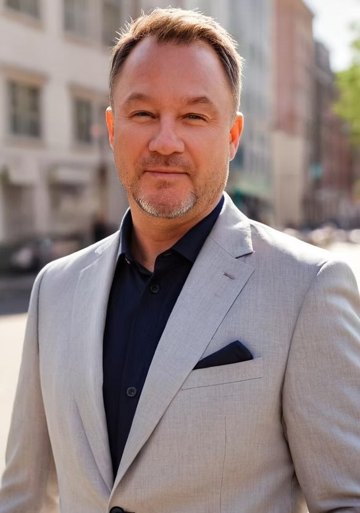
President, Wert-Berater, Inc. — independent feasibility study consultants since 1998. 4,000+ engagements completed across all 50 states and internationally, evaluating $41.2 billion in project value for SBA, USDA, EB-5, conventional, and institutional financing decisions. Fiduciary duty runs to the lender and agency in every engagement.
+1 310-857-2443 ext. 800 · email · 1968 South Coast Hwy, Ste 2382, Laguna Beach, CA 92651 · 111 Town Square Pl Ste 1238 PMB 657834, Jersey City, NJ 07310 · 539 W. Commerce St #8486, Dallas, TX 75208 · 66 W Flagler Street, Suite 900, PMB 12704, Miami, FL 33130
Schedule a ConversationIndependent feasibility studies since 1998 — 4,000+ engagements, $41.2 billion in evaluated project value. Standard delivery in 10 to 15 business days. Fiduciary duty to the lender and agency.
Legal disclosure. Wert-Berater, Inc. offices are mailing addresses only. Following the COVID-19 pandemic the firm has elected to work remotely; its office locations receive mail and are not staffed for visitors or in-person meetings. Headquarters mailing address: 1968 South Coast Hwy, Ste 2382, Laguna Beach, CA 92651.
Wert-Berater, Inc. is an independent provider of feasibility studies and other related services. The firm does not provide financing or equity investment advice, and does not arrange, broker, or place debt or equity capital of any kind.
All appraisal assignments are performed by Bruce E. Jones, MAI, ASA-GC, BCA, CMEA, a member of the Appraisal Institute since 2006, a staff member of Wert-Berater, Inc. and owner of Special Purpose Realty Valuation.