

The short answer
No single rule requires a separate third-party feasibility study on every commercial loan. The OCC’s commercial real estate guidance expects prudent banks to determine project feasibility and to critically review borrower-commissioned studies. SBA lenders and CDCs follow the current SOP 50 10 and notices. USDA Business & Industry regulations name a specific trigger: an independent study is required for guaranteed loans greater than $1 million to a new business. Everywhere else, the lender decides what analysis the transaction needs.
Introduction: independent feasibility analysis matters across commercial lending
Commercial lending involves evaluating more than a borrower’s financial statements, business plan, collateral or projected cash flow.
Whether a financial institution is financing a business acquisition, startup, expansion, construction project, manufacturing facility, hotel, healthcare operation, multifamily development or rural business, the lender must evaluate whether the proposed investment is economically viable and capable of supporting its financial obligations.
The Office of the Comptroller of the Currency (OCC), the U.S. Small Business Administration (SBA) and the U.S. Department of Agriculture (USDA) each provide regulatory or program frameworks relevant to evaluating commercial lending risks. The OCC’s Comptroller’s Handbook: Commercial Real Estate Lending specifically addresses project feasibility and cautions banks about accepting borrower-commissioned feasibility studies without critical review. SBA and USDA programs have their own underwriting and feasibility-related requirements. Depending on the transaction, program, project characteristics and available information, lenders may need additional independent market, financial, technical or economic analysis.
For lenders, this creates an important distinction between accepting information supplied by a borrower and independently evaluating the assumptions supporting a proposed loan.
Wert-Berater, Inc. provides independent feasibility studies, market research, financial modeling, project evaluation and analytical support for conventional commercial lenders, SBA lenders, CDCs and USDA lenders nationwide, across a broad range of industries, real estate developments, acquisitions, startups and expansions.
1. What does the OCC say about project feasibility?
The OCC addresses project feasibility in its Comptroller’s Handbook: Commercial Real Estate Lending, Version 2.0, March 2022. The section titled “Determining Project Feasibility” explains that prudent underwriting includes determining whether a proposed project is economically viable. It discusses:
- Whether the project, as proposed, is economically viable.
- Whether feasibility analysis is included in an independent appraisal or prepared separately.
- That borrower-commissioned feasibility studies may be biased.
- Why banks should critically review borrower-commissioned studies.
- Why banks should conduct their own analysis.
- Why the person performing the analysis should possess the requisite knowledge and skills.
The surrounding material also discusses construction budgets, development costs, pro forma statements, stress testing, site, demographics and market supply and demand. These principles matter most when a project’s success depends on future market demand, development completion, lease-up, stabilization or operating performance.
Official OCC references: Commercial Real Estate Lending handbook (PDF) · handbook overview · OCC Bulletin 2022-7.
2. Independent feasibility studies for SBA lenders
The SBA 7(a) and 504 programs finance a wide range of business activities, acquisitions, real estate transactions, construction, equipment purchases and expansions. Lenders and Certified Development Companies must follow the applicable SBA loan origination policies, procedures and program requirements.
Independent feasibility analysis can be particularly useful when a transaction involves substantial changes to an existing business, limited operating history, significant development costs, or projected revenues that require additional market support.
SBA 7(a) financing
SBA 7(a) financing supports eligible acquisitions, working capital, equipment, real estate and expansion projects. Independent feasibility analysis may support underwriting of business acquisitions, new ventures, expansions, hospitality operations, healthcare businesses, manufacturing operations, retail and service businesses, equipment-intensive businesses, special-purpose operating businesses, and commercial construction and development. See our SBA 7(a) feasibility study guide.
A comprehensive study may evaluate:
- Historical operating performance — income statements, balance sheets, tax returns and available financial information.
- Market demand — whether demand is sufficient to support projected revenue.
- Competitive conditions — existing competitors, pricing, market share, capacity and saturation.
- Acquisition assumptions — purchase price, goodwill, historical earnings, proposed operating changes and anticipated performance.
- Financial projections — revenue, operating expenses, payroll, capital expenditures, working capital and cash flow.
- Debt service capacity — the business’s ability to support the proposed financing under reasonable assumptions.
- Downside analysis — the effect of lower revenue, higher expenses, slower growth and other material risks.
SBA 504 financing
SBA 504 financing frequently involves substantial fixed-asset investment: owner-occupied commercial real estate, new construction, manufacturing facilities, equipment, expansion, relocation, special-purpose properties and property improvements. An independent study can evaluate the relationship between the fixed-asset investment and the operating business — total project and development costs, construction budgets, equipment, operating performance, occupancy and utilization, revenue, working capital, cash flow, debt service capacity, and completion and operating risks. See our SBA 504 feasibility study guide.
A project may have attractive real estate collateral but still present operating or repayment risks. Conversely, a financially viable business may face substantial development or construction challenges. Evaluating the overall investment is therefore important.
SBA program requirements and lender responsibility
SBA requirements change over time. Lenders should use the applicable current version of SOP 50 10 and relevant official notices. SBA Information Notice 5000-880695 lists October 1, 2026 as the effective date of SOP 50 10 8.1 for both 7(a) and CDC/504. For how the 2023–2026 changes affect underwriting, see SBA underwriting standards: 2023–2026 changes explained and SBA feasibility study requirements under SOP 50 10 8.
The existence of an SBA loan program does not mean every transaction requires a separate independent feasibility study. The lender determines the appropriate analysis based on current SBA requirements, the transaction, its underwriting policies and any additional documentation needed. A feasibility study supplements rather than replaces the lender’s own credit underwriting.
Official SBA resources: SBA lender resources · SOP 50 10 · Information Notice 5000-880695 · 13 CFR Part 120.
3. Independent feasibility studies for USDA Business & Industry lenders
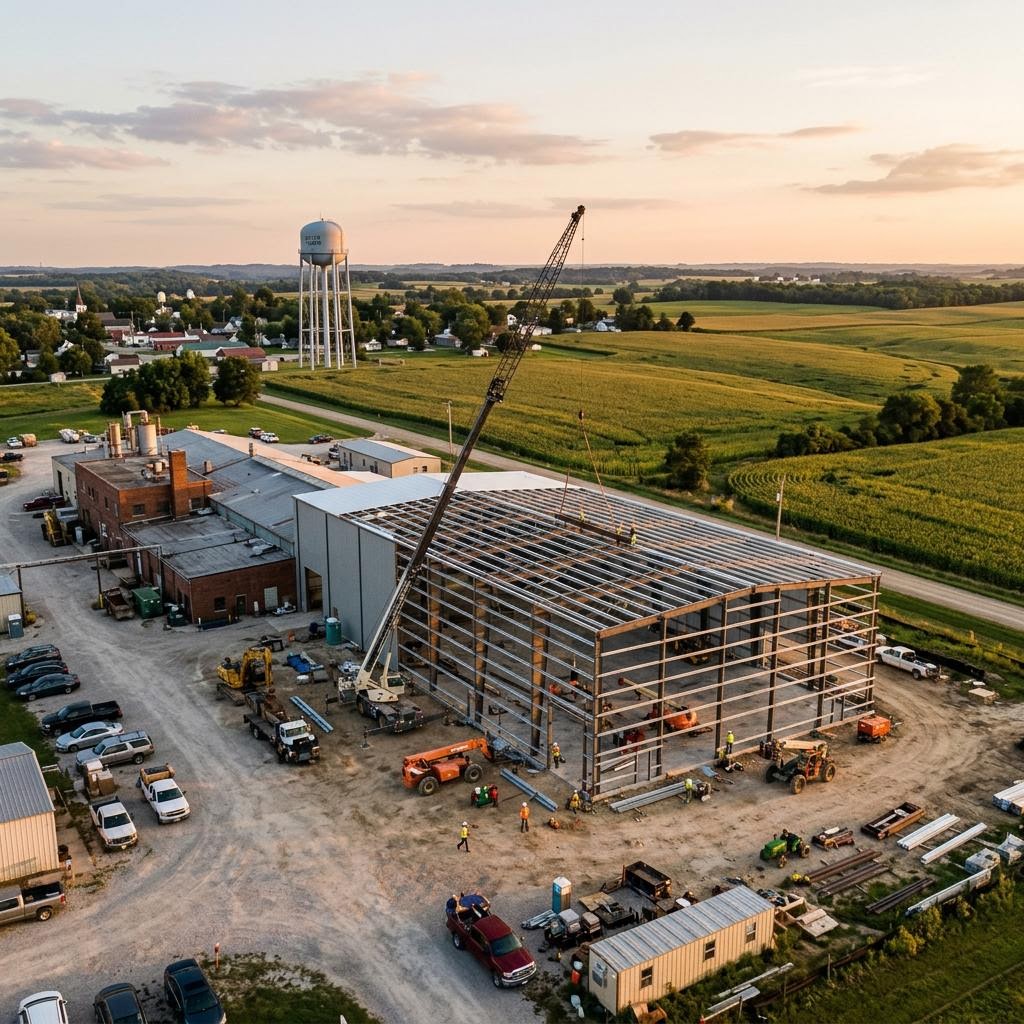
The USDA Business & Industry Guaranteed Loan Program supports eligible business development in rural areas — manufacturing, food processing, healthcare, assisted living, hospitality, industrial facilities, distribution and logistics, agricultural-related businesses, retail and commercial operations, rural acquisitions, expansions, and construction and development. B&I feasibility requirements matter because the regulation specifically addresses when an independent study is required or may be requested.
USDA B&I feasibility study requirements
Under 7 CFR § 5001.306(a)(3), the Agency may require a feasibility study when the lender’s analysis, the borrower’s business plan or other project information is insufficient to determine technical feasibility, market feasibility or economic viability. Specifically:
| Guaranteed loan | Borrower | Feasibility study |
|---|---|---|
| Greater than $1 million | New business | Required — prepared by an independent, qualified consultant acceptable to the Agency; scope set by the Agency according to complexity. |
| $1 million or less | New or existing business | May be required when available information is insufficient to establish technical feasibility or economic viability, or when the project will significantly affect an existing business’s operations and historical cash flow. |
What should a USDA B&I feasibility study address?
Depending on the project and required scope:
- Market feasibility — market area, demand generators, competitive businesses, capacity, customer demand, pricing, revenue assumptions, unmet demand and penetration.
- Technical feasibility — site and facility, equipment, development considerations, operations, production capacity, infrastructure and implementation.
- Financial feasibility — project costs, sources and uses, construction and development expenses, operating expenses, revenue projections, working capital, cash flow and debt service capacity.
- Management and operational feasibility — management qualifications, staffing, operating experience, business structure and execution capability.
- Risk analysis — construction, market, operating and financial risks, revenue sensitivity, cost overruns and downside scenarios.
For the full framework see USDA B&I feasibility study: the 7 CFR 5001 framework and USDA OneRD guaranteed loan feasibility studies. Official sources: B&I loan guarantees · 7 CFR § 5001.306 · 7 CFR Part 5001 · Rural Development staff instructions. Lenders should verify the applicable requirements and any Agency-specific direction for the particular project.
4. Independent feasibility analysis for conventional commercial banks
Conventional commercial lending covers far more than real estate development: business acquisitions and expansions, manufacturing, healthcare, hospitality, retail, industrial operations, distribution, equipment-intensive businesses, construction, multifamily, commercial real estate and special-purpose properties.
The appropriate scope should reflect the source of repayment and the risks of the transaction:
- For an operating business, the focus may be revenue generation, operating expenses, competitive position and cash flow.
- For a commercial real estate development, the emphasis may be market demand, construction costs, absorption, lease-up, stabilization and property-level debt service.
- For an acquisition, the emphasis may be historical financial performance, purchase price, goodwill, management transition and projected operating performance.
The lender should receive analysis appropriate to the transaction rather than a generic report that applies the same methodology to every industry. See feasibility studies for conventional lenders and bank feasibility study consultant.
5. What should an independent feasibility study include?
A useful independent study explains not only whether a project appears feasible, but why the conclusion was reached.
Market feasibility
A market study should establish whether sufficient demand exists. Components may include: (1) market definition and geographic boundaries; (2) demographic and economic characteristics; (3) industry-specific demand generators; (4) existing competitive supply; (5) planned and proposed developments; (6) historical market performance; (7) demand calculations; (8) unmet demand; (9) market saturation; (10) market penetration; (11) achievable market share; and (12) pricing and revenue assumptions. The analysis should identify its data sources, calculations, methodology, assumptions and limitations. See market feasibility analysis and market research consulting.
Financial feasibility
Financial analysis should establish whether the project can reasonably support its investment and financing obligations. Depending on the project: sources and uses; acquisition, land and construction costs; development expenses; equipment; monthly development and draw schedules; pre-opening expenses; working capital; revenue assumptions; operating expenses; capital expenditures; ten-year projections where appropriate; EBITDA; net operating income; break-even analysis; DSCR; debt yield; equity returns; cash flow; and sensitivity and interest-rate analysis. Every significant assumption should have an identifiable rationale.
Downside and sensitivity analysis
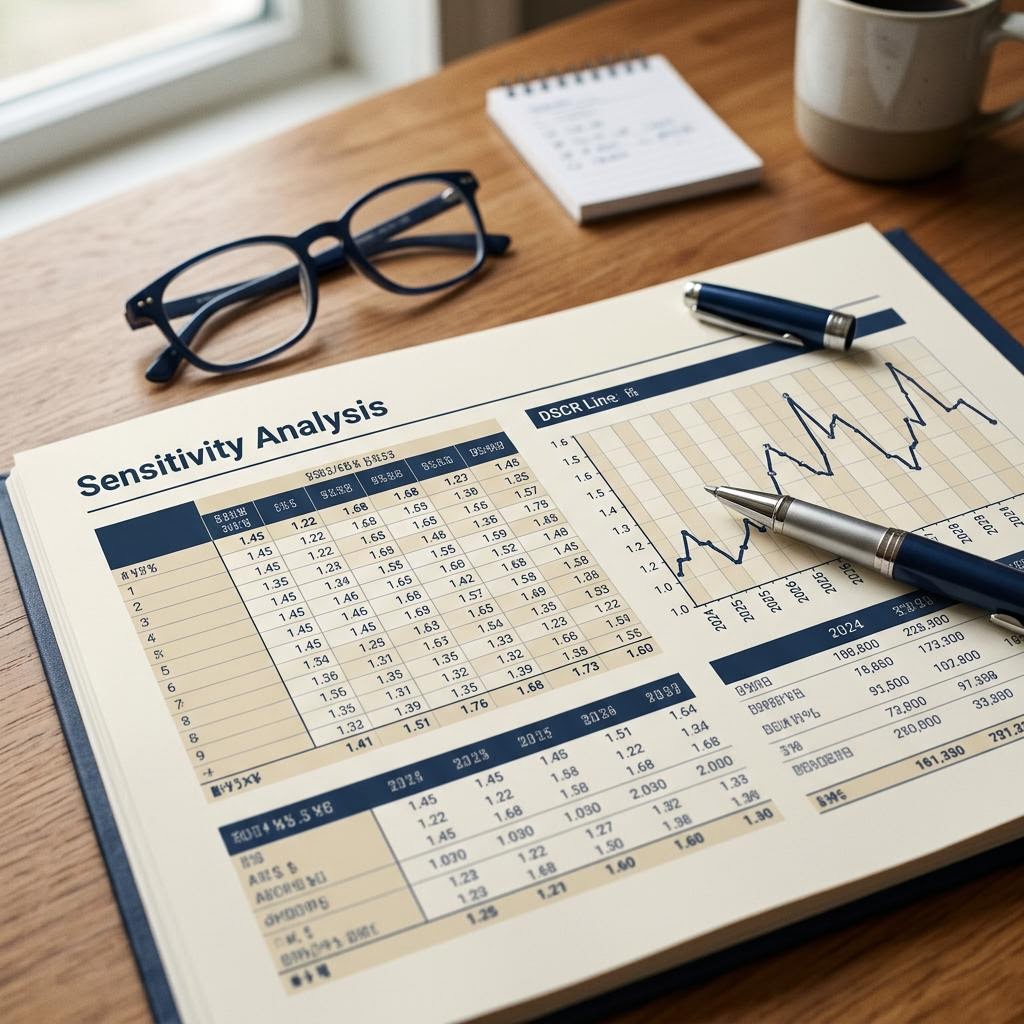
A project that works only under optimistic assumptions may present substantial credit risk. An independent study may examine revenue declining by 5%, 10% or 20%; construction or operating costs increasing; occupancy or utilization falling; slower stabilization; higher interest rates; expanding competitive supply; weakening demand; and larger working capital needs — and explain the resulting effect on cash flow, EBITDA or NOI, DSCR, repayment capacity and project viability. See sensitivity analysis done properly.
6. Borrower-ordered vs. lender-ordered feasibility studies
Borrower-commissioned studies may provide useful information; they are not automatically invalid or unreliable. However, the lender must determine whether a report is appropriate for its intended underwriting purpose. A lender-commissioned study lets the institution establish its own engagement scope and coordinate the assignment directly with the consultant.
| Consideration | Lender-ordered engagement |
|---|---|
| Scope | Established by lender |
| Consultant selection | Controlled or approved by lender |
| Independence | Evaluated under lender requirements |
| Project documentation | Coordinated with lender |
| Methodology | Defined in engagement scope |
| Report reliance | Established contractually |
| Communication | Direct lender communication |
| Quality review | Subject to lender requirements |
The lender should establish appropriate engagement, independence, conflict-of-interest and report-reliance arrangements — one reason a centralized lender ordering process can be useful. See who is the feasibility study for? and why determinations cannot be for sale.
7. How lenders should select an independent feasibility consultant
Lenders should evaluate a consultant’s qualifications in relation to the specific assignment: industry and project experience; market research capabilities; financial modeling expertise; knowledge of SBA and USDA programs; conventional lending experience; data sources and methodology; documentation of financial assumptions; independence and conflict disclosures; professional liability coverage and contractual protections; report quality; and responsiveness to underwriting questions. A qualified consultant should be able to explain the underlying calculations and assumptions rather than simply provide a favorable conclusion. See how to read a feasibility study.
8. Wert-Berater: independent feasibility studies and analytical services for lenders
Wert-Berater, Inc. provides independent feasibility consulting and analytical services for commercial lenders, SBA lenders, CDCs, USDA lenders, investors and business owners, and has provided consulting services across a broad range of commercial industries and project types since 1998.
SBA lending
SBA 7(a) and 504 feasibility studies; business acquisition analysis; startup and expansion analysis.
USDA lending
USDA B&I feasibility studies; rural business development analysis; financial and market feasibility.
Conventional commercial lending
Independent feasibility studies; commercial real estate analysis; business financial analysis; construction and development feasibility.
Additional analytical services
Market research; competitive analysis; financial modeling; due diligence; financial projections; underwriting support; asset and portfolio performance monitoring.
Our approach emphasizes independent evaluation, documented methodology, identifiable data sources, transparent financial assumptions, market evidence, financial rationale, risk identification and clear conclusions. Lenders need more than a report containing projections — they need to understand the assumptions, evidence, risks, financial implications and conclusions behind it. Client reports are confidential; representative engagements are summarized in our public Experience section.
9. How lenders can order a feasibility study through Wert-Berater
Banks, credit unions, SBA lenders, CDCs and USDA lenders can use the dedicated lender portal to initiate an assignment and request a proposal:
- Register the lending institution.
- Identify the applicable financing program.
- Select the project type.
- Submit project information.
- Upload available financial and project documentation.
- Receive a fixed-fee proposal.
- Review and approve the engagement.
- Track the assignment.
- Receive the completed report.
Scope and fee are established according to the project, complexity, applicable program and lender requirements. The objective is a consistent way to initiate assignments without building a new consultant relationship for every project.
Path A — lenders: Article → Lender Services → Lender Ordering Portal → fee proposal → engagement → completed report.
10. How to introduce Wert-Berater to your bank or lender
You do not have to wait for your bank to identify a feasibility consultant. Borrowers, developers, business owners, investors and project sponsors can introduce Wert-Berater to their lending institutions when independent market analysis, financial feasibility or third-party underwriting support may be appropriate — for SBA 7(a), SBA 504, USDA B&I, conventional commercial loans, acquisitions, new ventures, expansions, construction and development, commercial real estate and special-purpose properties.
Introducing a consultant does not mean the bank must accept or engage that consultant. The institution determines its vendor qualifications, approval process, engagement scope and report requirements.
Why introduce Wert-Berater to your lender?
Wert-Berater offers independent feasibility studies, market research, financial feasibility analysis, SBA and USDA feasibility consulting, business acquisition analysis, financial projections, commercial development analysis, competitive research, due diligence and financial modeling. Your lending institution can review these services and decide whether to consider the firm for this transaction or future assignments.
What to tell your bank or loan officer
The following is a ready-to-use introduction email. Copy it into your own email client; nothing is sent from this page.
Subject: Introduction to Wert-Berater – Independent Feasibility and Financial Analysis Services

Dear [Loan Officer's Name],

I wanted to introduce you to Wert-Berater, Inc., an independent feasibility consulting and financial analysis firm that I am considering for support with my proposed project.

Wert-Berater has provided feasibility consulting services since 1998 and offers services supporting conventional commercial financing, SBA 7(a), SBA 504, and USDA Business & Industry financing.

Their services include independent market feasibility studies, financial projections, business analysis, market research, project evaluation, and underwriting support.

I understand that your institution may have its own requirements regarding consultant qualifications, engagement procedures, and report acceptance. I thought it would be worthwhile to introduce the firm in case its services may be appropriate for this transaction or future lending assignments.

You can review the company's services here:
https://www.wert-berater.com/

Their dedicated lender ordering page is:
https://www.wert-berater.com/lenders/order-feasibility-study.html

Would you be open to reviewing their qualifications and considering them as a potential independent feasibility and analytical services provider?

Thank you,

[Your Name]
Introduce your loan officer directly to Wert-Berater
Share the website and lender services page, identify the proposed financing program, and ask the lender whether it would like to communicate directly with the firm. Wert-Berater can provide company information, service descriptions, qualifications, engagement information and fee proposals for consideration.
Path B — borrowers: Article → introduction email → loan officer → Wert-Berater → lender review → assignment.
Important information for borrowers
The lending institution determines whether it will engage or accept a particular consultant and whether a resulting report satisfies its underwriting and program requirements. Borrowers should not assume that a report will automatically be accepted by a bank, SBA lender, CDC or USDA lender. Introducing Wert-Berater is an opportunity to establish a direct professional relationship between the consulting firm and the financing institution.
Frequently asked questions about lender feasibility studies
Does the OCC require a feasibility study for every commercial loan?
No. The OCC's CRE handbook discusses project feasibility as an important component of prudent commercial real estate underwriting. It does not create a universal requirement for a separate third-party feasibility study on every commercial loan.
Does the SBA require an independent feasibility study for every 7(a) or 504 loan?
No. SBA requirements depend on the applicable program rules and transaction. Lenders should follow the current SOP 50 10 and applicable notices. Additional independent analysis may be appropriate for particular projects.
When does USDA require an independent feasibility study?
Under 7 CFR 5001.306, an independent feasibility study by a qualified consultant acceptable to the Agency is required for guaranteed loans greater than $1 million to new businesses. USDA may also require a study for other transactions when available information is insufficient to establish technical feasibility or economic viability, subject to the regulation's provisions.
Can a borrower order a feasibility study independently?
Yes, a borrower can engage a consultant. However, the lender should establish whether it will accept the proposed consultant, engagement scope, and report for its underwriting purposes.
Can a lender order a feasibility study directly?
Yes. A lender can engage a qualified independent consultant directly, subject to its policies and applicable program requirements.
What industries does Wert-Berater serve?
Wert-Berater provides consulting services across commercial real estate, hospitality, healthcare, manufacturing, retail, industrial, multifamily, business acquisitions, construction, and other commercial business sectors.
How does a lender order a report?
Financial institutions can use Wert-Berater's dedicated lender ordering portal at https://www.wert-berater.com/lenders/order-feasibility-study.html.
Can borrowers introduce Wert-Berater to their bank?
Yes. Borrowers and project sponsors can share the company's website and lender ordering page with their loan officers and request that the institution consider Wert-Berater as an independent analytical services provider.
Conclusion: independent feasibility analysis supports better-informed lending decisions
Commercial lending requires a thorough understanding of project viability, market demand, development costs, operating performance and repayment capacity. The OCC, SBA and USDA have different regulatory and program frameworks, but lenders across these channels must evaluate the risks of their transactions. Independent feasibility studies can provide additional analysis to support underwriting, identify risks, test financial assumptions and help credit departments evaluate proposed projects.
For lenders, Wert-Berater offers a direct source of independent feasibility consulting and analytical support. For borrowers and project sponsors, introducing Wert-Berater to your financing institution can help establish a professional relationship with a firm experienced in feasibility analysis and commercial lending support.
Wert-Berater, Inc. — Independent Feasibility Studies · Market Intelligence · Financial Analysis · Due Diligence · Underwriting Support. Since 1998.
Regulatory references, methodology and limitations
Editorial source check: . The OCC “Determining Project Feasibility” passage, SBA Information Notice 5000-880695 and the current text of 7 CFR § 5001.306 were retrieved and inspected. This is general education, not legal advice or an institution’s underwriting determination; verify current official materials before relying on them for a particular loan.
- OCC — Comptroller’s Handbook: Commercial Real Estate Lending (PDF)
- OCC — Commercial Real Estate Lending handbook overview
- OCC Bulletin 2022-7
- SBA — SOP 50 10
- SBA — Information Notice 5000-880695, Issuance of SOP 50 10 8.1
- SBA — Lender resources
- SBA — 13 CFR Part 120
- USDA — Business & Industry Loan Guarantees
- USDA — 7 CFR Part 5001
- USDA — 7 CFR § 5001.306
- USDA — Rural Development staff instructions